
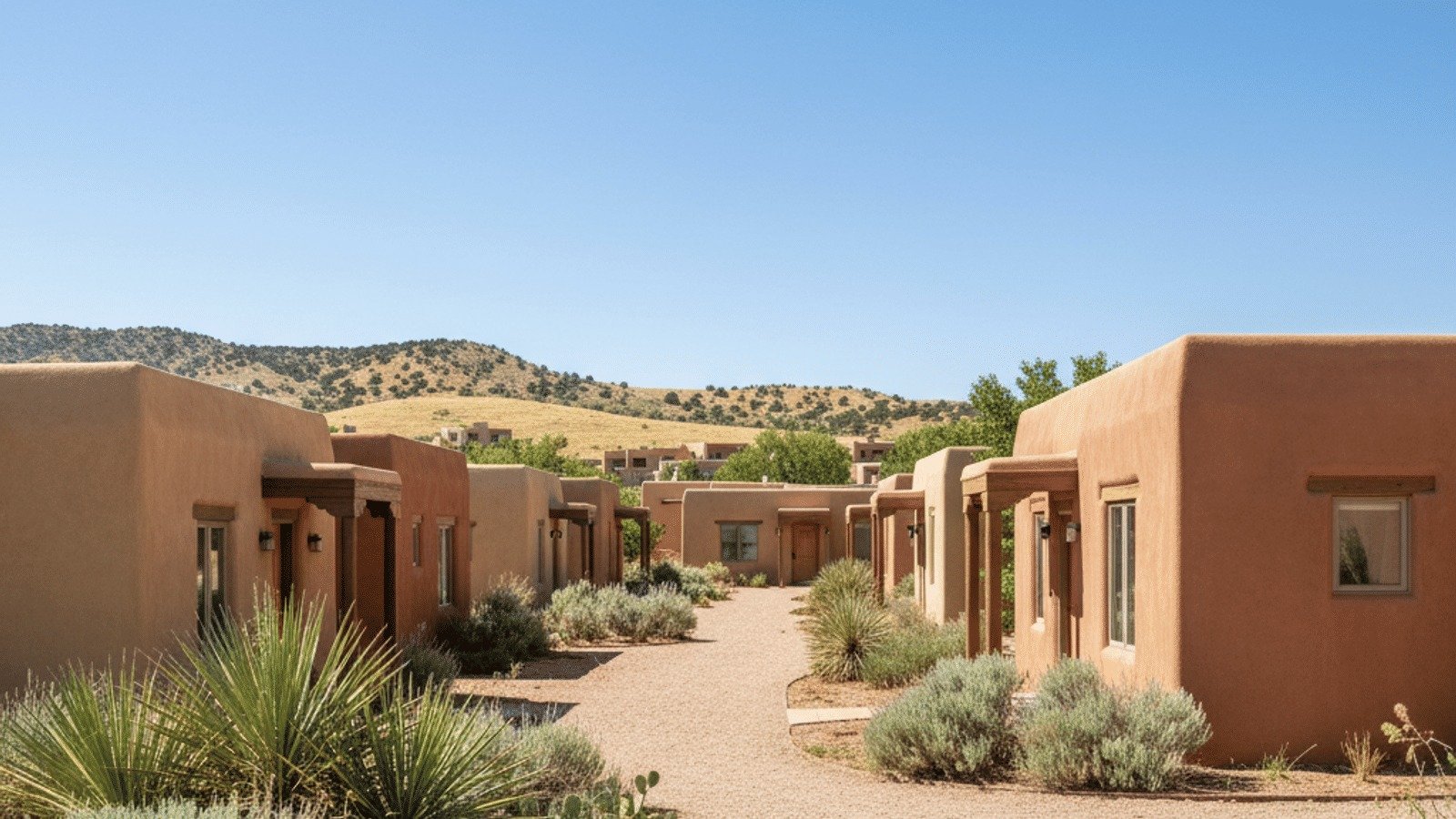
Let’s be real for a moment: buying a home in Santa Fe has changed. If you’ve been watching Santa Fe real estate market trends lately, you know that prices have ticked upward, making the dream of owning a slice of the "City Different" feel a little further out of reach for many locals. But here is the good news that doesn't always make the headlines—financial help is available, and it is more robust than you might think.
Many buyers assume that assistance programs are only for those with very low incomes, but that’s a misconception. In Santa Fe, we have "workforce" housing initiatives designed for teachers, nurses, service industry professionals, and civil servants—people earning up to 100% or even 120% of the Area Median Income (AMI).
The secret to making the numbers work here isn't usually finding one magic grant; it’s about "layering." Successful buyers often combine a state mortgage program with a city down payment grant and maybe even a county incentive. It takes a bit of coordination, but with the right roadmap, homeownership in this beautiful high desert climate is absolutely attainable.
Here is a breakdown of how the numbers shake out and who to call to get the ball rolling.
New Mexico Mortgage Finance Authority (MFA) Programs
If you are looking for assistance, your first stop—mentally, at least—should be the New Mexico Mortgage Finance Authority (MFA). Think of the MFA as the state’s housing backbone. They don't lend money directly to you; instead, they work with participating lenders to offer mortgage products that are friendlier than what you’d typically find on the open market.
Most of the local assistance packages you’ll build will start with an MFA mortgage as the foundation.
FirstHome: This is the MFA’s flagship program for first-time buyers. It is a 30-year fixed-rate mortgage that typically offers interest rates slightly lower than the standard market rate. It’s designed to keep your monthly principal and interest payments manageable. Income limits apply, but because Santa Fe’s cost of living is higher than the state average, those limits are often adjusted upward here.
FirstDown: Coming up with a down payment is often the biggest hurdle. FirstDown is a second loan that covers your down payment and closing costs. It functions as a fixed-rate second mortgage with a low interest rate. You can typically borrow up to 4% of the purchase price. It’s a great way to keep your cash reserves intact for moving expenses or repairs.
HomeNow: For households with lower incomes (typically 80% AMI or lower), the HomeNow program is a game-changer. It provides a "silent" second mortgage for down payment and closing costs. The magic word here is "deferred." It has a 0% interest rate and requires no monthly payments. You only pay it back if you sell the home, refinance, or move out. In some cases, if you stay in the home long enough, the loan may be forgiven entirely.
FirstDown Plus: This is a newer addition designed to give buyers extra leverage. It is a third loan (yes, you can have three) that provides additional down payment assistance specifically for buyers who are already using the FirstHome program. It’s meant to bridge the gap when prices are high, ensuring you don't get priced out by a few thousand dollars.
City of Santa Fe Affordable Housing Programs
Once you have looked at state options, it’s time to zoom in on the cost of living in Santa Fe specifically. The City of Santa Fe Office of Affordable Housing has created aggressive policies to ensure locals can still afford to live here. These programs differ from the state ones because they often deal directly with the inventory (the houses themselves) in addition to the financing.
Santa Fe Homes Program (SFHP): This is one of the most effective tools the city has. Under inclusionary zoning laws, most new residential developments in Santa Fe are required to set aside 20% of their homes as "affordable." These aren't separate, lower-quality units; they are often identical to the market-rate homes next door but sold at a strictly controlled price.
To buy one, you need to be income-certified and placed into a "Pricing Tier":
Tier 1: Generally for households earning below 65% AMI.
Tier 2: For households between 65% and 80% AMI.
Tier 3: For households between 80% and 100% AMI.
If you qualify, you aren't competing with cash investors from out of state. You are in a specific pool of local buyers, purchasing a home well below market value.
Affordable Housing Trust Fund (AHTF): The City also manages a trust fund used to provide down payment assistance. These funds are often administered through local partners (more on them in a moment). The goal is to provide gap financing. If the bank says you can afford a $300,000 mortgage, but the home is $320,000, these funds can step in to bridge that gap for qualified buyers.
Santa Fe County Down Payment Assistance
If you are looking at Santa Fe neighborhoods that lie outside the city limits, or perhaps considering a property in the wider county jurisdiction, you fall under the Santa Fe County Housing Authority umbrella. The County operates its own distinct assistance program that is excellent for those looking for a bit more space or a more rural setting.
County Affordable Housing Program: Similar to the city, the county offers deferred payment loans. These are usually 0% interest loans that sit silently in the background. The amount you can receive depends on your income tier.
While exact numbers change annually (usually in July), you can generally expect:
Households under 65% AMI might see assistance up to roughly $20,000.
Households under 80% AMI might qualify for around $15,000.
Households under 100% AMI typically see caps near $10,000.
The Forgiveness Factor: One of the best features of the county program is loan forgiveness. If you occupy the home as your primary residence for a set period—often 10 years or more—the lien may be released, meaning that money essentially becomes a grant that you never have to pay back. However, if you sell before that period ends, you will likely need to repay a prorated portion of the assistance.
Key Nonprofits: Homewise and The Housing Trust
You cannot talk about affordable housing in this town without mentioning the two heavy hitters: Homewise and The Housing Trust. These nonprofits act as the "gatekeepers" for many of the city and county funds. They are often where you will start your journey.
Homewise: Homewise is unique because they use an integrated model. They aren't just a lender; they provide financial coaching, real estate representation, and lending all under one roof. They are incredibly effective at helping buyers improve their credit scores to qualify for better rates.
The Advantage: Homewise offers their own portfolio loans that don't require mortgage insurance (PMI). Since PMI can add hundreds of dollars to a monthly payment, avoiding it increases your buying power significantly.
The Housing Trust: The Housing Trust is both a lender and a developer. They build affordable housing communities (like the Tierra Contenta area) specifically for low-to-moderate-income buyers. They also administer down payment assistance funds for the City and County. If you are trying to navigate the "Tier" system for a new build, you will likely be working closely with them.
Homebuyer Training: Both organizations offer HUD-approved homebuyer education classes. Let’s be clear: this class isn't optional. Virtually every assistance program—state, city, or county—requires you to complete this training before you can close on a home.
Federal Loan Options in Santa Fe
Sometimes, the local programs might have restrictions that don't fit your situation. In that case, standard federal programs are a solid fallback.
FHA Loans: The Federal Housing Administration (FHA) loan is the classic choice for buyers with lower credit scores or higher debt-to-income ratios. It requires a 3.5% down payment. While the mortgage insurance is permanent on these loans (unlike conventional loans where it drops off), the flexibility in qualification makes it a lifeline for many.
VA Loans: Santa Fe has a proud veteran community. If you have served, the VA loan is arguably the best mortgage product on the planet. It offers 0% down and no monthly mortgage insurance. It is a huge benefit that beats almost any other program if you are eligible.
USDA Rural Development: Here is a pro tip for those moving to Santa Fe but willing to commute: The USDA loan offers 0% down financing for "rural" areas. Central Santa Fe is considered urban, but if you look at areas like Edgewood, parts of Pecos, or the glorious Glorieta area nearby, the map often opens up. It’s worth checking the USDA eligibility map if you don't mind a 20–30 minute drive.
Do You Qualify? Income and Requirements
Okay, so how do you know if you are "in"? Eligibility usually boils down to a few key metrics.
Area Median Income (AMI): Everything revolves around the AMI. This number changes based on your household size. A single person has a lower income limit than a family of four. Because Santa Fe is affluent, our AMI is higher than the New Mexico average, which means you can earn a decent salary (often $60,000–$100,000+ depending on household size) and still qualify for assistance.
First-Time Buyer Status: For most programs, a "first-time buyer" is defined as someone who has not owned a home in the past three years. If you owned a home five years ago but have been renting since, you are likely back in the "first-time" club.
Credit Score: The MFA typically looks for a minimum credit score of 620. However, if you are working with Homewise or The Housing Trust, they often have coaching programs to help you repair a lower score, or they may have internal loan products that allow for more flexibility.
Occupancy: This is non-negotiable. These programs are for primary residences only. You cannot use these funds to buy a vacation rental or an investment property. You have to live there.
Steps to Apply for Assistance
It can feel bureaucratic, but if you take it step-by-step, the process is manageable.
Take the Class: Sign up for the Homebuyer Education class immediately. It’s valid for a year, and getting it out of the way early shows lenders you are serious.
Get Pre-Qualified: Contact a participating lender, Homewise, or The Housing Trust. Be upfront that you want to check your eligibility for MFA, City, and County assistance.
Check Your Income Tier: Verify the current 2026 AMI limits for Santa Fe. Your lender can tell you exactly which "bucket" you fall into.
Find a Home: Work with a real estate agent who understands the "Purchase Price Limits." If a home is too expensive, it won't qualify for the bond money, no matter your income.
Stack Applications: Your lender will handle the heavy lifting of applying to the different agencies (MFA, City, etc.) concurrently. This is the "layering" phase.
Frequently Asked Questions
What is the income limit for homebuyer assistance in Santa Fe?
Income limits depend entirely on your household size and the specific program. Generally, programs target households earning between 80% and 120% of the Area Median Income (AMI). For a family of four in Santa Fe, this limit can often exceed $100,000, but you must verify the latest figures with a lender as they change annually.
Can I combine city and state down payment assistance?
Yes, this practice is called "layering" or "stacking." It is very common in Santa Fe for a buyer to use a state MFA mortgage and down payment loan, and then combine it with a City of Santa Fe grant or trust fund loan to cover the gap caused by high housing prices.
Does Santa Fe have grants for first-time homebuyers?
Yes, but they are often structured as "deferred loans" rather than cash checks handed to you. For example, some County or City assistance is a 0% interest loan that is forgiven (turns into a grant) if you live in the home for a specific number of years.
Is homebuyer education required in New Mexico?
Yes, virtually all financial assistance programs in Santa Fe and New Mexico require you to complete a HUD-approved homebuyer education course. These are offered by organizations like Homewise and The Housing Trust and can often be taken online or in person.
How much down payment assistance can I get in Santa Fe?
The amount varies significantly by program and your income tier. MFA programs generally offer up to 4% of the loan amount, while City or County specific "gap financing" can range from $10,000 to over $20,000 depending on your financial need and funding availability.