
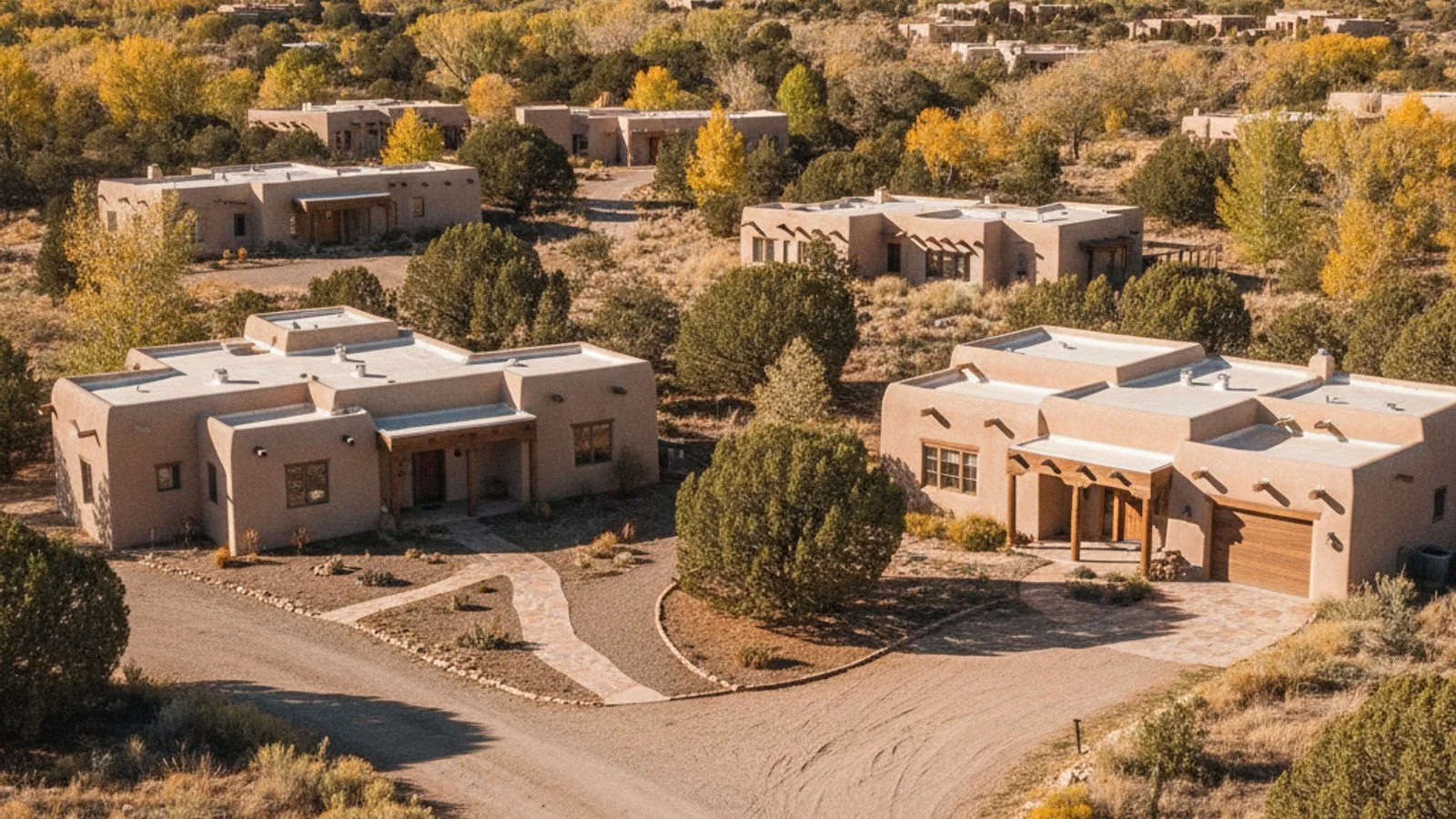
Santa Fe, NM draws people from all over the country for its distinctive adobe architecture, high-desert landscapes, and rich cultural history. The local housing market offers everything from historic downtown casitas to large mountain estates with sweeping views of the Sangre de Cristo Mountains. But for buyers considering a move, understanding the local safety landscape matters just as much as finding the right home. Evaluating a city's security requires looking past the surface to see how local law enforcement, medical facilities, and infrastructure function on a daily basis.
The city has a permanent population of around 87,500, yet it hosts millions of tourists every single year. This massive influx of visitors skews per-capita data, making the numbers look completely different than a typical town of its size. When you factor in the temporary population, the mathematical crime rate shifts dramatically. Here is what the latest data shows about crime, emergency response, and daily living in the area.
Santa Fe Crime Statistics Explained
Property offenses make up roughly 80% of all reported crime in Santa Fe, NM. Vehicle break-ins and burglary account for the vast majority of these incidents, especially in busy tourist areas. Visitors leaving valuables visible in parked cars create easy targets for opportunistic theft near popular trailheads, hotels, and shopping districts.
When comparing the overall crime rate to the US national average, Santa Fe crime numbers appear elevated at first glance. Because the FBI calculates crime per 100,000 residents, the millions of annual visitors inflate the per-capita statistics. The permanent population is relatively small, meaning the denominator does not account for the daily tourist presence that swells the city's actual footprint.
The murder rate in Santa Fe remains low, and most violent offenses are isolated incidents rather than random attacks. Overall violent crime does sit higher than the national average, though it represents a small fraction of the city's total reported offenses. Residents should lock their vehicles and secure their homes to deter the much more common property-related offenses. Adding simple home security measures like motion-sensor lights or visible cameras can deter property crime effectively.
Police and Emergency Response Times
The Santa Fe County Sheriff's Office recently implemented a 4/8/40 shift schedule to improve staffing and coverage. This pilot program, which ran through 2025 and was extended into 2026, dropped the department's vacancy rate to just 3%. A fully staffed department means more patrol units are available across the county at any given time, providing better coverage for both urban and rural areas.
Under this model, deputies work four 10-hour shifts a week with dedicated time for wellness. The schedule change led to a 53% decrease in overtime hours and a measurable drop in response times for Priority Level 1 calls. Officers report higher job satisfaction, which translates to a more active and engaged presence on the streets. Traffic stops and proactive patrols have increased as a direct result of this scheduling adjustment.
The city also uses an Alternative Response Unit for low-threat 911 calls. This team handles non-emergency welfare checks and behavioral health calls without tying up patrol cars or fire engines. By dispatching specialized personnel to these situations, armed officers remain available for more serious emergencies. This targeted approach ensures that the right professionals respond to the right situations, improving overall public safety outcomes.
Hospitals and Medical Infrastructure
Christus St. Vincent Regional Medical Center on St. Michael's Drive is the primary healthcare facility for the area. The hospital holds a Level III trauma center designation and operates more than 200 private patient beds. This facility serves as the largest medical center north of Albuquerque, providing care access to residents across several northern counties.
The emergency department features 34 treatment rooms and two dedicated trauma bays to handle severe injuries. It also includes specialized behavioral health assessment rooms to support patients in crisis. Having this level of emergency infrastructure nearby gives residents peace of mind when unexpected medical events occur.
Beyond the main hospital, the region supports a broad network of urgent care and specialty clinics. These localized centers handle minor injuries and routine medical needs, keeping the main emergency room clear for severe trauma cases. Buyers moving to the outskirts of the city will still find nearby clinics for everyday healthcare, reducing the need to drive into the center of town for basic appointments.
Real Estate Types and Property Taxes
Median home prices in Santa Fe range from $550,000 to $799,000 depending on the zip code and the month in 2026. The local housing inventory features distinct architectural styles, with Pueblo Revival and territorial designs dominating the market. Buyers will find flat roofs, exposed vigas, and stucco exteriors throughout most neighborhoods, maintaining the city's historic aesthetic.
New Mexico property taxes follow a one-third fractional assessment rule. This means your property is taxed on exactly one-third of its assessed value, rather than the full market price. The median effective property tax rate in the county sits around 0.54%, which remains lower than many other states and helps offset the higher purchase prices.
State law also protects homeowners from sudden tax spikes that can disrupt a household budget. For owner-occupied primary residences, annual valuation increases are capped at 3%. Buyers purchasing luxury properties should budget for the 2026 High-End Excise Tax, which applies a 3% fee on any sale amount exceeding $1,029,000 to fund affordable housing initiatives.
Public Parks, Lighting, and Commuter Access
The state allocated a $5 million grant through spring 2026 to fund capital improvements at Fort Marcy Park. These upgrades focus on expanding accessibility and installing new security lighting across the grounds. Improved lighting allows residents to use the walking paths and recreational fields safely during the early evening hours. The funding also supports general landscaping and facility maintenance to keep the park welcoming for daily use.
Municipal maintenance crews prioritize street lighting and infrastructure upkeep around the downtown plaza. Well-lit public spaces deter property crime and improve visibility for pedestrians walking after dark. Outside the city center, street lighting becomes intentionally sparse to preserve the area's famous dark-sky views, meaning residents often rely on their own exterior home lighting to walk from their cars to their front doors.
Commuters rely on I-25 and US-84 to reach surrounding areas. The drive to Albuquerque takes about an hour via I-25, making it a manageable trip for work or larger airport access. Public transportation, including the Rail Runner Express train, offers a reliable alternative for commuters heading south into Albuquerque without driving. The train provides a relaxed commute with Wi-Fi, bypassing highway traffic entirely.
Frequently Asked Questions
Is it safe to walk around Santa Fe at night?
Walking around the downtown plaza and Canyon Road after dark is generally secure, as these areas feature good street lighting and regular foot traffic. Visitors should stay aware of their surroundings and use rideshare services if traveling to less illuminated neighborhoods on the outskirts. Planning your transportation in advance ensures a smooth trip back to your hotel or home.
Is Santa Fe safer than Albuquerque?
Santa Fe records fewer total crimes and a lower violent crime rate than Albuquerque. Because Santa Fe is smaller and hosts massive tourist crowds, its per-capita property crime rate can appear statistically similar to larger cities. Looking at raw incident numbers provides a clearer picture of the difference between the two locations.
Which areas of Santa Fe have the lowest crime rates?
Neighborhoods in the northern and eastern foothills typically report the lowest property crime statistics. Areas near Cerrillos Road tend to see higher rates of vehicle break-ins and retail theft due to the concentration of commercial businesses. Buyers prioritizing low crime data often focus their search on residential streets further from the main commercial corridors.