
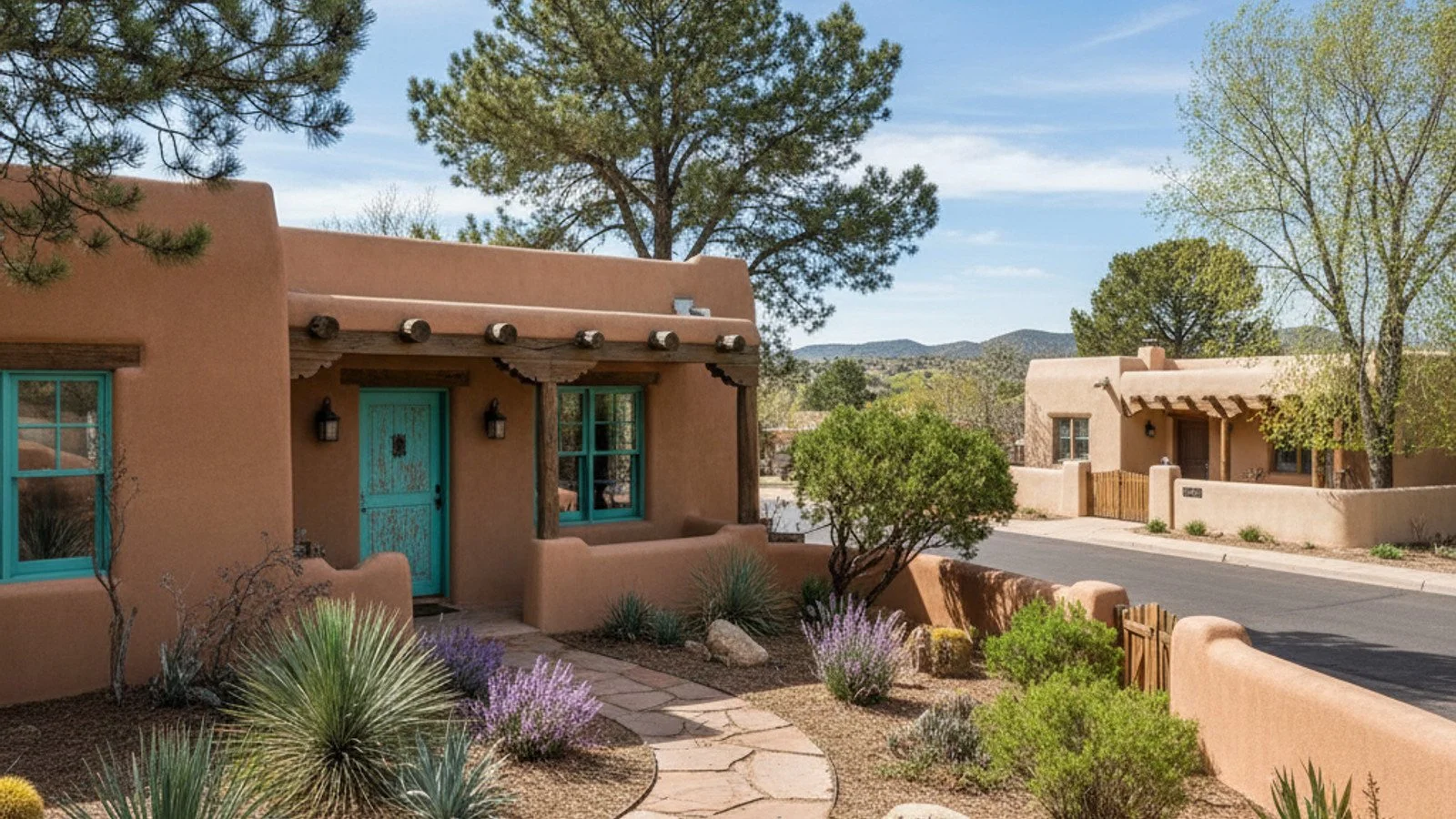
Purchasing a home in Northern New Mexico requires a clear understanding of local carrying costs. While the architecture and high-desert landscapes draw buyers from across the country, the financial realities of ownership often come with a learning curve.
Figuring out property taxes santa fe nm style means navigating specific state formulas and local mill levies. New Mexico handles property valuation differently than many other states, utilizing fractional assessments and strict caps on annual increases.
Knowing how these calculations work before you close on a property can save you from unexpected financial surprises. This guide covers current rates, the assessment process, and crucial deadlines you need to track.
How Property Taxes are Calculated in Santa Fe
The valuation process begins with the New Mexico Property Tax Division and the Santa Fe County Assessor. These offices work together to determine the market value of residential real estate every year.
New Mexico applies a fractional assessment system to residential properties. The taxable value of a home is set at exactly one-third of its appraised market value.
The basic formula takes the market value, divides it by three, and subtracts any eligible exemptions to find the net taxable value. This final figure is then multiplied by the local mill rate to determine your annual bill.
Buyers are often surprised to see that their assessed value is significantly lower than their purchase price. This one-third fractional assessment rule is the primary reason for that gap.
The New Mexico 3% Valuation Cap
State law strictly limits how much a residential property's assessed value can increase from year to year. For single-family owner-occupied properties, the annual valuation increase is capped at 3%.
This statutory cap protects current homeowners from sudden tax spikes when the local housing market experiences rapid appreciation. However, the cap is entirely removed when a property changes ownership.
When looking at homes for sale in Santa Fe, you should always calculate your future carrying costs based on your purchase price rather than the previous owner's tax bill. New buyers will see the property reassessed at current market value during their first full year of ownership.
Current Santa Fe County Residential Property Tax Rates
The effective property tax rate in Santa Fe typically hovers around 0.8%, depending on your specific district and local mill levies. This sits slightly below the national median effective rate of 0.89%.
With a median single-family home price in Santa Fe reaching approximately $687,000 in 2026, a typical annual tax bill runs roughly $5,496. Mill rates will vary based on whether the home is located within city limits or the unincorporated county.
Local bond measures for school districts and infrastructure also influence the final mill rate applied to a specific neighborhood. Santa Fe's relatively low effective tax rate helps offset the higher-than-average entry price for local real estate.
New Mexico Property Tax Exemptions in Santa Fe
State law provides several specific exemptions that can lower a homeowner's annual tax burden. These programs are administered directly by the local county assessor.
It is crucial to understand that exemptions are deducted from the property's taxable value, not subtracted from the final tax bill. Applying these deductions before the local mill rate is calculated reduces the overall basis for your taxes.
Missing the filing deadline for these exemptions is one of the most common and costly mistakes new residents make during their first year of homeownership. You must proactively apply for these benefits, as they are not automatically granted at closing.
Head of Family Exemption
The Head of Family exemption is the most widely used homeowner tax benefit in the state. It reduces the taxable value of a primary residence by $2,000.
This benefit is available to any New Mexico resident who provides more than half the financial support for their household. You only need to apply for this exemption once, and it will automatically carry over in subsequent years.
Veterans and Disabled Veterans Exemptions
Military veterans and their surviving spouses have access to substantial property tax relief. The standard Veterans Exemption recently increased, allowing for a taxable value reduction of up to $10,000.
The Disabled Veteran Tax Exemption offers even deeper relief, potentially exempting up to 100% of the property from taxation. This depends entirely on the specific disability rating recognized by the Department of Veterans Affairs.
Claiming either benefit requires a Certificate of Eligibility from the New Mexico Department of Veterans Services. You must present this certificate to the county assessor when filing your exemption paperwork.
Important Deadlines and Administrative Resources
Managing your property taxes requires tracking a few critical dates throughout the calendar year. The county operates on a strict schedule for assessments, appeals, and payments.
Notices of Value are typically mailed to property owners in the spring, usually around April or May. You have exactly 30 days from the mailing date to file an appeal or claim any new exemptions.
Official tax bills are mailed by November 1st each year. Setting a calendar reminder for the following payment deadlines ensures you avoid unnecessary penalty fees and delinquent notices:
First-half payments are due on November 10th and become officially delinquent on December 11th.
Second-half payments are due on April 10th and become delinquent on May 11th.
Payments can be submitted online, mailed, or paid in person at the Santa Fe County Treasurer's Office located at 100 Catron Street, Santa Fe, NM 87501.
Frequently Asked Questions
Are property taxes included in your mortgage payment?
Most conventional, FHA, and VA loans require lenders to collect property taxes as part of your monthly mortgage payment. These funds are held in an escrow account and paid directly to the Santa Fe County Treasurer on your behalf. If you purchase a $687,000 home with a substantial down payment, you might have the option to waive escrow and pay the county directly.
What happens if you don't pay your property taxes?
Failing to pay by the December 11th or May 11th delinquency dates results in immediate penalty fees and accruing interest. The Santa Fe County Treasurer will issue multiple delinquent notices to the property owner over time. If taxes remain unpaid for three years, the state can seize the property and sell it at a public delinquent property tax auction.
Do people over 65 pay property taxes in New Mexico?
Yes, seniors are still required to pay property taxes on their New Mexico real estate. However, residents aged 65 or older who meet specific income limits can apply for the Low Income Value Freeze program. This program locks in the assessed value of the home, preventing future tax increases even if the local market appreciates.