
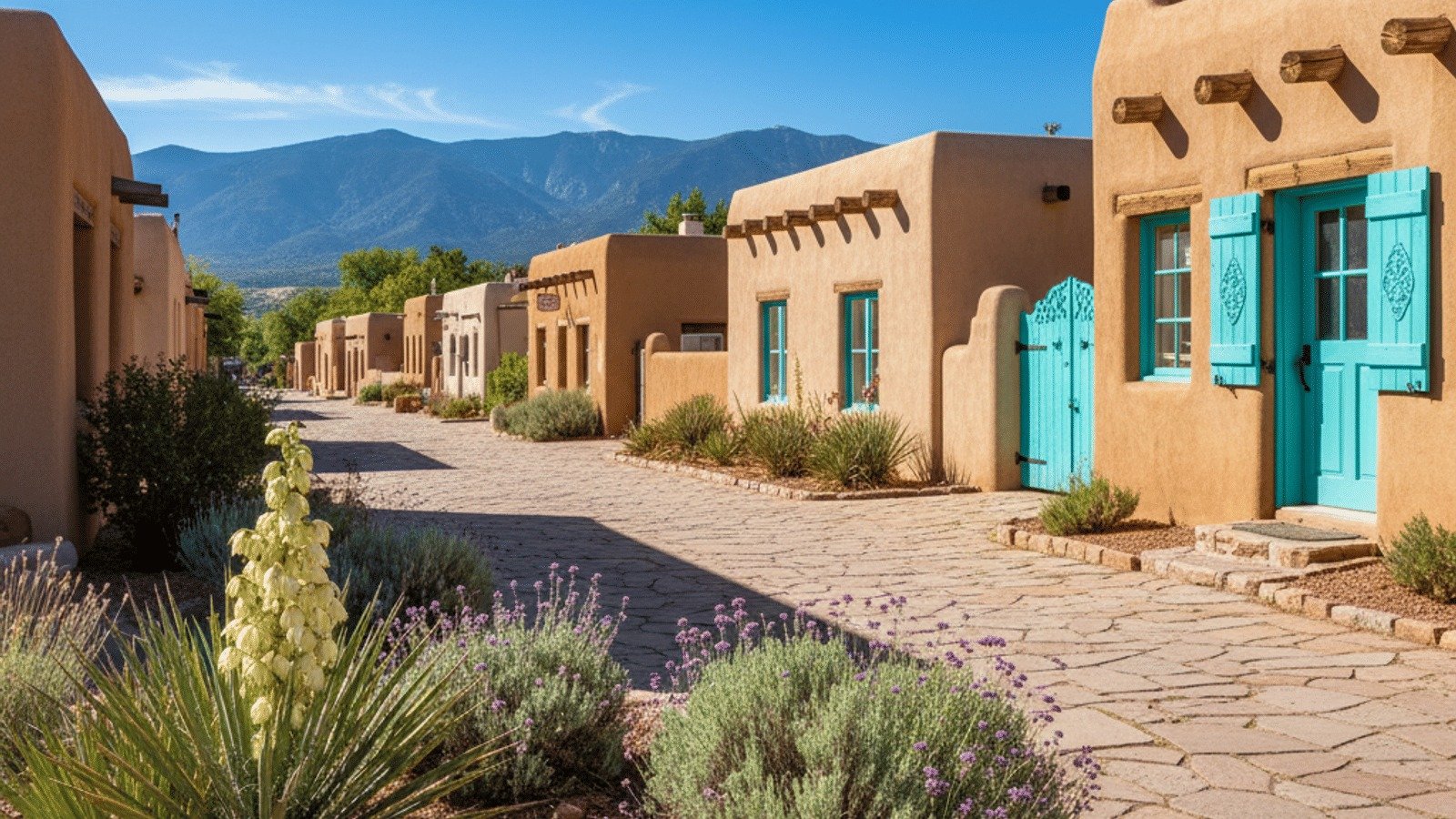
When people dream of moving to Santa Fe, they usually picture the adobe architecture, the stunning Sangre de Cristo Mountains, and the world-class art scene. It’s a place that captures your heart quickly, but your head eventually has to ask the practical question: "Is the City Different actually within my budget?"
The short answer is that Santa Fe is a destination city, and that popularity comes with a price tag. It is currently the most expensive housing market in New Mexico. However, the full financial picture is a bit more nuanced than just looking at sticker prices on homes. While housing costs can be steep, other expenses like property taxes and utilities are often surprisingly reasonable.
In this guide, we’ll break down exactly what it costs to live here—from rent and mortgages to the price of a gallon of milk—so you can decide if a move to the Land of Enchantment makes financial sense for you.
Santa Fe Cost of Living Index: The Big Picture
If you look at the statistics, the overall cost of living in Santa Fe generally hovers around 12% to 18% higher than the US national average. However, that number doesn't tell the whole story.
When you compare Santa Fe to the rest of the state, the gap widens. Living here is significantly more expensive—often 20% to 28% higher—than the New Mexico average, including Albuquerque.
The main culprit driving these numbers up is housing. While goods, services, and groceries remain fairly moderate, housing costs here can be 60% or more above the national average. Essentially, your daily coffee and internet bill might look the same as they do in the Midwest, but the cost to put a roof over your head will be the primary budget consideration.
Housing Costs: Buying a Home in Santa Fe
Housing is the biggest line item for anyone relocating here. The market has been historically strong for sellers, though we have seen some stabilization in late 2025 and moving into 2026. Inventory is tight, and demand remains high.
To understand the market, it helps to break the city down into tiers, as prices vary wildly depending on which side of the street you live on.
Tier 1: Luxury and Historic
If you are looking at homes for sale in the Historic Eastside or the famous Canyon Road area, you are looking at the premium market. These are often multi-million dollar estates where you are paying for history, walkability to the Plaza, and that classic adobe charm. In this tier, prices easily exceed $1,000,000.
Tier 2: Mid-Range
For more space and a slightly lower price point, buyers often look to areas like South Capitol or Eldorado. Eldorado is a bit further out, offering larger lots and dark night skies. In this mid-range tier, the median home price typically lands between $575,000 and $675,000.
Tier 3: Accessible Entry Points
If you are looking for more affordable options, neighborhoods like Tierra Contenta real estate, the Airport Road corridor, and Nava Ade offer great value. These areas are popular because they provide modern amenities at a much more accessible price point, generally ranging from $350,000 to $450,000.
It is also worth noting that short-term rentals have impacted inventory here. Because Santa Fe is a major tourist hub, many potential starter homes are purchased as vacation rentals, which keeps the supply for long-term residents lower than we’d like.
Rental Market: Trends and Vacancy Rates
If you aren't ready to buy yet, be prepared for a competitive rental environment. High demand and low inventory mean that finding a good rental often requires moving quickly.
Rent prices here are significantly higher than the New Mexico average. You can expect the average rent to hover between $1,600 and $1,800 per month.
1-Bedroom Apartments: typically range from $1,300 to $1,600.
2-Bedroom Units: usually land between $1,600 and $2,000.
Seasonality plays a huge role in the rental market. Finding a long-term lease in the summer can be difficult because landlords often flip units to short-term vacation rentals for the Opera season and summer tourism. If you can time your move for the off-season, you might have better luck.
Utility Costs: Climate and Altitude Factors
One of the pleasant surprises for newcomers is that utility bills in Santa Fe are often lower than the US average. This is largely due to our high-desert climate—we don't experience the extreme humidity that drives up cooling costs in the South or East.
Electricity and Cooling
The average electric bill usually runs between $70 and $120 per month, depending on the season. A unique local feature is the "swamp cooler" (evaporative cooling). Many homes use these instead of refrigerated air conditioning. They work beautifully in our dry heat and cost a fraction of what traditional AC costs to run, though refrigerated air is becoming more common in newer builds.
Heating and Gas
Winters do get cold here. Most homes use gas heating, so you will see your gas bill spike from December through February. A summer gas bill might be as low as $25, but winter bills can easily climb over $100.
Water and Internet
Water rates in Santa Fe are tiered to encourage conservation, as we are in a drought-prone region. The more you use, the more you pay per gallon. For connectivity, standard high-speed internet averages around $65 per month.
Groceries, Healthcare, and Everyday Expenses
Once you move past housing, the cost of living normalizes a bit.
Groceries in Santa Fe are right around the national average. You have a wide range of options to fit your budget. You can shop at budget-friendly staples like Smith’s or Albertsons, or you can spend a premium at Whole Foods, Kaune’s Neighborhood Market, or the incredible local Farmers Market.
Healthcare is a mixed bag financially. While premiums can sometimes be lower than in major coastal cities, access to specialists can be a challenge. Many residents find themselves driving to Albuquerque for specific procedures or specialists, so you should factor that travel time and gas into your "health budget."
Dining out can be pricey if you stick to the tourist areas. Because the economy relies heavily on visitors, restaurants near the Plaza command higher prices. However, if you eat where the locals eat—finding those hidden gems for breakfast burritos or New Mexican cuisine away from the city center—the prices drop significantly.
Tax Benefits: Where You Might Save Money
Here is the good news: New Mexico offers some financial bright spots that can help offset the higher housing costs.
Property taxes in New Mexico are among the lowest in the United States. The effective property tax rate is often around 0.50% to 0.55%. Furthermore, taxes are based on the "taxable value" of the home, which is typically just one-third of the assessed value. This is a huge relief for buyers coming from high-tax states like Texas or New Jersey.
Income tax is moderate, and recent changes have made the state more friendly to retirees by adjusting exemptions for Social Security income.
The one tax that catches people off guard is the Gross Receipts Tax (GRT). Instead of a standard sales tax, we have GRT, which applies to goods and many services. The rate in Santa Fe generally hovers between 8.19% and 8.44%. While it is slightly high, the savings on property tax usually outweigh the difference for homeowners.
Transportation: Getting Around the City Different
Santa Fe is a sprawling city, and outside of the downtown core, it is largely car-dependent. Most residents own a vehicle to get to the grocery store, trailheads, or work.
Fortunately, gas prices here are typically 5% to 10% below the national average, which helps.
For public transit, the Santa Fe Trails bus system covers the city, and fares are very affordable (often around $1.00, with frequent pilot programs offering free rides). If you need to commute to Albuquerque, the Rail Runner Express train is a comfortable and scenic option that saves you from driving on I-25.
Commuting is a reality for many. A significant portion of the workforce commutes to Los Alamos National Laboratory or Albuquerque. While the drive is scenic, it does impact your fuel budget and wear-and-tear on your vehicle.
Comparison: Santa Fe vs. Albuquerque Cost of Living
We often see people torn between relocating to New Mexico generally, or Santa Fe specifically. The comparison usually comes down to budget versus lifestyle.
Albuquerque is significantly cheaper. The overall cost of living there is roughly 20% lower than Santa Fe. The biggest difference, again, is housing; a comparable home in Santa Fe can be 80% more expensive than in Albuquerque.
If your priority is maximizing square footage and minimizing costs, Albuquerque wins. However, people pay the "Santa Fe Premium" for the lifestyle—the walkability, the distinct small-town feel, the art markets, and the immediate access to nature. You are paying to live in a world-renowned cultural hub rather than a standard metropolitan city.
Lifestyle Costs: Entertainment and Outdoors
One of the best financial perks of living here is that the best entertainment is free. If you enjoy the outdoors, your weekend activities—hiking the Dale Ball Trails or climbing Atalaya Mountain—cost absolutely nothing.
For paid entertainment, Ski Santa Fe is remarkably affordable compared to resorts in Colorado. You can enjoy a day on the slopes without the exorbitant lift ticket prices found in Vail or Aspen.
Cultural activities like the Santa Fe Opera or the various museums can be pricey, but being a local has its perks. Many museums offer "free Sundays" or discounts for New Mexico residents, allowing you to enjoy the city's rich culture without paying tourist prices every time.
Common Questions About Santa Fe Living Costs
Is Santa Fe expensive to live in?
Compared to the rest of New Mexico, yes, Santa Fe is expensive, particularly regarding housing. However, for those relocating from high-cost coastal areas like California or New York, the overall cost of living often feels quite affordable.
What is a good salary to live in Santa Fe?
To rent comfortably without being house-poor, a salary of $70,000 or more is recommended for a single person. If you plan to buy a home, especially in mid-range neighborhoods, a household income of $100,000+ is often necessary to manage mortgage payments comfortably.
Are property taxes high in Santa Fe?
No, this is one of the biggest financial benefits of living here. New Mexico has some of the lowest property tax rates in the country, and taxes are calculated on taxable value (one-third of market value), keeping annual bills surprisingly low.
How much are utilities in Santa Fe?
Utility costs are generally moderate. You can expect to pay between $70 and $120 for electricity, while gas bills fluctuate significantly from summer lows of $25 to winter highs of $100+.