
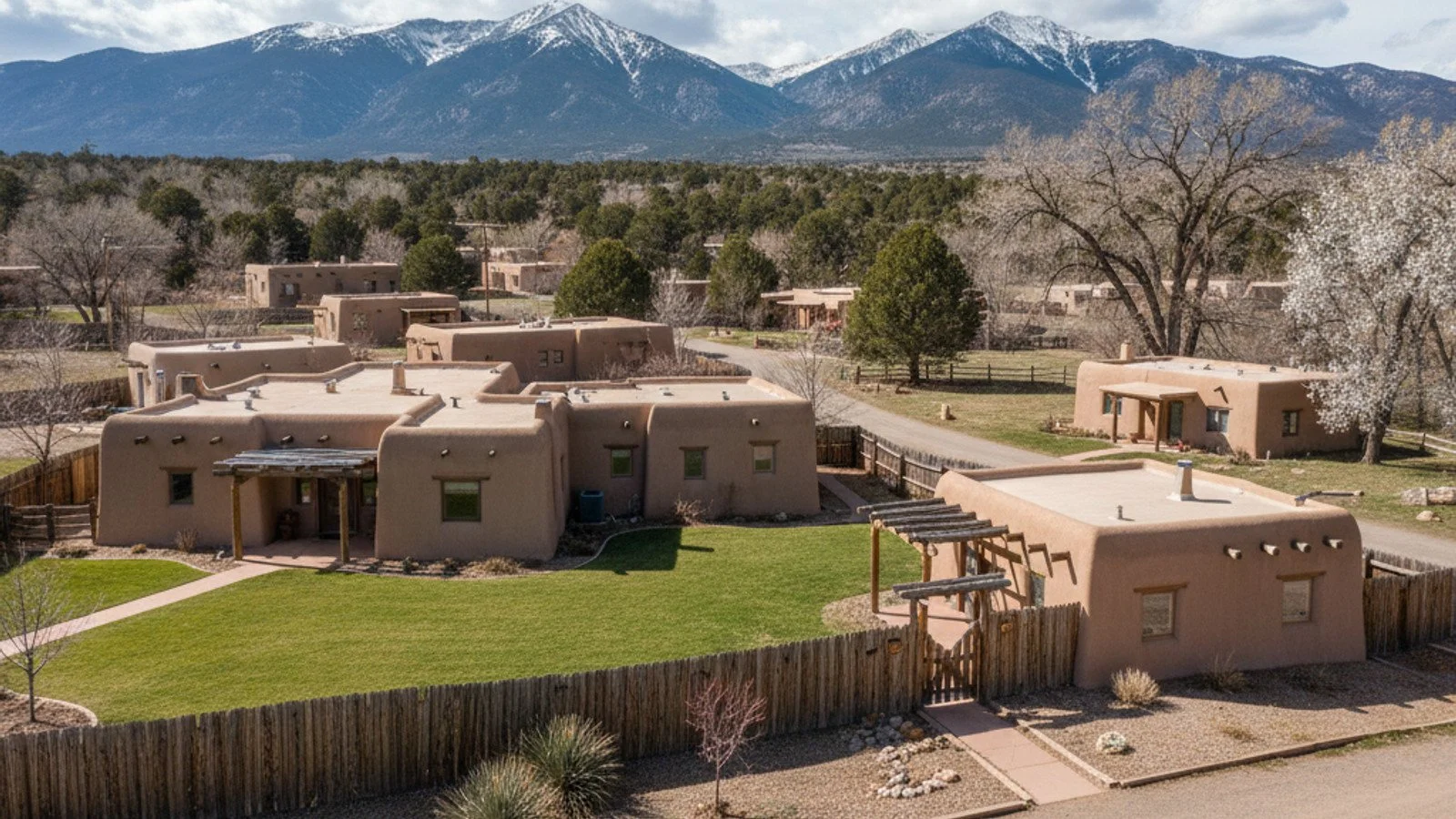
Northern New Mexico offers two distinct real estate markets separated by a 70-mile drive along the Rio Grande. Buyers comparing Santa Fe vs Taos will find different price points and property styles in each location. The trip between the two cities takes about an hour and a half via the Low Road.
Santa Fe, NM generally carries a higher median price tag and a larger population. Taos, NM offers more rural acreage options and a smaller-town environment.
Home Prices and Property Styles in Each Market
The median home price in Santa Fe, NM ranges from $600,000 to $850,000 in 2026, depending on the specific zip code. Inventory here moves faster due to a larger pool of inbound buyers.
Taos, NM offers a more affordable entry point, with median home prices sitting between $425,000 and $600,000. The available housing stock in Taos leans toward rural acreage, off-grid homes, and traditional adobe properties.
Santa Fe features a wider variety of construction types. Buyers can find modern condos near the downtown plaza, historic adobe structures, and large estates in the surrounding county.
Daily Living Expenses and Local Taxes
Housing costs drive the primary gap in daily living expenses between the two cities. Homes on the outskirts of Taos often rely on propane, private wells, and solar systems, which changes monthly utility budgeting. Properties in central Santa Fe typically connect to municipal water and natural gas lines.
Property tax rates provide a slight advantage to Taos County residents. Buyers should verify the exact mill levy for their specific address before closing.
Santa Fe County: The average property tax rate sits around 0.45% of the assessed value.
Taos County: Rates generally range from 0.33% to 0.53%, depending on the specific utility district.
Groceries and dining out cost slightly more in Santa Fe due to the higher concentration of premium restaurants and imported goods. Taos offers plenty of local dining options, but fewer large-scale grocery chains.
Ski Resorts, Parks, and Local Amenities
Both locations offer immediate access to the Sangre de Cristo Mountains, but the ski experiences differ. Taos Ski Valley features higher elevation and steeper terrain, drawing advanced skiers to its runs. Ski Santa Fe provides a wider mix of beginner and intermediate trails.
Within the city limits, Santa Fe Railyard Park offers green space and walking paths. Taos residents use Kit Carson Park for outdoor recreation near the town center.
Santa Fe features the Georgia O'Keeffe Museum, Meow Wolf, and numerous galleries along Canyon Road. Taos offers its own rich cultural history, anchored by the Taos Pueblo. This living Native American community is a UNESCO World Heritage site and a major center for regional art.
Local Infrastructure and Daily Commutes
Healthcare access and transportation are major factors for buyers comparing these two markets. The distance between the cities means residents experience different levels of convenience for air travel and medical specialists.
Buyers should review the specific county services available at their target property. This is especially true if they are looking at rural acreage outside the main city limits.
Healthcare Facilities
Santa Fe, NM offers specialized medical care at Christus St. Vincent Regional Medical Center. This facility handles complex procedures and houses numerous specialist clinics.
Taos, NM is served by Holy Cross Hospital, which manages routine medical needs and emergency care. Residents in Taos often drive the 90 minutes to Santa Fe for major medical procedures or specialist visits.
Highway and Airport Access
Air travel requires different commute times depending on your home address. Albuquerque, NM is home to the Albuquerque International Sunport, which is about an hour from Santa Fe. The drive from Taos to this major airport takes closer to two and a half hours.
Both cities operate regional airports for smaller flights. Local commuters rely on state highways, and snow removal services vary based on whether a property sits on a state-maintained road or a private dirt road.
Deciding Between the Two Markets
Choosing between these two Northern New Mexico locations comes down to budget and lifestyle preferences. Santa Fe provides faster airport access, specialized healthcare facilities, and a larger downtown commercial district.
Taos offers lower median home prices and larger parcels of rural land. Buyers focused on expert ski terrain and a smaller-town environment often prefer the Taos Valley.
Buyers should tour homes in both cities to understand the commute times and local infrastructure firsthand. Driving the routes between the two locations provides a clear picture of the regional geography.
Frequently Asked Questions
Is Santa Fe higher than Taos?
The town of Taos sits at an elevation of 6,969 feet, while Santa Fe rests slightly higher at 7,199 feet. This altitude difference means both cities experience snowy winters and cooler summer nights than the surrounding desert. Buyers should prepare for a period of altitude adjustment when moving to either location.
What's better, Taos or Santa Fe?
The choice depends entirely on your budget and daily needs. Santa Fe offers more extensive medical facilities, a larger airport, and a broader range of contemporary condo options. Taos provides a more rural setting with lower average property prices and steep terrain at its local ski resort.
Is the drive from Santa Fe to Taos difficult?
The trip takes about 90 minutes via the Low Road, which follows the Rio Grande and remains relatively flat and clear. The High Road to Taos is a scenic, winding mountain route that takes longer and requires winter tires or four-wheel drive during snowstorms. Commuters should check local weather advisories before taking the higher elevation route.