
New Mexico's two major hubs sit just 65 miles apart along the I-25 corridor, but their housing markets operate on different wavelengths. Buyers comparing Santa Fe vs Albuquerque will find a clear contrast in median prices, property styles, and daily transit options.
Albuquerque serves as the state's economic engine with a massive footprint and diverse housing inventory. Santa Fe offers a smaller, specialized market dominated by historic architecture and a higher barrier to entry.
Both cities attract buyers looking to live in New Mexico, but they cater to different budgets and architectural preferences. Investors and homebuyers should weigh the upfront costs against long-term appreciation trends and lifestyle benefits.
Everyday Expenses and Property Taxes
The median home price in Santa Fe, NM hovers around $600,000, while Albuquerque, NM properties average closer to $360,000. That gap dictates the broader cost of living for residents in both areas. Albuquerque generally offers lower costs for groceries, utilities, and local services.
Beyond the housing market, daily living expenses lean in favor of the larger city. A typical grocery run or monthly utility bill in Bernalillo County costs less than the equivalent in Santa Fe. Transportation costs also tend to be lower in Albuquerque due to shorter driving distances between commercial centers.
Santa Fe County assesses an effective property tax rate of roughly 0.55%, while Bernalillo County carries an effective rate closer to 0.90%. Buyers should calculate their estimated monthly payments to see how this difference impacts their budget. The lower tax rate in Santa Fe offsets a portion of the higher purchase price over the life of a loan.
Home Prices and Architectural Styles
By May 2026, buyers looking in Albuquerque can expect median prices between $346,000 and $380,000. The inventory here includes a broad mix of single-family detached houses, modern condos, and traditional ranch-style homes. This variety makes it easier to find entry-level properties compared to the northern market.
Albuquerque features distinct sectors that cater to different buyer preferences. The Northeast Heights area offers traditional single-family homes with larger lots, while Downtown provides access to newer condominium developments. This variety allows buyers to choose between suburban environments and dense, walkable corridors.
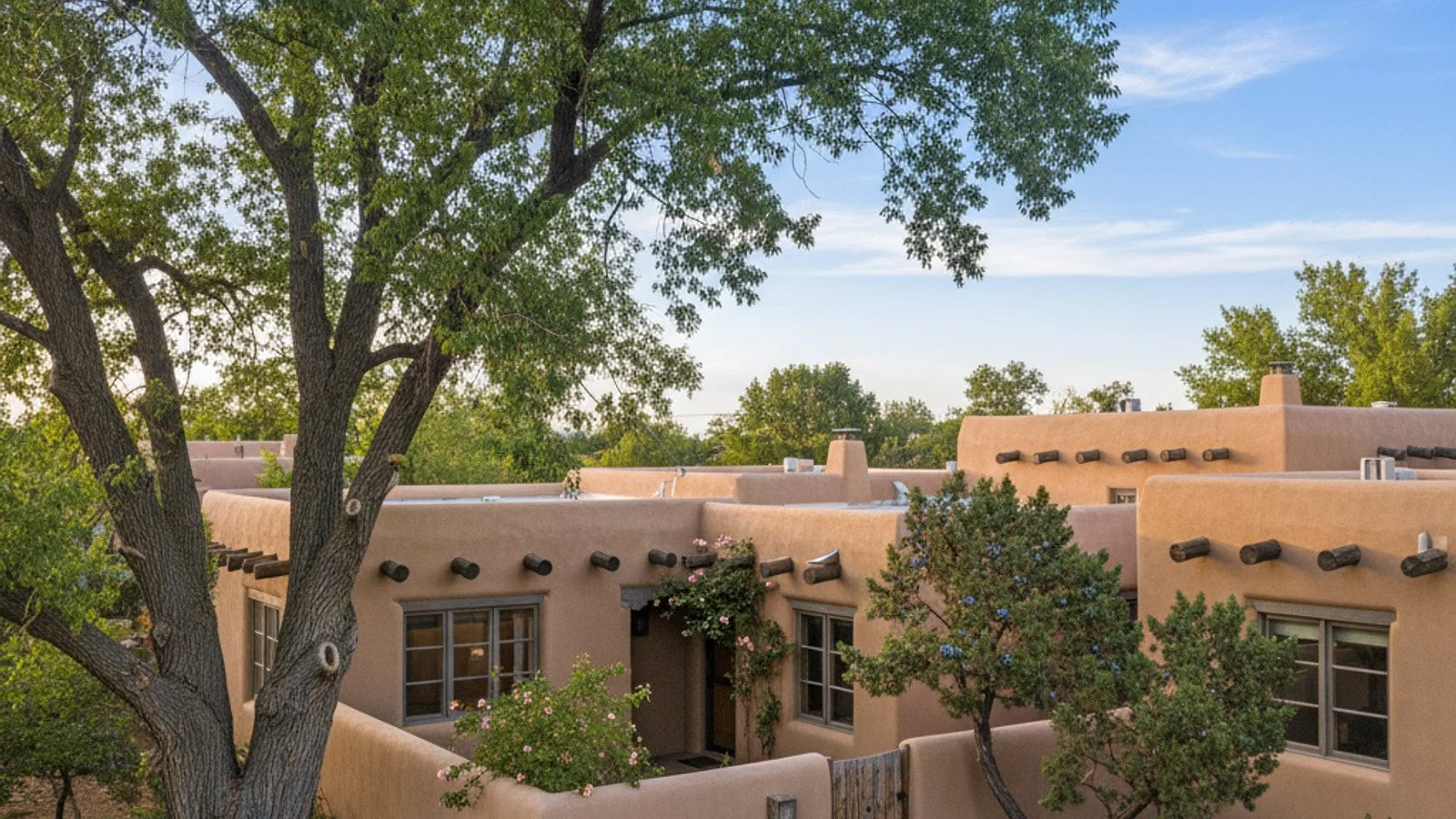
Santa Fe maintains a median price point between $580,000 and $625,000. Local historical zoning laws protect the city's visual identity, which keeps inventory tight and prices elevated. Buyers looking to live in Santa Fe will mostly find Pueblo Revival homes and authentic adobe architecture.
Homes in the northern city often feature flat roofs, exposed wooden vigas, and enclosed courtyards. Newer construction projects outside the historic center still incorporate these regional design elements to maintain neighborhood cohesion. The premium attached to these properties reflects both the architectural style and the limited land available for development.
Commute Times and Local Transit
Average daily commute times in both cities run roughly 23 to 25 minutes. Albuquerque sits squarely at the intersection of I-25 and I-40, making cross-town travel straightforward for daily drivers. The city grid makes navigation predictable for new residents learning the area.
Albuquerque operates a comprehensive public transport bus service that runs along major arterial roads like Central Avenue. The Alvarado Transportation Center serves as the primary hub for local routes. Drivers benefit from multiple river crossings that connect the west side to the main commercial districts.
Santa Fe features a more centralized, slower-paced road network that funnels traffic toward the historic center. The city layout follows historical wagon trails rather than a modern grid, which can slow down cross-town travel during peak tourist seasons. Most residents rely on personal vehicles, though local bus routes do connect the main residential areas to the Plaza.
The New Mexico Rail Runner Express connects the two cities with a 90-minute train ride. This commuter rail service allows residents to live in one city and work in the other without fighting highway traffic. For air travel, the Albuquerque International Sunport serves both populations, requiring a 65-mile drive from Santa Fe.
Recreation Access and Healthcare Facilities
Albuquerque residents have immediate access to the Sandia Mountains, the Rio Grande nature trails, and Petroglyph National Monument for outdoor recreation. The city maintains an extensive network of cycling paths along the river bosque. These accessible outdoor spaces provide year-round recreation options without requiring a long drive out of town.
The Sandia Peak Tramway offers Albuquerque residents quick access to high-altitude trails and winter sports. Santa Fe sits at a higher elevation, offering immediate proximity to the Sangre de Cristo Mountains and day-trip access to Bandelier National Monument. The nearby Pecos National Historical Park provides additional hiking and historical exploration opportunities.
Healthcare infrastructure scales with city size in both locations. Albuquerque hosts the University of New Mexico Hospital, the state's primary Level I trauma center, alongside a large network of specialized clinics. Santa Fe residents rely on Christus St. Vincent Regional Medical Center for emergency care and routine procedures.
Cultural amenities also differ in scale and focus. Albuquerque hosts large-scale events like the Albuquerque International Balloon Fiesta and features exhibits at the Albuquerque Museum and the Indian Pueblo Cultural Center. Santa Fe centers its cultural footprint around the historic Plaza, Canyon Road art galleries, and immersive installations like Meow Wolf.
Both cities offer excellent examples of the cuisine of New Mexico, but the dining scenes have different atmospheres. Albuquerque features countless casual diners and historic Route 66 eateries serving traditional red and green chile dishes. Santa Fe favors fine dining establishments and upscale restaurants that blend local flavors with international techniques.
Frequently Asked Questions
Is it cheaper to live in Albuquerque or Santa Fe?
Albuquerque offers a lower overall cost of living, particularly regarding housing costs and everyday goods. A typical grocery run or utility bill in Bernalillo County costs less than the equivalent in Santa Fe. However, buyers should remember that Santa Fe County charges a lower effective property tax rate, which helps balance out the higher home prices slightly.
How far is Santa Fe from Albuquerque?
The two cities are separated by about 65 miles along the I-25 corridor. Driving between the city centers usually takes just over an hour under normal traffic conditions. Commuters can also take the New Mexico Rail Runner Express, which completes the trip in about 90 minutes.
What are the main property types in Santa Fe?
The Santa Fe market is famous for its Pueblo Revival architecture and authentic adobe structures. Buyers will see flat roofs, exposed wooden vigas, and earth-toned stucco exteriors throughout most neighborhoods. Traditional single-family homes and townhouses also exist, but they typically incorporate these regional design elements to match the local aesthetic.