
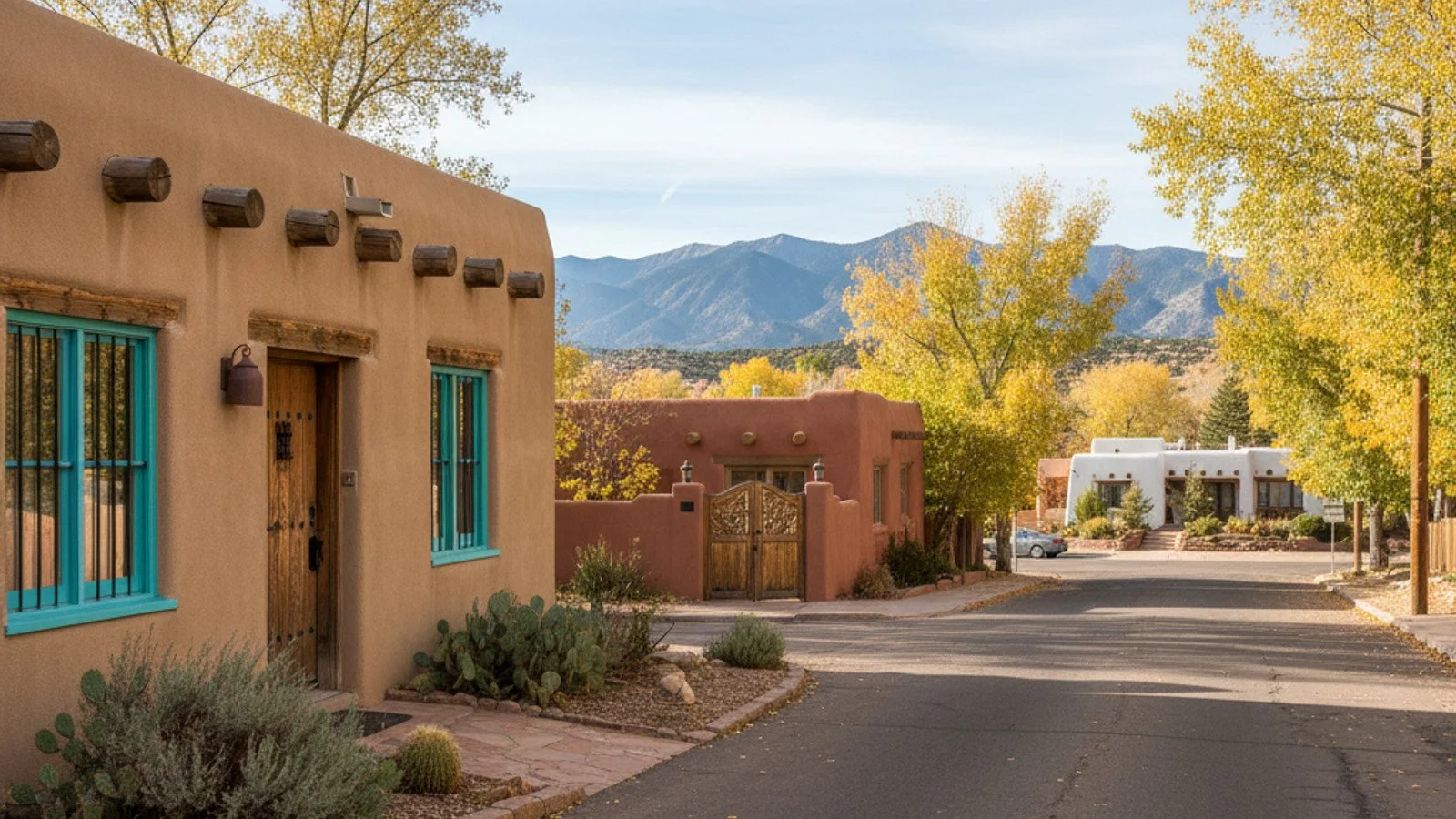
Santa Fe, NM sits at an elevation of 7,200 feet in the foothills of the Sangre de Cristo Mountains. The city is defined by its distinct adobe architecture and a slower pace of life than you will find in larger western hubs like Denver, CO or Phoenix, AZ. The population is relatively small, hovering around 90,000 residents in the greater metro area.
When asking the question, Is Santa Fe, NM Good for Young Professionals, the answer comes down to your career field and lifestyle preferences. People who move to Santa Fe, NM often prioritize outdoor access and a strong local arts scene over late-night entertainment. The city attracts remote workers, artists, and professionals in specialized scientific fields.
The city presents a unique environment for building a career. You trade the massive corporate campuses of major tech hubs for specialized research facilities, government offices, and regional healthcare centers. The film and television industry also maintains a steady presence in the region, offering production and administrative jobs.
The Local Job Market and Major Employers
Government, healthcare, and scientific research drive the Santa Fe, NM economy. The State of New Mexico is the largest single employer within the city limits, providing thousands of administrative, legal, and policy jobs. Many residents work for large state agencies like the Environment Department or the Department of Transportation.
Christus St. Vincent Regional Medical Center serves as another major employment anchor for medical staff and administrators. Beyond these central pillars, the hospitality and tourism sectors provide a steady stream of jobs. These service-industry roles often operate at different income brackets than government or research positions.
The average commute time in Santa Fe, NM is approximately 25 minutes. Traffic patterns are generally predictable, with the heaviest congestion occurring along Cerrillos Road and St. Francis Drive during morning and evening rush hours. Most daily driving involves short trips across town rather than long highway commutes.
Los Alamos National Laboratory
Los Alamos National Laboratory is located about 45 minutes northwest of Santa Fe, NM. The lab is a massive draw for scientific, engineering, and administrative talent. It remains one of the largest employers in northern New Mexico.
Many lab employees choose to live in Santa Fe, NM and commute up the hill to Los Alamos, NM. This commute requires driving on State Road 502, which can experience delays during winter weather. Carpooling and commuter buses are common solutions for daily lab workers.
Commuting and Regional Transit
The New Mexico Rail Runner Express connects Santa Fe, NM to Albuquerque, NM and points south. This commuter train is a practical option if you work in Albuquerque, NM but prefer living in Santa Fe, NM, or vice versa. The train offers Wi-Fi, allowing professionals to work during the ride.
Within the city, the Santa Fe Trails bus system provides local public transit. Most residents still rely on personal vehicles for daily errands, especially when accessing trailheads or traveling outside the downtown core. Biking is popular, though the hilly terrain requires some physical endurance.
Housing Costs and Average Rent in Santa Fe, NM
The median home price in Santa Fe, NM sits between $545,000 and $583,000 as of May 2026. This pricing places the city above the national average, making affordable housing a common topic of local discussion. Property taxes in New Mexico are relatively low, which helps offset some of the initial purchase costs.
Housing inventory includes historic adobe homes near the center, mid-century single-family residences, and newer condo developments on the south side. Buyers looking for entry-level homes often focus their search south of Interstate 25 or in neighboring communities. The Historic Eastside commands the highest premiums due to its proximity to Canyon Road.
Buying a Home
Buyers should expect a competitive market for properties priced under $500,000. These homes often receive multiple offers within the first week of listing. Working with a local agent helps buyers identify properties before they hit the broader market.
Condos and townhomes provide a more accessible entry point for first-time buyers. These properties frequently include HOA fees, which buyers should factor into their monthly budget calculations. Many condo communities offer shared amenities like road maintenance and snow removal.
Renting an Apartment
Average rent in Santa Fe, NM runs about $1,688 to $1,750 per month. A standard one-bedroom apartment typically costs between $1,600 and $1,688. Two-bedroom units generally start closer to $2,000 depending on the location and building amenities.
Rental inventory can be tight, particularly during the summer when seasonal workers and tourists arrive. Signing a lease in the late fall or winter often yields better availability and slightly lower rates. Newer apartment complexes on the south side of town tend to have more consistent vacancy rates.
Neighborhoods to Consider
Santa Fe, NM is divided into distinct geographic zones, each offering a different daily routine. The downtown area features narrow, historic streets and high walkability, while the outer subdivisions offer larger lots and easier highway access. The city lacks a traditional grid system, meaning roads often follow natural terrain and historical trails.
Choosing where to live depends on whether you prioritize walking to coffee shops or having a quick drive to the grocery store. Public transit access is strongest near the central corridors and tapers off as you move toward the foothills. Housing prices generally decrease as you move further south and west from the downtown plaza.
The Railyard District
The Railyard District is a central hub for dining, shopping, and transit. It sits adjacent to the downtown plaza and features a mix of modern apartments and renovated historic properties. The architecture here blends industrial elements with traditional stucco.
Living here means you can walk to the farmer's market, local art galleries, and the Rail Runner station. This convenience comes with a premium price tag for both renters and buyers. Parking can also be limited, so residents often rely on designated garage spaces.
South Capitol
South Capitol is located just south of the downtown area. It features tree-lined streets and a mix of early 20th-century architectural styles. You will find bungalows and brick homes alongside traditional adobe structures.
The area provides a straightforward walk or bike ride to state government offices. Properties here hold their value well due to the proximity to major employment centers. The neighborhood maintains a quiet residential feel despite being blocks away from commercial zones.
The Southside
The southside of Santa Fe, NM offers newer construction and larger commercial shopping centers. This area includes neighborhoods like Rancho Viejo, which features planned communities and extensive walking paths. The streets are wider and more uniformly laid out than in the historic center.
Living on the southside provides immediate access to Interstate 25 and State Road 599. This makes it a practical choice for professionals commuting to Albuquerque, NM or Los Alamos, NM. Home prices and rental rates here are generally more accessible than in the downtown districts.
Dining, Entertainment, and the Social Scene
Santa Fe, NM is famous for its culinary landscape, which features traditional New Mexican cuisine. The city supports a high concentration of independent restaurants, particularly around the downtown plaza and Canyon Road. Chain restaurants are mostly relegated to the southern commercial corridors.
The local nightlife operates on an earlier schedule than you might find in larger cities. Most kitchens close by 9:00 PM, and late-night entertainment options are limited to a handful of bars and music venues. The social scene centers more around happy hours, gallery openings, and weekend brunches.
Local Flavors and Breweries
Red and green chile are staples of the local diet, served on everything from breakfast burritos to enchiladas. You will find casual diners and upscale restaurants alike showcasing these ingredients. The debate over which chile is better is a permanent fixture of local conversation.
The city also supports several local breweries and taprooms. These spots serve as common gathering places after work and on weekends. Many breweries feature outdoor patios to take advantage of the region's 300 days of sunshine.
Cultural Hubs
The Santa Fe Opera provides world-class performances in an open-air theater during the summer months. It is a major draw for both locals and international visitors. Tailgating in the opera parking lot before a show is a longstanding local tradition.
For year-round entertainment, Meow Wolf offers an immersive art installation that doubles as a concert venue. This facility hosts touring bands and electronic music acts on a regular basis. The downtown plaza also hosts free concerts and cultural festivals throughout the summer.
Outdoor Recreation and High-Altitude Living
Santa Fe, NM sits at an elevation of approximately 7,200 feet above sea level. This high-altitude desert environment means the city experiences four distinct seasons, including winter snow and summer monsoons. The dry climate keeps humidity low year-round.
New residents should plan for altitude sickness during their first few weeks. Drinking extra water and limiting alcohol intake helps the body acclimate to the thinner air. Sun protection is also necessary, as the UV index is intense at this elevation.
Trails and Green Spaces
The Dale Ball Trails offer over 20 miles of hiking and mountain biking routes just outside the city center. These trails connect to the Atalaya Mountain trail, which provides steep climbs and expansive views. The trailheads are easily accessible, allowing for quick hikes after work.
Within the city limits, Fort Marcy Park offers open green space, a recreation center, and historical markers. It is a popular spot for dog walking and outdoor exercise. The city maintains several paved urban trails for cycling and jogging.
Winter Sports and Forest Access
The Santa Fe National Forest borders the city to the east, providing vast acreage for camping and exploration. The road up the mountain leads directly to Ski Santa Fe. The Pecos Wilderness is also nearby, offering multi-day backpacking routes.
The ski area operates from late fall through early spring, offering runs for various skill levels. It is located just 16 miles from the downtown plaza, making half-day ski trips a practical weekend option. The base elevation of the ski basin starts at over 10,000 feet.
Frequently Asked Questions
Is Santa Fe an expensive place to live for young professionals?
Yes, the cost of living in Santa Fe, NM is higher than the national average and higher than most other cities in New Mexico. Housing costs are the primary driver of this expense, with median home prices hovering around $545,000. Groceries and utilities also run slightly above average due to the city's relatively isolated location.
How does Santa Fe compare to Albuquerque for young professionals?
Albuquerque, NM is a much larger metropolitan area with a more diversified economy and lower housing costs. Living in Albuquerque, NM provides access to an international airport and major interstate crossroads. Santa Fe, NM offers a smaller-town feel, immediate access to mountain trails, and a specialized job market focused on government and research.
What are the crime statistics in Santa Fe?
Santa Fe, NM experiences property crime rates that are higher than the national average, particularly regarding auto theft and burglary. Violent crime rates remain relatively low compared to major urban centers. Residents rely on local police department data and neighborhood watch programs to stay informed about specific areas.