Area

Canyon Road, Santa Fe, NM: The Ultimate Guide to the Historic Arts District

If you ask anyone who lives here to describe the heart of Santa Fe’s cultural scene, they usually point you toward the "Magical Half-Mile." Canyon Road isn't just a street; it is the densest concentration of art galleries in the entire country, weaving through the historic fabric of the city.

For visitors and potential homebuyers alike, this area offers a sensory experience you can’t really find anywhere else. As you walk the gentle incline, the smell of piñon wood smoke often hangs in the air, dried chili ristras hang from portals, and the Sangre de Cristo Mountains provide a perfect backdrop.

Before you head over, there is one common confusion to clear up. Because it is a famous destination, many people ask if Canyon Road is "open." The road itself is a public street, so you can walk or drive it 24/7. However, the galleries and businesses generally operate from 10:00 AM to 5:00 PM. While the road is beautiful at sunrise, the doors won't open until mid-morning.

From Humble Footpath to World-Class Art Colony

To understand the real estate and the vibe here, you have to look at the history. Long before it was a destination for fine art, this road was a humble farming trail running alongside the Acequia Madre (the "Mother Ditch"), which still irrigates the trees and gardens today. It was the route wood haulers used to bring firewood down from the mountains into the city center.

The transformation into an art colony really began in the 1920s. A group of artists known as "Los Cinco Pintores" (The Five Painters) moved in and began building their own adobe homes. They were young, broke, and looking for a cheap place to live and paint. Today, those "humble" homes are some of the most desirable properties in the Southwest.

As you explore, keep an eye out for historic landmarks that anchor the neighborhood. El Zaguan, home to the Historic Santa Fe Foundation, is a stunning example of a hacienda-style building with a garden that feels like a secret oasis. You might also spot the Olive Rush House and Studio, which serves as a testament to the Quaker artist who helped shape the district's identity. This history dictates the architecture you see today—low-slung buildings, thick adobe walls, and narrow streets that were never designed for modern SUVs.

Navigating the Galleries: A Collector’s Paradise

With over 80 to 100 galleries packed into such a short stretch, it can be overwhelming to know where to start. The variety here is staggering. You aren't just looking at one style; you will find everything from contemporary abstract paintings and large-scale wind sculptures to traditional Native American pottery and Navajo weavings.

One of the unique features of Canyon Road is the "sculpture garden" culture. Unlike big city galleries that are purely indoor spaces, many properties here have deep front yards filled with bronze and kinetic art. It encourages a slower pace where you browse outside before stepping in.

If you are planning a day of viewing, here is a simple strategy: Start at the bottom of the road (near Paseo de Peralta) and work your way up.

  • Contemporary Art: You’ll find incredible modern works and kinetic wind sculptures (like those at Wiford Gallery) that move with the breeze.

  • Western & Traditional: As you wander, you will see classic oil paintings capturing the Western landscape and cowboy culture.

  • Historic Gems: Don't miss the smaller, tucked-away spots like the Meyer Gallery, which often feature incredible regional artists.

Where to Eat: Canyon Road Restaurants & Dining

Walking the road is a workout—it is a steady uphill climb—so knowing where to refuel is essential. The dining scene here is just as artistic as the galleries, often housed in centuries-old buildings that add to the atmosphere. These aren't just tourist stops; they are culinary destinations in their own right.

  • Geronimo: Located in the historic Borrego House (built in 1756), this is often cited as one of the best restaurants in Santa Fe. It offers global eclectic fine dining and is perfect for a celebratory dinner.

  • The Compound Restaurant: Famous for its design by Alexander Girard, this spot focuses on seasonal menus and has one of the most beautiful patios in the city.

  • El Farol: This is Santa Fe’s oldest restaurant and bar. It is the place to go for tapas, steaks, and world-class flamenco shows. The walls are covered in murals painted by early artists who traded art for drinks.

  • The Teahouse: If you want something more casual, this is a local favorite located at the top of the commercial district. They have a massive tea selection and great breakfast and lunch options.

Living on Canyon Road: Historic Eastside Real Estate

For many of my clients, buying a home in the Historic Eastside is the ultimate Santa Fe dream. When we look at homes for sale in this area, we aren't just buying square footage; we are buying a piece of history.

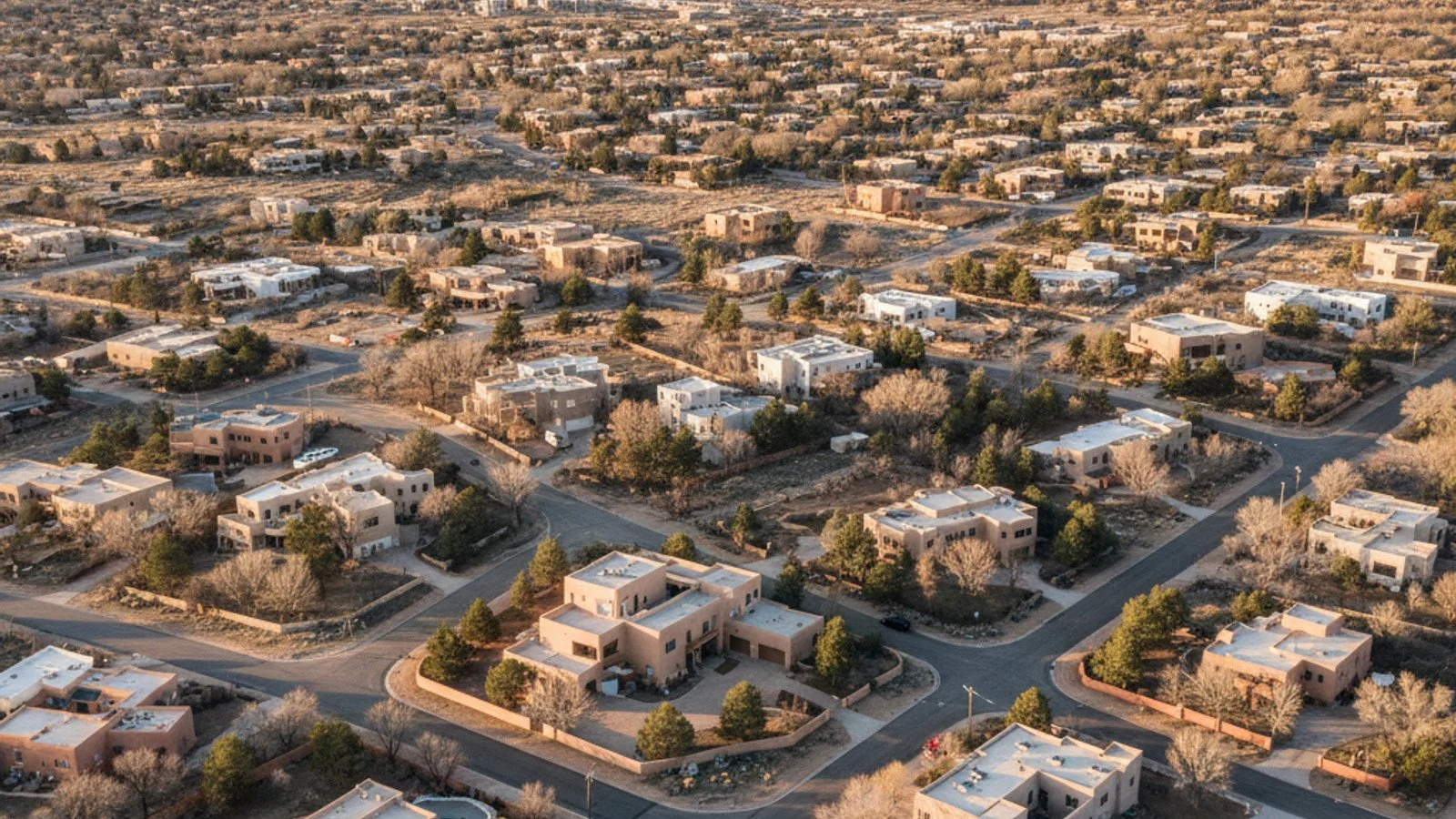
The housing stock here is distinct. You are looking at authentic adobe homes, many of which date back a hundred years or more. These properties often feature kiva fireplaces, thick plaster walls, and vigas (exposed ceiling beams). Because the lots were originally agricultural, many homes are hidden behind high coyote fences or adobe walls, creating private compounds with lush courtyards that you would never guess exist from the street.

However, potential buyers should be prepared for the market reality. Because of the scarcity of land and the prestige of the location, price per square foot here is among the highest in the city. Zoning is also very strict. The Historic Design Review Board ensures that the "Old World" charm remains intact, which is great for property values but means renovations require careful planning.

Living here offers a lifestyle you can't replicate. You are within walking distance to world-class dining and art, yet once you close your garden gate, it is incredibly quiet and private.

Signature Events: The Farolito Walk & Paint Outs

While the road is active year-round, there are certain times when the community really comes alive.

The most famous event is arguably the Christmas Eve Farolito Walk. On December 24th, the city closes the road to cars, and thousands of people walk the street. The area is lit by thousands of "farolitos" (small paper bags filled with sand and a candle) and "luminarias" (small bonfires made of stacked piñon wood). It is a silent, glowing spectacle that feels almost spiritual.

In the summer, the vibe changes with various Paint Outs. During these weekends, artists set up easels on the sidewalks and paint live. It is a fantastic way to meet the artists and see the creative process firsthand. You might also catch the Edible Art Tour, a charity event that pairs galleries with top local chefs.

Visitor Logistics: Parking, Hours, and Tips

If you are planning a visit or scouting the neighborhood, here are the answers to the most common logistical questions we get.

What time does Canyon Road Santa Fe open and close?

Canyon Road is a public street, so it never technically "closes." However, the galleries and shops generally open their doors around 10:00 AM and close by 5:00 PM. If you want to see the art, that is your window, though evening dining keeps the street lively after dark.

Where do you park to walk Canyon Road?

Parking is the biggest challenge here. There is very limited street parking, and the road is narrow. Your best bet is the paid parking lot at the bottom of the road (near Paseo de Peralta). You can sometimes find parallel parking on side streets like Acequia Madre, but be very careful not to block driveways, as towing is enforced.

How long does it take to walk Canyon Road?

If you power-walked from the bottom to the top without stopping, it would take about 45 minutes. However, nobody does that. To truly enjoy the galleries and gardens, plan for at least 2 to 4 hours.

Is Canyon Road residential or commercial?

It is a unique blend of both. While the main frontage is dominated by commercial galleries and restaurants, the properties immediately behind and between them are high-end residential homes. This mix is what gives the Historic Eastside its vibrant, lived-in character.
Living on Museum Hill: Santa Fe’s Cultural Crown Jewel

When people think of Santa Fe, they often picture the bustling Plaza or the galleries of Canyon Road. But just a few miles southeast, rising above the city dust, lies an area that offers a completely different perspective on high-desert living. Museum Hill isn't just a destination for tourists clutching guidebooks; it is one of the most prestigious residential districts along the Old Santa Fe Trail corridor.

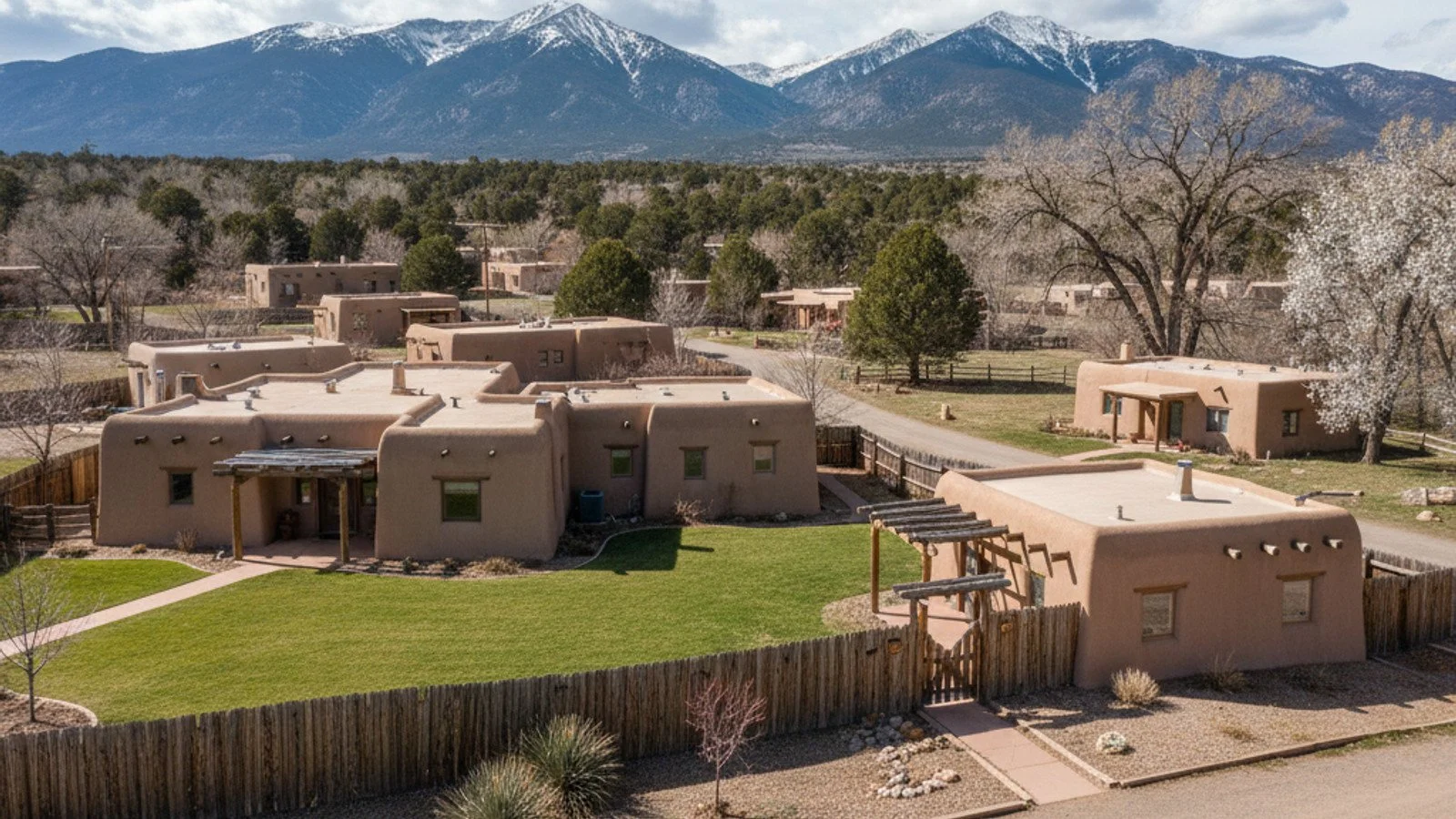
For those considering a move here, the appeal goes far beyond the "big four" museums and the botanical garden that anchor the neighborhood. It’s about the elevation. Living here means your daily backdrop often includes sweeping panoramic views of the Sangre de Cristo Mountains and the badlands to the north. It is a transition zone where the historic density of downtown gives way to winding roads, piñon-studded lots, and a profound sense of quiet. If you are looking at Santa Fe luxury neighborhoods, Museum Hill offers a rare blend of world-class culture and residential privacy.

The Cultural Anchors: Living Next to Masterpieces

Living on Museum Hill is a bit like having the Smithsonian in your backyard, but with better weather and Adobe architecture. The institutions here define the neighborhood’s character, serving as community hubs where residents can attend lectures, enjoy member-only openings, or simply take a quiet morning walk through curated gardens. It transforms the concept of things to do in Santa Fe from a weekend itinerary into a daily lifestyle.

Museum of International Folk Art

This is a neighborhood pride point. Holding the world’s largest collection of folk art, this museum brings global color to the high desert. For residents, it’s a constant source of inspiration, offering rotating exhibits that ensure there is always something new to see just minutes from your front door.

Museum of Indian Arts & Culture

Focusing deeply on the Southwest Native peoples, this institution is vital for understanding the land you live on. It connects the history of the region with contemporary Native life. The outdoor sculpture gardens here are particularly peaceful spots for contemplation away from the city crowds.

Nuevo Mexicano Heritage Arts Museum

Longtime locals and repeat visitors might remember this as the Museum of Spanish Colonial Art. It was rebranded in 2024 to the Nuevo Mexicano Heritage Arts Museum, but the soul of the place remains. Housed in a stunning building designed by legendary architect John Gaw Meem, it is a masterclass in the Santa Fe architecture styles that influence the surrounding homes.

Wheelwright Museum of the American Indian

The Wheelwright stands out for its unique focus on contemporary Native art and its distinct octagonal architecture, inspired by a Navajo hogan. It feels intimate and personal, often hosting shows that challenge conventional expectations of Native art.

Santa Fe Botanical Garden

Think of this as the neighborhood’s collective garden. It is perfect for tracking the seasons, from the first blooms of spring to the stark beauty of winter. Many locals use the garden trails for their daily exercise, enjoying the "Ojos y Manos" section which explores the intersection of nature and human creativity.

Museum Hill Real Estate: Views, Architecture, and Value

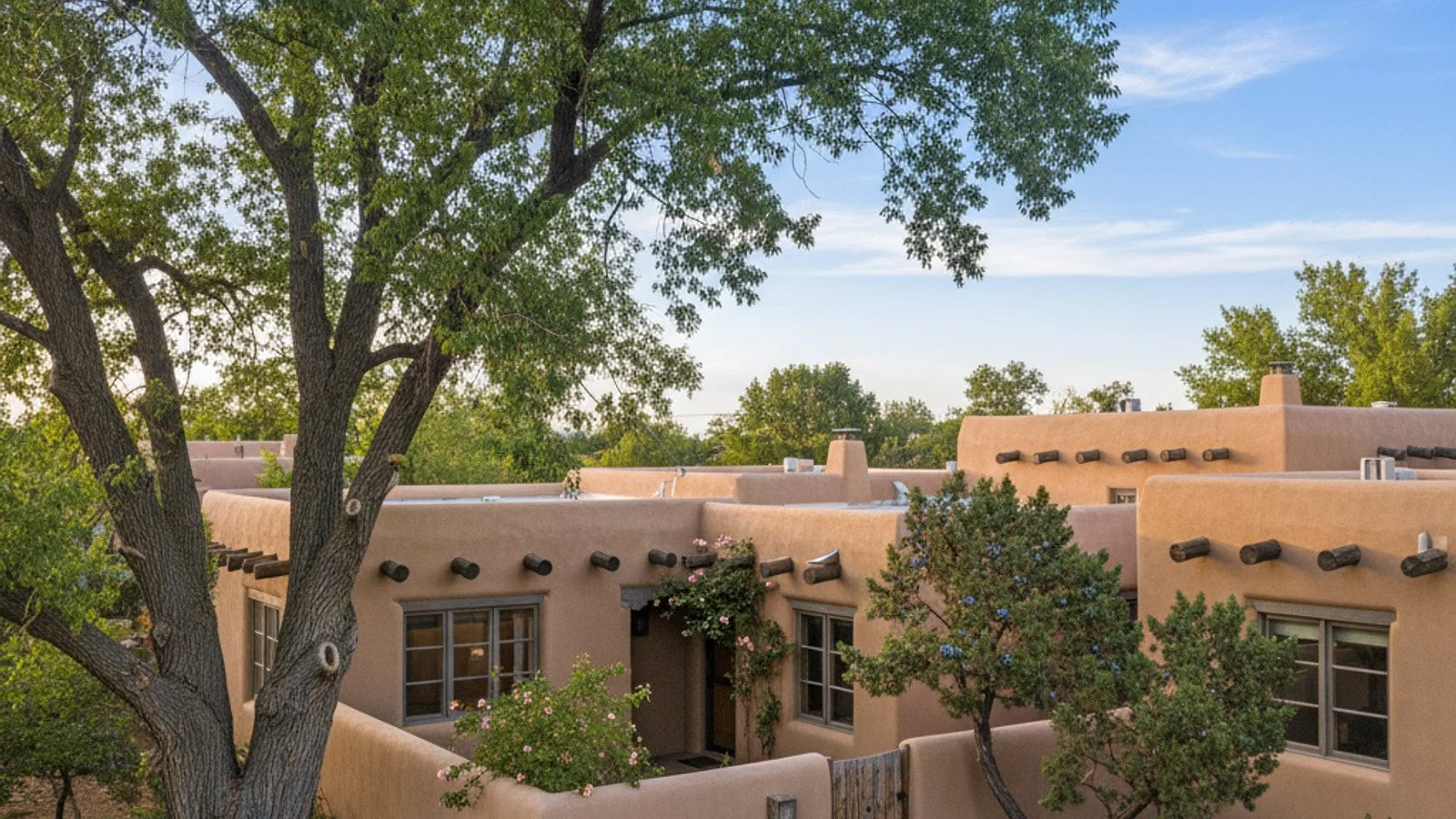
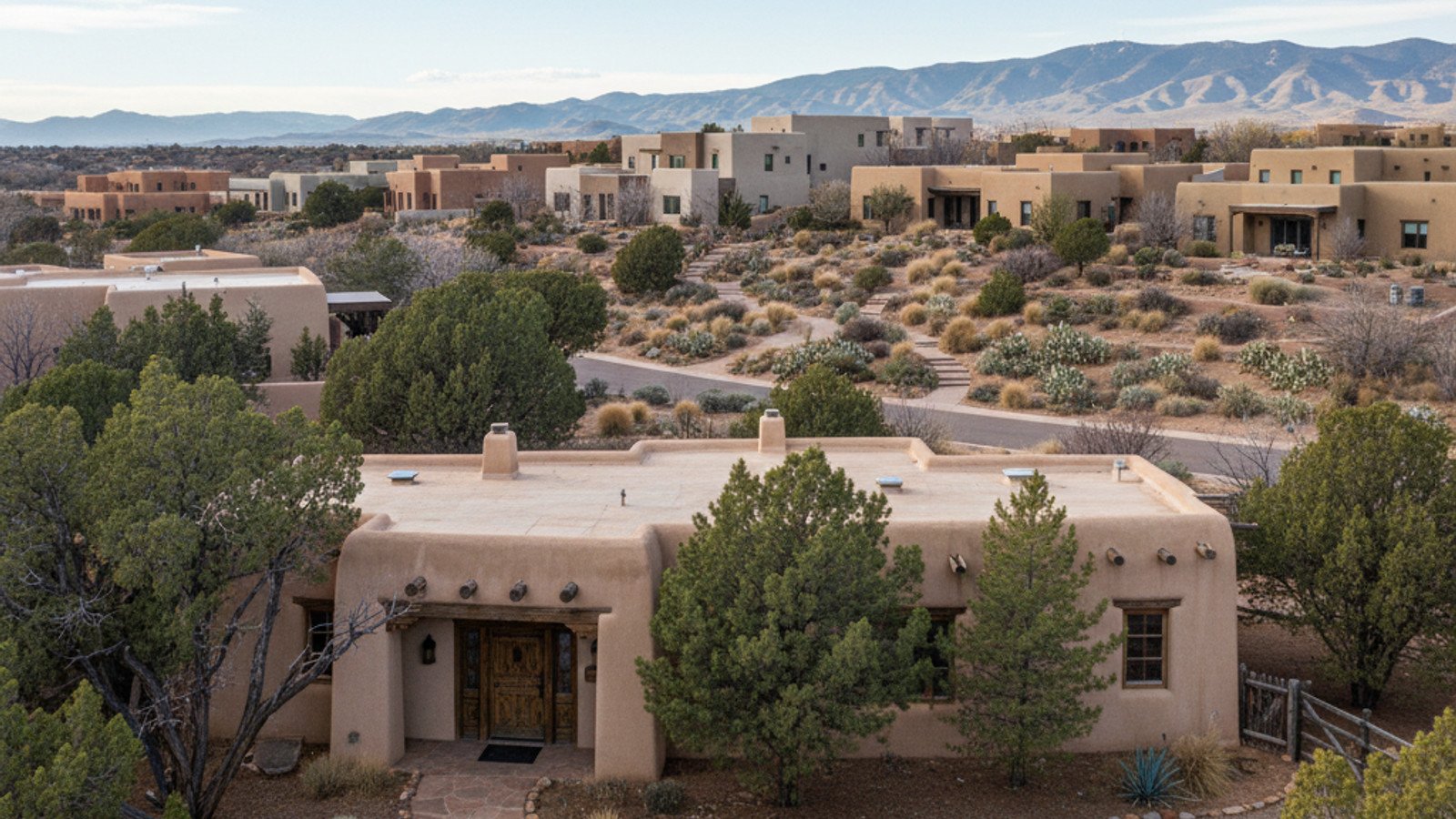
The real estate market here is distinct from the rest of the city. While you can find pockets of varying styles, the area is dominated by Pueblo Revival and Territorial designs that adhere to strict covenants. These rules are there for a reason: they protect the view corridors that give property here its immense value. Unlike the tighter lots downtown, homes on Museum Hill are often sited on hillsides or larger parcels to frame the Jemez and Sangre de Cristo mountain views perfectly.

Price-wise, this is firmly a luxury market. While the broader Santa Fe median home price might hover around the $600K to $800K mark, properties in this specific pocket typically start at $1M and can easily climb to $3M or more. You are paying for the stability of the neighborhood—anchored by state-funded museums that prevent over-commercialization—and the prestige of the address.

The housing stock is a fascinating mix. You might find a mid-century modern build influenced by the John Gaw Meem aesthetic sitting just down the road from a newer, custom-built estate. Because it sits along the Old Santa Fe Trail, the area feels connected to history without being stuck in it. If you are interested in Santa Fe historic homes but want modern amenities and room to breathe, this district is often the sweet spot.

Lifestyle & Amenities: The Convenience Factor

One of the most common questions I get from buyers is about the practical side of living "up on the hill." It feels removed, but that’s by design. The convenience factor here is surprisingly high, especially if you value a slower pace.

For a sophisticated lunch or a mid-day coffee meeting, Weldon's Museum Hill Café is essentially the neighborhood clubhouse. Open for lunch Tuesday through Sunday from 11 AM to 3 PM, it offers incredible views and a menu that feels special enough for guests but casual enough for a regular Tuesday. It’s a great asset to have within walking distance.

Outdoor access is another major perk. You have direct connectivity to walking paths that link the museums, and you are right on the doorstep of the Dale Ball Trails system for serious hiking and mountain biking. It’s effortless to go from your living room to a trail without ever getting in a car. Santa Fe hiking trails are world-famous, and living here puts you at the trailhead.

It is also worth noting the shift in local events. For years, the International Folk Art Market brought thousands of people to the hill every July. That event has moved to the Santa Fe Railyard Park to better accommodate the crowds. For residents, this is actually a win-win: you get the quiet streets back during the summer, but the hill still hosts smaller, more intimate jazz nights, lectures, and openings that foster a real sense of community. Plus, you are only about two miles from the Plaza and Canyon Road, making it a quick drive to the best restaurants in Santa Fe whenever you want a night out.

Who Calls Museum Hill Home?

The demographic here is defined more by lifestyle choice than anything else. It attracts people who are seeking quietude and deep cultural immersion. You won't find the late-night noise of downtown, which makes it perfect for those who prioritize tranquility.

It is a very popular area for second-home owners who want "lock-and-leave" security. The neighborhood is established and watchful, providing peace of mind when you are away. We also see many retirees and remote workers choosing this area. The inspiring landscape provides a perfect backdrop for a home office, and the proximity to the city center allows for easy engagement when the workday is done. It’s a community where privacy is respected, but shared interests in art and nature create natural connections among neighbors.

Frequently Asked Questions About Living Near Museum Hill

How far is Museum Hill from the Santa Fe Plaza?

It is approximately two miles from Museum Hill to the Santa Fe Plaza. While it is technically walkable for fit hikers or those looking for a workout, the return trip is uphill; most residents drive, take a ride-share, or use the local shuttle system for errands.

Do I need a car to live on Museum Hill?

Generally, yes. While the area offers beautiful walking paths and trail access for recreation, it is a car-dependent luxury area for grocery shopping and daily errands. However, the drive is short, scenic, and rarely congested compared to other cities.

What happened to the Museum of Spanish Colonial Art?

The museum is still there and thriving, but it was rebranded in 2024 as the Nuevo Mexicano Heritage Arts Museum. The name change reflects a broader commitment to the diverse heritage arts of the region, though the location and the historic John Gaw Meem building remain the same.

Is the International Folk Art Market still on Museum Hill?

No, the International Folk Art Market (the large summer event) moved to Santa Fe Railyard Park in 2023 to handle larger crowds and improve accessibility. However, the Museum of International Folk Art itself remains a permanent fixture on the hill and is open year-round.

The Heart of the City Different: Living in Plaza & Downtown Santa Fe

If you trace the history of Santa Fe back to 1610, everything starts at the Plaza. For over four centuries, this square has been the commercial, cultural, and geographic nucleus of the city. While millions of visitors flock here to see the Palace of the Governors—the oldest continuously occupied public building in the U.S.—living here is an entirely different experience.

For a homebuyer, the Downtown and Plaza district offers a unique proposition: the ability to exist in a modern, walkable urban center that feels like an open-air museum. It is a blend of high-energy commercial buzz during the day and surprising residential quiet in the evenings.

When you look for homes for sale in downtown Santa Fe, you aren't just buying square footage; you are buying access. This is the only neighborhood where world-class opera, indigenous art markets, and James Beard Award-winning cuisine are literally just outside your front gate.

Real Estate in the Historic District: Adobe Charm Meets Luxury

Let's look at the housing stock. If you are accustomed to suburban markets with wide lawns and two-car garages, downtown Santa Fe requires a shift in perspective. Inventory here is incredibly scarce, and the price per square foot often reflects that exclusivity.

Architectural Style and Preservation

The aesthetic here is non-negotiable. The streets are dominated by Pueblo Revival and Territorial styles. You will see flat roofs, earth-toned stucco, and soft, rounded edges. Inside, these homes often feature the authentic details that define Santa Fe style: vigas (exposed ceiling beams), latillas (ceiling strips), and kiva fireplaces.

Because this area falls under strict historic zoning, the Historic Districts Review Board (HDRB) plays a major role. They ensure that no matter how much the city grows, the downtown aesthetic remains preserved. For a homeowner, this protects your property value, though it does mean that exterior renovations require careful approval.

What You Can Buy

True single-family homes with large yards are rare in the immediate downtown core. Instead, the market is defined by:

  • Luxury Condos: often converted from historic buildings or built to look like them.

  • Pied-à-terres: smaller, high-end units designed for part-time residents who want lock-and-leave convenience.

  • Historic Compounds: clusters of casitas sharing a courtyard or driveway, offering a sense of privacy amidst the bustle.

The Downtown Lifestyle: Culture at Your Doorstep

Living near the Plaza means your daily routine is steeped in art and history. You might step out for a morning coffee and walk past a building that has stood since the Spanish colonial era.

For art lovers, the density of culture is unmatched. The New Mexico Museum of Art and the Georgia O'Keeffe Museum are neighborhood staples. Beyond the museums, Lincoln Avenue and the surrounding streets are lined with high-end galleries. You don't need to plan a trip to see art; you just have to walk down the street.

Dining and shopping are equally accessible. You have historic institutions like The Shed and Plaza Cafe for traditional New Mexican red and green chile. For a more elevated evening, fine dining spots like Sazon or Geronimo (on the nearby Canyon Road) are within easy reach. Shopping here isn't about big-box stores; it’s about bespoke boots, high-end fashion boutiques, and buying turquoise jewelry directly from artisans under the portal of the Palace of the Governors.

Front Row Seats to Santa Fe's Signature Events

One of the greatest perks of owning real estate in the Plaza district is the logistics of festival season. During the summer and early autumn, Santa Fe hosts massive cultural events that draw global crowds. While visitors struggle with traffic and hotel bookings, residents simply walk out their front door.

Santa Fe Indian Market, held in August, is the largest indigenous art market in the world, transforming the downtown streets into a gallery of talent. In July, the Spanish Market celebrates traditional Hispanic arts.

Come September, the Fiestas de Santa Fe take over. You are within walking distance of Fort Marcy Park for the burning of Zozobra, a unique local tradition, as well as the parades and music on the Plaza. In the winter, the Christmas Eve Farolito Walk is a magical, luminary-lit tradition that feels intimate and communal. Living here gives you a front-row seat to the festivities, with the luxury of retreating to your quiet home whenever you choose.

Living Downtown: Walkability, Parking, and Safety

When clients ask about moving to Santa Fe’s historic center, the conversation eventually turns to logistics. It is important to weigh the convenience of walkability against the realities of an old city layout.

Walkability

The walkability score here is incredibly high. If you enjoy a pedestrian lifestyle, this is the best spot in the city. You can handle banking, dining, entertainment, and social outings without ever turning on a car ignition.

The Parking Reality

Parking is the primary challenge in the historic district. The streets were laid out for donkeys and carts, not SUVs. When viewing properties, dedicated off-street parking or a private garage is a premium feature that adds significant value. Many historic condos or compounds may rely on tight driveways or permit parking systems. It is something to check immediately when looking at a listing.

Safety and Atmosphere

A common question regarding downtown living is safety. The Plaza is a commercial hub, meaning it is busy and highly visible during the day. There is a consistent police presence, especially during peak tourist seasons. At night, once the shops and galleries close, the area becomes surprisingly quiet. The streets are generally well-lit, but like any city center, it requires standard urban awareness.

Frequently Asked Questions About Living Near the Plaza

Is downtown Santa Fe safe at night?

Generally, the downtown area is quiet once the restaurants and shops close for the evening. While it is a safe area with good lighting and patrol presence, it is still a city center, so standard awareness of your surroundings is always recommended.

Is living in downtown Santa Fe noisy?

Despite the tourist foot traffic, residential units are often tucked away on side streets or behind compound walls. The thick adobe construction of many historic homes also provides excellent sound insulation, keeping interiors quiet even during busy times.

Do homes near the Plaza have parking?

This varies significantly by property. Many historic condos and homes have tight parking situations, shared driveways, or rely on residential permits. A property with a dedicated, spacious garage is a rare find and commands a premium price.

Can you walk to grocery stores from the Plaza?

While you can walk to incredible restaurants and cafes, full-service grocery shopping usually requires a car or a short ride. The nearest major grocery options, such as Kaune’s Neighborhood market or Whole Foods, are a short drive away rather than a convenient walk with heavy bags.

Living in the Railyard & Guadalupe Districts, Santa Fe, NM: A Neighborhood Guide

If you stand at the intersection of Guadalupe Street and Paseo de Peralta, you are standing at the exact meeting point of Santa Fe’s past and its future. To your left, you have the historic winding streets of the Guadalupe District, the original end of the Camino Real. To your right, the modern, industrial energy of the revitalized Railyard.

For buyers looking into living in Santa Fe, this specific pocket of town offers something rare: a truly walkable, urban lifestyle in a city famous for its sprawling landscapes. It is the convergence of "Old Santa Fe" charm and "New Energy" sophistication. Anchored by the active rail line and the historic Santuario de Guadalupe, this area has become the cultural living room of the city.

If you are looking for a car-optional lifestyle where world-class contemporary art, fresh local food, and historic residential charm sit side-by-side, this is likely where your search will end.

A Tale of Two Districts: History & Atmosphere

While often spoken of together, the Guadalupe and Railyard districts have distinct personalities. Understanding the difference is key to understanding the vibe here.

The Guadalupe District is steeped in history. For centuries, this was the trading hub where the Camino Real (the Royal Road) terminated. Consequently, the atmosphere is organic and intimate. The streets are narrow and winding, lined with historic adobes that hug the sidewalks. It feels established, cozy, and deeply rooted in the Spanish and Mexican heritage of the region.

The Railyard District, by contrast, feels open and breathable. Historically, this was a grit-and-gravel industrial transport hub. In the 2000s, a massive 50-acre redevelopment project transformed the area. It shifted from a dusty train yard into a master-planned arts and leisure district. The architecture here transitions from the organic adobe of Guadalupe to modern, angular structures that pay homage to the area's industrial roots.

The magic of living here is the ability to move between these two worlds in a five-minute walk. You can leave a centuries-old chapel and walk straight into a steel-and-glass contemporary art museum.

Real Estate in the Railyard & Guadalupe Districts

Because these two neighborhoods offer such different atmospheres, the housing stock is equally varied. This diversity appeals to a wide range of buyers, from those seeking a historic pied-à-terre to investors looking for modern urban living.

Guadalupe Homes If you are browsing historic homes for sale in Santa Fe, the Guadalupe district is a prime target. Here, you will find renovated historic adobes, charming bungalows, and hidden compounds tucked behind coyote fences. Many of these properties carry historic status, which preserves the neighborhood's visual integrity. These homes are perfect for buyers who want that authentic, "old world" New Mexico aesthetic with kiva fireplaces, vigas, and thick adobe walls.

Railyard Living Cross into the Railyard, and the inventory shifts dramatically. This is one of the few places in town where you can find true industrial lofts and luxury condos. The architecture features sharper lines, steel, glass, and corrugated metal elements. A unique feature of this area is the availability of "live/work" spaces, which are highly sought after by creatives and entrepreneurs.

Market Trends Regardless of which side of the tracks you prefer, be prepared for a competitive market. Because this area offers the highest walkability score in the city, demand is consistently high. You are paying for the location—the ability to walk to dinner, the movies, and the grocery store commands a premium price per square foot compared to neighborhoods further from the core.

Lifestyle & Amenities: The Urban Heart of Santa Fe

When people talk about the "Santa Fe lifestyle," they usually mean hiking and sunsets. But in the Railyard, the lifestyle is distinctly urban. This is a neighborhood where you can genuinely leave the car in the garage for days at a time.

The Santa Fe Farmers Market This is the undeniable crown jewel of the district. Housed in a LEED-certified building, the market is one of the best in the country. On Tuesday and Saturday mornings, the neighborhood transforms into the city’s social hub. Residents grab coffee, buy green chiles and local produce, and catch up with neighbors. Living within walking distance of the market is a major selling point for many residents.

Transportation & The Depot The Santa Fe Depot serves as the northern terminus for the New Mexico Rail Runner Express. This commuter train connects Santa Fe to Albuquerque, making it incredibly convenient for those who need to travel between the two cities without driving. The presence of the depot adds a romantic travel element to the neighborhood, especially with the Sky Railway offering adventure train rides.

Railyard Park Just because it is urban doesn't mean it lacks green space. The Railyard Park covers over 10 acres, offering performance spaces, picnic areas, and walking paths that weave through xeric gardens. It serves as a communal backyard for condo owners and local residents.

Art & Culture: The Railyard Arts District

While Canyon Road is famous for traditional and impressionist art, the Railyard is the undisputed headquarters of the contemporary art scene. The vibe here is edgier, larger in scale, and globally connected.

  • SITE Santa Fe: This is a globally renowned contemporary art space that hosts biennials and exhibitions rivaling those in New York or London.

  • Vladem Contemporary: The recently opened New Mexico Museum of Art Vladem Contemporary has solidified the district's status as a modern art hub.

  • Commercial Galleries: The district is dense with high-end contemporary galleries, such as Blue Rain Gallery and Tai Modern, often housed in converted warehouses with soaring ceilings.

  • Cinema: For film lovers, the Violet Crown Cinema offers a luxury movie-going experience with a full bar and restaurant. Nearby, the Jean Cocteau Cinema, owned by George R.R. Martin, hosts eclectic film screenings and author events.

Dining, Shopping, and Nightlife

The culinary and retail scene in this corridor is eclectic, reflecting the mix of residents and visitors.

For dining, you have a spectrum of options. You can enjoy high-end steakhouse fare at Market Steer or grab a pint and a burger at Second Street Brewery, which features a lively patio right on the plaza. The area is also home to excellent New Mexican cuisine and fusion restaurants that take advantage of the fresh ingredients from the nearby Farmers Market.

Shopping is a mix of practical and boutique. REI serves as a major anchor tenant for outdoor enthusiasts, which is incredibly convenient. However, if you wander down Guadalupe Street, you’ll find curated clothing boutiques, antique shops, and local bookstores.

Regarding nightlife, the Railyard tends to stay awake a bit later than the historic Plaza. Between the breweries, the cinemas, and the performance spaces, there is a vibrancy here after dark that attracts locals who want an evening out without the tourist density of the city center.

Schools & Education

For households considering the educational landscape, the Railyard and Guadalupe districts offer proximity to several downtown options. While the area is heavily commercial and residential, it is centrally located near various public and charter schools.

Notably, the vibe of the neighborhood aligns closely with the New Mexico School for the Arts. While admission is based on audition and lottery, the school’s presence in the downtown area contributes to the creative, student-friendly energy that permeates the streets. The central location also means short commute times to other educational institutions across the city.

Why Residents Love Living Here

Ultimately, people choose the Railyard and Guadalupe districts because they want to be part of the energy. They love waking up on a Saturday and walking over to get a breakfast burrito at the Farmers Market. They love the spontaneity of deciding to catch a movie or visit a gallery opening without needing to plan parking.

It is a neighborhood that respects Santa Fe’s deep history while enthusiastically embracing its modern future. Whether you are looking for a lock-and-leave luxury condo or a historic adobe project, this area offers a dynamic, connected way of living in The City Different.

Frequently Asked Questions

Is the Railyard District in Santa Fe walkable?

Yes, the Railyard and Guadalupe districts have the highest walkability scores in Santa Fe. Residents can easily access grocery stores, restaurants, museums, parks, and the Farmers Market on foot, making a car-optional lifestyle entirely possible.

What is the difference between the Guadalupe District and the Railyard?

The Guadalupe District is historic, characterized by narrow winding streets and older adobe architecture centered around the Santuario de Guadalupe. The Railyard is a modern, revitalized industrial district featuring open plazas, contemporary lofts, and steel-structured commercial buildings.

Does the Rail Runner stop in the Railyard District?

Yes, the Santa Fe Depot is located directly in the Railyard District. It serves as the northern terminus for the New Mexico Rail Runner Express, providing direct train access to and from Albuquerque.

What kind of homes are for sale in the Railyard District?

The housing stock varies by specific location. The Guadalupe side features historic adobes, bungalows, and single-family compounds, while the Railyard proper offers modern industrial live/work lofts and luxury condominiums.

Midtown & Siler-Rufina: Santa Fe’s Creative & Innovation District

If you ask most visitors about Santa Fe, they’ll describe the adobe charm of the Plaza or the quiet luxury of Canyon Road. But if you ask a local artist, a brewer, or a tech entrepreneur where the real energy is, they’ll point you toward the center of town.

Welcome to the Midtown and Siler-Rufina district. Often called the "Brooklyn of Santa Fe," this area is gritty, industrial, and rapidly evolving. It sits roughly in the triangle formed by St. Michael’s Drive, Cerrillos Road, and Siler Road.

This isn't just one neighborhood; it's really two distinct zones operating side-by-side. You have the Siler-Rufina area, which is an active, edgy hub of manufacturing, makers, and immersive art right now. Then you have the Midtown site (formerly the university campus), which is a massive 64-acre redevelopment project currently shaping the city's future.

If you are looking for polished perfection, this might not be your spot. But if you want innovation, "maker" culture, and a front-row seat to the city's most aggressive revitalization efforts—formally recognized as the Midtown LINC (Local Innovation Corridor)—this is where you want to be.

Living in the Siler-Rufina Nexus: The Industrial Arts Hub

Let’s talk about the part of the district that is already bustling. The Siler-Rufina corridor was once purely industrial—think auto body shops and metal supply yards. Today, it’s the beating heart of Santa Fe’s alternative scene.

The catalyst for this transformation was undoubtedly Meow Wolf. When their House of Eternal Return took over an old bowling alley complex, it turned a sleepy industrial park into a global destination. That energy rippled outward, attracting other creatives who wanted large, flexible spaces that simply don’t exist in the historic districts.

Housing and The Vibe

Real estate here is eclectic. You won’t find many sprawling estates. Instead, the market is a mix of older workforce housing, industrial lofts, and new creative-focused projects. A prime example is Siler Yard: Arts + Creativity Center. This development brought 65 live-work rental units specifically designed for artists and makers, solidifying the neighborhood’s identity.

The vibe here is unpolished and vibrant. It feels significantly younger than the city average. On a Friday night, the streets are filled with locals biking between taprooms or heading to a show, giving it a distinct urban pulse that’s rare in New Mexico.

Local Amenities

Living here means your local "coffee shop" might actually be a distillery or a climbing gym. The area is anchored by places like the Second Street Brewery Rufina Taproom, which acts as a de facto community center. You also have access to performance spaces like Wise Fool New Mexico for circus arts and various rock climbing gyms, making it a haven for active residents.

The Midtown Redevelopment: What’s Happening with the Old Campus?

While Siler-Rufina is active now, the Midtown site is the giant question mark that investors and locals are watching closely. This is the site of the former Santa Fe University of Art and Design (SFUAD), which sat vacant after the school closed in 2018.

As of early 2026, the "wait and see" phase is officially over. The City designated this 64-acre parcel as a Metropolitan Redevelopment Area (MRA), a legal move that unlocks specific funding and tax tools to get dirt moving.

The Master Plan

The vision for this site is huge. The Master Plan calls for a new city center featuring roughly 1,000 mixed-income housing units, a new central library, expanding film studios, and public parks. The goal is to create a walkable, dense urban village that connects the disjointed parts of the city.

Timeline and Status

If you drive by the site on St. Michael’s Drive today, you’ll likely see activity. The demolition of non-historic structures (like the old barracks) was slated to begin ramping up in 2025. We are looking at a long-term build-out over the next decade, but the initial phases are critical for setting the tone of the market. The city has partnered with groups like the Midtown Arts and Design Alliance (MADA) to ensure the cultural integrity of the project remains intact.

Real Estate Trends: Investing in 87507

So, what does this mean for homebuyers and investors? The 87507 zip code has historically been the "affordable" side of town, but that gap is closing as demand for the Midtown lifestyle grows.

Price Point and Value

Despite the appreciation, this area remains significantly more attainable than the Historic Eastside. While a modest adobe near the Plaza might command $700,000 or more, single-family homes in the Siler-Rufina area generally trade in the $350,000 to $550,000 range. This lower entry point makes it attractive for first-time buyers and investors looking for cash flow.

The Investment Angle

Real estate agents often talk about the "path of progress." This district is the definition of that concept. Gentrification is already evident near Meow Wolf, where industrial warehouses are being converted into studios and offices.

As the Midtown redevelopment brings new parks, a library, and modern infrastructure online, property values in the surrounding blocks are expected to benefit. The zoning changes—shifting from heavy industrial to mixed-use Live/Work—are also opening doors for creative renovations that weren't possible ten years ago.

Lifestyle & Local Culture: Beyond the Plaza

Life in Midtown isn't about sunset views over the mountains; it's about community and craft. The lifestyle here appeals to people who want to be close to the production of things, whether that’s beer, art, or food.

  • Food & Drink: The density of craft beverages here is high. Beyond the Rufina Taproom, you have spots like Leaf & Hive for hard kombucha and live music, and Java Joe’s for the morning rush. Food trucks are a staple of the dining scene here.

  • Makerspaces: This is a working neighborhood. Reunity Resources offers a community farm and compost operation that is a favorite for locals, while MAKE Santa Fe provides the tools and space for industrial fabrication.

  • Entertainment: Nightlife is genuinely local. The Bridge at Santa Fe Brewing is a go-to for concerts, while the immersive art scene provides constant, rotating events.

  • Walkability: A note of caution—while the area is "walkable" in terms of distance, the infrastructure is still catching up. You will encounter sidewalks that end abruptly and industrial traffic. It’s walkable in a gritty, urban sense, not a manicured, park-like sense.

Is Midtown / Siler-Rufina Right for You?

Pros:

  • Creative Energy: You are surrounded by artists, brewers, and makers.

  • Walkability to Amenities: You can walk to a brewery, a gym, and an art show.

  • Price: Lower entry price compared to downtown or the Eastside.

  • Upside: High potential for appreciation as the Midtown Campus develops.

Cons:

  • Noise: This is a mixed-use zone; expect noise from traffic, industry, and construction.

  • Construction: The Midtown redevelopment will generate dust and detours for years.

  • Infrastructure: Sidewalks and lighting can be patchy in the industrial pockets.

  • Scenery: You are further from the foothills and hiking trails than in other parts of town.

Frequently Asked Questions

What is the Midtown Santa Fe redevelopment plan?

The Midtown redevelopment is a city-led initiative to transform the vacant 64-acre former university campus into a mixed-use district. The Master Plan includes approximately 1,000 new housing units, a central library, film production facilities, and public spaces, managed under a Metropolitan Redevelopment Area (MRA) designation.

Is Siler-Rufina a walkable neighborhood?

Yes and no. It is walkable in the sense that you can easily walk between breweries, art spaces, and housing, which is rare for Santa Fe. However, it retains an industrial character, meaning sidewalks are sometimes missing, and the aesthetic is more "concrete and metal" than scenic walking paths.

What happened to the Santa Fe University of Art and Design campus?

The campus has been vacant since the university closed in 2018. After years of planning and community input, the City of Santa Fe is now actively redeveloping the site (the Midtown Project) to serve as a new hub for housing, education, and digital media.

Are there homes for sale near Meow Wolf?

Yes, the area surrounding Meow Wolf (zip code 87507) has a mix of real estate available. Inventory typically includes older mid-century workforce housing, newer infill condos, and occasional live-work industrial lofts, generally priced lower than Santa Fe's historic districts.

The Southside: Santa Fe’s Fastest-Growing District

If you have spent time browsing homes online or visiting our city, you probably know there are effectively two Santa Fes. There is the "Tourist Santa Fe" of the Historic Plaza and Canyon Road—beautiful, iconic, and priced accordingly. Then there is the "Local Santa Fe," often referred to as the Southside. This is where the bulk of our population actually lives, shops, and commutes from every day.

Geographically, we are talking about the area generally south of Siler Road and St. Michaels Drive, spreading out around the Cerrillos Road and Airport Road corridors. This encompasses the massive 87507 zip code. For many years, this area was an afterthought for visitors, but for residents, it has become the engine of the city's growth.

The value proposition here is straightforward. While the Historic Eastside offers historic charm, the Southside offers modern infrastructure, genuine affordability, and big-box convenience. If you are looking for living in Santa Fe NM without the million-dollar price tag, this is likely where your search will begin.

Living Local: The Southside Vibe & Lifestyle

Life on the Southside is defined by convenience and community. While the downtown area shuts down relatively early, the Southside is where you find the pulse of daily life. It’s less about art galleries and more about practical living.

One of the best ways to understand the vibe is to look at where the locals eat. Places like the Plaza Cafe Southside are staples here. It’s the same authentic New Mexican food you’d find downtown, but you’re sitting next to nurses, teachers, and construction managers rather than tourists, and you aren't paying the "Plaza premium."

The convenience factor is hard to overstate. Living here means you are minutes away from the essentials that can be a hassle to reach from the historic districts. You have major grocery chains, the Santa Fe Place Mall, and the Regal cinemas all concentrated along the main arteries. For commuters, the location is strategic; you have the easiest access to I-25, making the drive to Albuquerque or Los Alamos significantly smoother than trying to navigate out of the winding streets of the north side.

Real Estate Market Analysis: Affordability & New Growth

Let’s talk numbers, because this is usually the deciding factor for buyers looking at cost of living in Santa Fe. The price gap between the Southside and the historic districts is not just a gap; it’s a canyon.

As of early 2026, the median listing price in the Southside hovers around $528,000. Compare that to the Historic Eastside, where the median easily pushes past $962,000, and you see why this area is booming. That $528,000 price point has ticked up about 1.6% year-over-year, showing steady appreciation without the volatile spikes seen in luxury markets.

The housing stock here is also fundamentally different. In the historic districts, you are often paying for 100-year-old adobe that requires specialized maintenance. On the Southside, you are looking at the hub for Santa Fe new construction. These homes come with modern insulation, standard drywall, stucco that meets current codes, and—perhaps most importantly—garages.

We are also seeing a strong push for "Missing Middle" housing here. Developments like Tierra Contenta Phase 3 are introducing more townhomes, duplexes, and workforce housing options. This inventory is critical for first time home buyer Santa Fe candidates who have been priced out of single-family detached homes elsewhere in the county.

Key Southside Neighborhoods & Developments

The Southside isn’t a monolith; it’s a collection of distinct neighborhoods, each with a different feel.

Tierra Contenta This is a massive master-planned community designed specifically to provide affordable housing. It is mixed-use, meaning you’ll find the library, the teen center, and trails interwoven with residential streets. It’s busy and dense, but it offers some of the most accessible price points in the city.

Nava Ade If you want something that feels a bit more established and calm, look at Nava Ade. It features excellent walking trails and a slightly quieter atmosphere. It’s located near the Santa Fe Community College, giving it a studious, relaxed vibe.

Rancho Viejo While technically stretching slightly south of the main city limits, Rancho Viejo is a major player in the Southside market. It is a higher-end master plan known for its "village" concept, preserving 50% of the land as open space. They also adhere to strict dark sky lighting rules, so the stars are clearer here than near the mall.

New Construction Zones If you are looking for brand-new builds, keep an eye on builders like Twilight Homes or Arete Homes. They are active in subdivisions like Cerro del Norte and Arroyo Oeste, delivering modern product that moves quickly.

Amenities: Parks, Shopping, and Healthcare

One of the biggest misconceptions about the Southside is that it’s just a concrete jungle of houses. In reality, the city has poured significant resources into amenities to support the growing population.

Swan Park (Southwest Activity Node)

Swan Park is the crown jewel of the Southside. It is a massive 90-acre master-planned space that rivals any park in the city. With the Phase 2 expansion, it includes ballfields, elaborate playgrounds, and plenty of open space. It has become the backyard for thousands of residents who don't have large lots of their own.

Santa Fe Place Mall & Retail

The Santa Fe Place Mall has undergone a serious revitalization. It’s no longer just a quiet indoor walking loop; it has attracted major tenants like Dunham’s Sports and Hobby Lobby, cementing it as a regional retail hub. This area is also home to Meow Wolf, which, while a tourist draw, has spurred development and energy in the surrounding industrial district.

Healthcare Access

For retirees or those with chronic health needs, the Southside is arguably the most practical place to live. The Presbyterian Santa Fe Medical Center is located right off Cerrillos Road. This is a modern, full-service hospital that has drawn many medical professionals to live in nearby neighborhoods like Rancho Viejo.

Safety in Southside Santa Fe: A Realistic Look

This is the most common question I get: "Is it safe?" It is important to address this realistically and look at the context behind the reputation.

Historically, the Airport Road corridor has carried a stigma of being "rougher" than the Plaza. If you look at the raw data, Santa Fe as a city has property crime rates that are higher than the national average, and the Southside does see a higher volume of calls for service. This is partly due to population density—this is where the people are.

However, there is a lot of nuance here. The safety profile of a high-density apartment complex on Cerrillos Road is very different from a quiet cul-de-sac in Nava Ade or a gated section of Rancho Viejo. Most of the crime statistics in the area are driven by property crime (auto burglary, larceny) rather than random violent crime.

The city is actively investing in community policing and social infrastructure here. Projects like the Teen Center and the expansion of the Genoveva Chavez Community Center are designed to build community cohesion. When evaluating safety, it is always best to look at the specific street or subdivision rather than painting the entire 87507 zip code with a broad brush.

Pros & Cons of Living in the Southside

If you are weighing your options, here is the quick breakdown of what to expect.

Pros:

  • Affordability: The most accessible entry point into the Santa Fe market.

  • Modern Living: Homes are newer, more energy-efficient, and require less maintenance.

  • Convenience: You are minutes away from Target, Lowe’s, groceries, and the cinema.

  • Commute: Direct access to I-25 makes getting to Albuquerque or Los Alamos easy.

Cons:

  • Less "Santa Fe Style": You won't find many historic adobe compounds or winding dirt lanes here.

  • Traffic: Cerrillos Road is the busiest street in the city, and traffic can get heavy during rush hour.

  • Density: Houses are often built closer together on smaller lots compared to the sprawling estates of the north.

Frequently Asked Questions

Is Southside Santa Fe safe?

Safety varies significantly by specific neighborhood within the Southside. While the area statistically has higher rates of property crime compared to rural outskirts, master-planned communities like Rancho Viejo and Nava Ade generally experience different safety profiles than high-traffic commercial corridors. It is advisable to check specific neighborhood crime maps and drive the area at different times of day.

What is the zip code for Southside Santa Fe?

The primary zip code for the Southside is 87507. This is the most populous zip code in the city and covers the area south of Siler Road, including the Airport Road and Cerrillos Road corridors.

How far is the Southside from the Santa Fe Plaza?

Depending on traffic and your specific location in the Southside, the drive to the Santa Fe Plaza takes approximately 15 to 20 minutes. While it isn't walking distance, the trade-off provides significantly more square footage for the price.

Does Southside Santa Fe have good schools?

The Southside is served by Santa Fe Public Schools, with several newer facilities built to accommodate the population growth, such as Nina Otero Community School. Ratings vary by specific campus, so we recommend parents check current reports from the New Mexico Public Education Department or sites like GreatSchools for the most up-to-date data on specific attendance zones.

Is Santa Fe NM Safe? A 2026 Safety Guide

If you are looking into living in Santa Fe or planning a trip to The City Different, you have likely looked at the crime statistics and paused. It is the most common question I get asked by clients moving here from out of state: "I love the culture and the views, but is it actually safe?"

The short answer is yes, Santa Fe is generally safe regarding your physical well-being, but we need to have a realistic conversation about property crime.

Is Santa Fe Safe? A Realistic Look at Safety in 2026

When we talk about safety in Santa Fe, we have to distinguish between "dangerous" (violent crime) and "high risk for theft" (property crime). As of early 2026, Santa Fe remains a place where you can generally walk around without fear of physical altercations, especially in the areas frequented by visitors and residents.

However, statistics do show that property crime is a significant issue here. It is important to look past the raw data and understand the daily reality. While the numbers might look alarming on a spreadsheet, they don't always reflect the feeling on the street. For the vast majority of residents and visitors, the biggest risk isn't physical danger—it's having a window smashed because a laptop was left on the passenger seat.

The context here is key. We are a major tourist destination with a relatively small full-time population. This skews the per-capita crime data, making the rates appear drastically higher than national averages. If you use common sense and "big city" awareness, your experience here will likely be peaceful.

Santa Fe Crime Rates: The Numbers Behind the Reputation

To truly understand the safety landscape, we have to break down what the police reports are actually telling us. The narrative that Santa Fe is "high crime" is almost entirely driven by one category: property offenses.

Property Crime vs. Violent Crime

The statistical outlier in Santa Fe is property crime. Rates for auto theft, burglary from vehicles, and larceny are consistently higher than the national average—sometimes ranging 20% to 40% higher depending on the specific year and report. The most common scenario involves opportunistic theft: someone checking for unlocked car doors or spotting valuables left in plain sight.

Violent crime is a different story. While rates are elevated compared to some quiet rural towns, they are often lower than the disparities seen in property crime. More importantly, violent incidents in Santa Fe are rarely random acts committed against strangers or tourists. They tend to be concentrated within specific demographics or involve interpersonal disputes rather than random public attacks.

The Tourist "Data Skew"

When you look at crime maps or rankings, keep in mind the "denominator problem." Santa Fe has a small resident population (roughly 89,000), but we host millions of tourists annually. Crime rates are calculated based on the resident population, not the daily effective population.

This means if a tourist has their rental car broken into, it counts against the small resident base, inflating the crime rate per 1,000 residents. This doesn't excuse the crime, but it explains why the stats might make the city look like a war zone when, in reality, it feels like a bustling, artsy town. If you are researching the cost of living in Santa Fe, it is worth factoring in comprehensive car insurance, but you don't generally need to budget for bodyguard-level security.

Safest Neighborhoods in Santa Fe

If you are thinking about living in Santa Fe, knowing the lay of the land is crucial. Safety often correlates with location, lighting, and neighborhood density. Here are a few areas that consistently offer a greater sense of security.

Eldorado at Santa Fe Located about 20 minutes outside of town, Eldorado is known for wide-open spaces and dark night skies. Because the lots are larger and the area is removed from the commercial bustle of the city center, traffic density is low, and reports of opportunistic crime are less frequent than in the downtown corridors.

Las Campanas For those seeking the highest level of security, Las Campanas is the premier option. It is a gated community with a 24/7 security presence. The controlled access points virtually eliminate the random foot traffic and "drive-by" scouting that can lead to property theft in open neighborhoods.

Historic Eastside & Northeast These are some of the most desirable and upscale areas in the city. The violent crime rate here is very low. However, because these are high-value areas, they can occasionally be targets for property theft. Residents here tend to invest in good security systems and gates.

Northwest (Las Soleras/Tierra Contenta) Newer developments like Las Soleras benefit from modern infrastructure. You will find better street lighting, newer home security features, and a layout that doesn't encourage as much cut-through traffic as older parts of the city.

When looking for the best neighborhoods in Santa Fe, prioritize areas with active neighborhood watches and good lighting if security is your top concern.

Areas That Require Extra Caution

Conversely, there are specific corridors in Santa Fe where police reports pile up. This doesn't mean you can't go there—these are often the commercial hubs where you'll do your shopping—but you should be more vigilant.

The Airport Road Corridor This area has statistically higher rates of police calls and incidents compared to the city center. It is a densely populated part of town with a mix of commercial and residential zones. While many people live here without issue, the frequency of disturbances is higher than in the foothills.

Cerrillos Road Cerrillos is the main artery of Santa Fe. It is lined with big-box stores, motels, and fast food joints. Because of the high volume of transient traffic and commercial activity, it is a hotspot for auto theft and shoplifting.

Advice for these zones: When you are shopping or dining along Cerrillos or Airport Road, park in well-lit areas. Do not leave your car running while you dash into a store, and double-check that your doors are locked. These are busy commercial zones, and distractions are easy to find.

Tourist Safety: The Plaza, Canyon Road, and Railyard

If you are visiting, you will likely spend 90% of your time in the "Santa Fe Triangle" of the Plaza, Canyon Road, and the Railyard.

The Plaza & Canyon Road During the day and early evening, these areas are very safe. There is usually a high police visibility near the Plaza to deter issues. The atmosphere is relaxed. The main risk here is pickpocketing in crowds during festivals (like Indian Market) or, again, theft from vehicles parked in nearby lots.

The Railyard This district is fantastic for dining and art, and generally very safe. However, unlike the Plaza which stays active a bit later, the Railyard can get quiet and dark quickly after the businesses close.

The #1 Rule: Car Safety I cannot stress this enough: Never leave valuables in your car. Not even for five minutes. Not even a jacket that looks like it might cover something valuable. Property crime here is often a crime of opportunity. If a thief sees nothing, they usually move on.

Is It Safe to Walk at Night in Santa Fe?

Walking in Santa Fe at night presents a unique set of challenges that actually have little to do with crime.

Lighting and Dark Skies Santa Fe protects its night skies aggressively. Many residential areas, especially on the Eastside and in the foothills, have no streetlights. It is pitch black. The safety risk here isn't a mugger—it's an uneven sidewalk, a coyote, or a low-hanging branch. If you are walking at night, carrying a flashlight is a safety necessity.

Pedestrian Safety Drivers in New Mexico have a reputation for being unpredictable. Crosswalks are not always respected as strictly as they are in other states. Always make eye contact with drivers before stepping into the street.

Solo Walking Downtown and the Plaza are generally fine in the early evening. However, I advise against walking the Santa Fe River Trail or isolated paths after dusk. These areas are not well-lit and can sometimes host transient activity that makes solo walkers uncomfortable.

Getting Around Safely: Rideshares and Public Transit

Reliability is a safety factor that many visitors overlook. Santa Fe is not New York City; you cannot always hail a ride instantly.

Rideshares (Uber/Lyft) Rideshare availability drops off sharply after 10:00 PM. I have seen many visitors get stranded at a bar or restaurant because no drivers were available. If you have a late night planned, schedule your ride in advance or have a designated driver. Being stuck on a dark street waiting for a car that isn't coming is a safety risk you can avoid.

Public Transit The Santa Fe Trails bus system is clean, safe, and efficient, but it runs on a limited schedule, especially in the evenings and on weekends. It is a great option for daytime commuting but not for nightlife.

Driving New Mexico has high rates of traffic accidents. Be particularly cautious at intersections; "green" means go, but check left and right first, as red-light running is a common local hazard.

Environmental & Physical Safety Tips

Sometimes the environment is more dangerous than the people. Visitors from sea level often underestimate the high desert.

  • Altitude: We are at 7,200+ feet. Altitude sickness is real. It can cause dizziness, headaches, and nausea. If you feel "off," it’s likely the elevation, not the flu.

  • Dehydration: The air is incredibly dry. Alcohol hits harder here, and dehydration sets in faster. Drink twice as much water as you think you need.

  • Weather: The temperature can drop 30 degrees once the sun goes down. Also, during summer monsoons, flash floods can happen in minutes. Never try to drive through a flooded arroyo (wash).

Safety Tips for Solo Travelers

Santa Fe is widely considered a welcoming and safe destination for solo travelers, including women traveling alone. The vibe is laid-back and non-aggressive.

  • Stick to the Light: For evening dining, stick to the well-lit, populated areas around the Plaza.

  • Trust Your Intuition: If you find yourself on a street that feels too dark or empty (which happens easily here), just head back to a main road.

  • Tech Check: Adobe buildings are thick, and cell reception can be spotty, especially on the outskirts. Keep your phone charged and maybe download an offline map just in case.

FAQ

Is Santa Fe safe for tourists at night?

Yes, generally. The main tourist areas like the Plaza are safe for walking in the evening, especially with the usual crowds. However, avoid unlit side streets and parks late at night, and always have a transportation plan since rideshares can be scarce after 10 PM.

What is the most common crime in Santa Fe?

Property crime is by far the most common issue, specifically larceny and auto burglary. Violent crime remains statistically much lower than property theft.

Is the Santa Fe Plaza safe?

The Santa Fe Plaza is one of the safest parts of the city due to high foot traffic and police presence. The biggest risks here are minor, such as pickpocketing during crowded events or theft from unattended vehicles in nearby parking lots.

Is Albuquerque or Santa Fe safer?

Statistically, Santa Fe has lower rates of violent crime compared to Albuquerque. While both cities struggle with property crime, Santa Fe generally offers a safer environment for tourists and residents, particularly in the historic and residential districts.

Verdict: Should You Be Worried?

So, is Santa Fe safe? In 2026, the verdict is a reassuring one with a side of caution. Santa Fe is culturally rich, beautiful, and largely safe for those who practice standard "big city" awareness.

You do not need to walk around looking over your shoulder for danger, but you do need to lock your car doors and keep your valuables out of sight. The primary risk here is theft, which is frustrating but largely preventable. If you take basic precautions, you will find that the only thing stealing your attention is the sunset.


Moving to Santa Fe, NM: A 2026 Relocation Guide

Welcome to "The City Different." If you are considering a move to Santa Fe, you have likely already fallen in love with the idea of it: the adobe skyline against the Sangre de Cristo Mountains, the scent of burning piñon in the winter, and a pace of life that feels centuries removed from the coastal grind.

As the oldest state capital in the U.S., founded way back in 1610, Santa Fe has had plenty of time to perfect its charm. But moving here in 2026 is about balancing that romantic appeal with practical realities. While we enjoy over 300 days of sunshine and world-class art, newcomers often face a few surprises regarding the housing market and the physical adjustment to the high desert.

My goal here is to walk you through the real numbers and the local quirks. Whether you are a remote worker, a scientist heading to the labs, or a retiree looking for your next chapter, this is your honest roadmap for relocation.

The Pros and Cons of Living in Santa Fe

Before we get into the dollars and cents, it helps to look at the big picture. Santa Fe is a specific flavor of lifestyle, and it isn't for everyone. Here is a quick summary of the trade-offs residents face.

The pros are usually what draw people in. We have an incredible four-season climate that manages to be sunny year-round. You have immediate access to nature, a globally recognized arts scene, and a distinct Pueblo Revival architecture that you won't find anywhere else. Financially, the low property taxes are a massive perk that often surprises buyers from out of state.

On the flip side, the cost of entry is high. Housing prices here are significantly higher than the rest of New Mexico. You also have to adjust to the "city that sleeps early" vibe; nightlife is limited, and many kitchens close by 9 PM. Finally, the "Mañana" culture is real—service can be slower than what you might be used to in a major metro, and the altitude can physically knock you down for the first few weeks.

Cost of Living in Santa Fe: What to Expect in 2026

When people ask about the cost of living in New Mexico, Santa Fe is usually the outlier. While the state is generally affordable, Santa Fe commands a premium.

Housing Market Reality

Housing is going to be your biggest line item. As of early 2026, the market is steady, but prices remain high due to strict building codes and high demand. You can expect median home prices to hover between $570,000 and $675,000, depending on the neighborhood and the season. If you are planning to rent while you look, be prepared for a competitive market. Vacancy rates are low, and a nice single-family home can easily run $2,000 to $2,400 per month.

The Tax Benefit

Here is the good news that helps balance out that mortgage payment: property taxes here are exceptionally low. In Santa Fe County, the effective tax rate is often around 0.51%. On a half-million-dollar home, your annual tax bill might be significantly less than what you would pay for a condo in Texas or the Northeast. Additionally, New Mexico offers favorable income tax policies for retirees, including exemptions on Social Security income, which makes the overall budget much friendlier for those on a fixed income.

Everyday Expenses

Outside of housing, your wallet won't take as big of a hit. Utilities, groceries, and healthcare costs generally track close to the national average. You aren't paying "island prices" like you would in Hawaii, but you are paying for the desirability of the location.

Best Neighborhoods in Santa Fe

Santa Fe isn't one big subdivision; it's a collection of distinct districts, each with a totally different lifestyle. When looking at a Santa Fe neighborhoods guide, you’ll want to match the area to how you live.

  • Historic Eastside & Canyon Road: This is the postcard version of Santa Fe. It is incredibly walkable, filled with famous galleries, and defined by those narrow, winding streets and high-walled adobe compounds. It is beautiful, but it comes with a high price tag and heavy tourist foot traffic.

  • South Capitol: Located just south of the Paseo de Peralta, this area is popular with politicians and professionals. The homes here are historic but sit on a more traditional grid, making it easier to navigate. It is walkable to the Plaza but feels slightly more residential.

  • The Railyard District: If you want modern living, this is the spot. You will find lofts and condos here, right next to the cinema, the best farmers market in town, and the Rail Runner train station. It is hip, active, and less "old world" than the Eastside.

  • Eldorado at Santa Fe: About 20 minutes southeast of town, this is where you go for space. Eldorado is known for dark skies, larger lots, and passive solar homes. It has a strong community feel and is great if you want quiet evenings and room to breathe.

  • Southside: This is the practical hub of the city. It is where you find newer construction, lower price points per square foot, and easy access to big-box shopping and schools. It is less "touristy" and more functional for daily life.

  • Las Campanas: For a resort-style experience, this gated community offers luxury living centered around golf courses and equestrian centers. It is grand, private, and located on the northwest side of town.

Job Market & Economy

Santa Fe’s economy is unique because it isn't driven by corporate headquarters or manufacturing. Instead, it relies on a mix of government stability, science, and tourism.

Tourism and hospitality are the most visible sectors, employing thousands in hotels, fine dining, and galleries. However, because we are the state capital, government jobs provide a stable economic floor for the city.

One of the biggest economic drivers is actually up the hill. Los Alamos National Laboratory (LANL) is a major employer for the region. Many scientists and tech professionals choose to live in Santa Fe for the lifestyle and commute to the lab. This influx of high-income earners supports the local housing market and brings a lot of intellectual capital to the area.

We are also seeing the "Netflix effect." With major film studios expanding in New Mexico, production crews are a common sight, creating fluctuating but significant opportunities in the film industry. For the remote work crowd, Santa Fe is increasingly popular, though you should verify high-speed internet availability if you are looking at more rural properties on the outskirts.

Living at 7,000 Feet: Climate and Altitude

You cannot talk about moving here without talking about the elevation. Santa Fe sits at approximately 7,200 feet. That is significantly higher than Denver.

The Altitude Factor

For newcomers, the thin air is a real physical shock. It is common to experience fatigue, headaches, or dehydration during your first few weeks. We always tell clients to drink twice as much water as they think they need and to go easy on alcohol/caffeine until they acclimatize.

The Elements

This is a true high-desert climate. We have four distinct seasons. Winters bring snow—enough to make the local ski basin fantastic, but usually not enough to shut down the city for long. Springs can be notoriously windy. Summers are warm, but because of the high altitude and lack of humidity, temperatures drop beautifully at night.

You will need to update your skincare routine. The air is incredibly dry, making humidifiers and heavy moisturizers essential household items. The sun is also much more intense here; with the high elevation and 300+ days of sunshine, daily UV protection is mandatory.

Lifestyle, Culture, and Things to Do

Once the boxes are unpacked, what is life actually like? It is much more than just browsing galleries.

Arts & Culture The arts are woven into the calendar. The Santa Fe Opera is a summer staple; tailgating in the parking lot with chandeliers and white tablecloths before the show is a beloved local tradition. Beyond the opera, you have the immersive art experience of Meow Wolf, and massive annual events like the Indian Market and Spanish Colonial Market that take over the downtown area.

The Outdoors If you aren't into art, you are likely here for the dirt. The Dale Ball Trails offer miles of hiking and mountain biking right on the edge of town. Ski Santa Fe is just a short drive up the mountain, offering great runs without the mega-resort crowds.

Food Scene New Mexican cuisine is a religion here. You will quickly be asked "Red, Green, or Christmas?" regarding your chile preference. But the food scene has evolved beyond just enchiladas; the Railyard hosts incredible farmers markets, and the fine dining scene punches way above its weight class for a city of this size.

Pace of Life This is perhaps the biggest adjustment for big-city movers: things move slower. It is not a late-night party city. Stores and restaurants often close early. The lifestyle focuses more on morning hikes and sunset dinners than midnight clubbing.

Schools, Transportation, and Logistics

Finally, let’s cover the logistics of getting around and getting settled.

Transportation Santa Fe is largely car-dependent. While there is a public bus system (Santa Fe Trails), it is limited in range and frequency. For regional travel, the Rail Runner Express is a fantastic commuter train that connects Santa Fe to Albuquerque, which is great for catching flights or day trips.

Air Travel You have two options for flying. The Santa Fe Regional Airport (SAF) is small and incredibly convenient, offering direct flights to hubs like Dallas, Denver, and Phoenix. For almost everything else, residents drive about an hour south to the Albuquerque International Sunport (ABQ).

Schools The education landscape is a mix of public, charter, and private institutions. The quality and focus of schools can vary quite a bit, so for households with students, researching specific school zones is highly recommended before committing to a neighborhood.

Frequently Asked Questions About Moving to Santa Fe

Is Santa Fe a good place to retire?

Yes, it is consistently ranked as a top retirement destination. The combination of a mild climate, excellent healthcare access, culturally rich activities, and favorable tax treatment for retirement income makes it very attractive for this demographic.

What is the 'Mañana' culture in Santa Fe?

"Mañana" literally means "tomorrow," but culturally it refers to a relaxed, unhurried attitude toward time and schedules. It isn't laziness; it's a prioritization of lifestyle over urgency. Newcomers accustomed to instant service may find it frustrating at first, but most eventually learn to embrace the slower pace.

Do I need a car to live in Santa Fe?

Practically speaking, yes. While the downtown area and the Railyard are walkable, most neighborhoods, grocery stores, and trailheads are spread out. Public transit exists but isn't robust enough to rely on for all your daily needs.

How bad is the altitude sickness