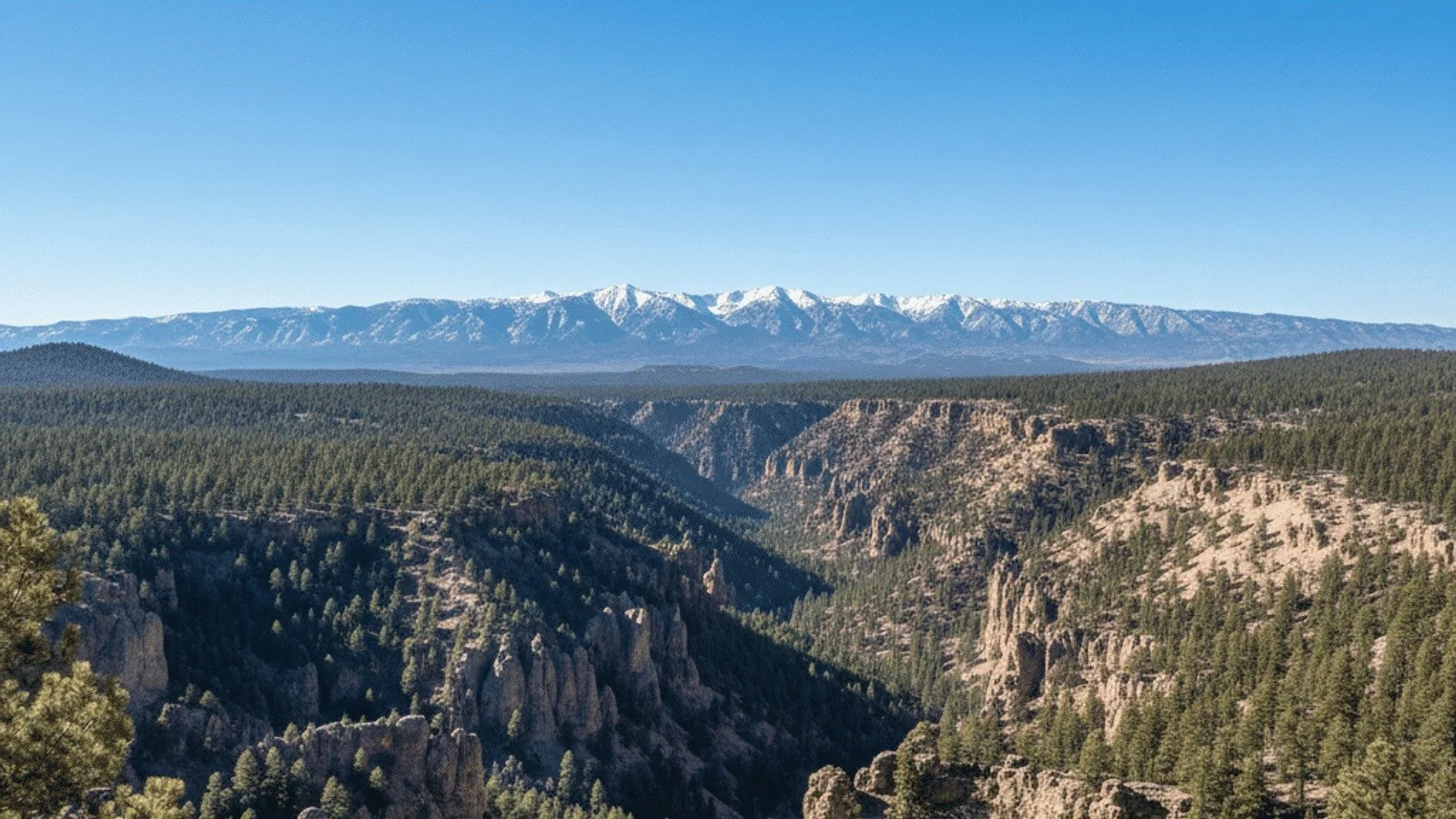
Living in Eldorado at Santa Fe: A Local's Guide to the High Desert

If you have been looking at homes in Santa Fe, you have almost certainly come across listings in Eldorado. It is one of those places that people tend to have strong feelings about—residents absolutely love the peace and the sunsets, while city-dwellers sometimes balk at the drive. But to really understand this community, you have to look past the map pins.

Eldorado at Santa Fe is a Census-Designated Place (CDP) located about 15 to 20 minutes southeast of downtown. It sits along the US-285 corridor, serving as a gateway to the high desert. Unlike the tight streets of historic districts, this area is defined by wide-open spaces. It is widely recognized as one of the largest solar communities in the country and maintains a fierce dedication to "dark sky" culture.

The vibe here is distinctly rural but with a suburban layer of convenience. You get the 1+ acre lots and the sweeping mountain views, but you also have neighbors, a local grocery store, and a community pool. It attracts a diverse mix of people—from retirees and artists to remote workers—who all share a desire for quiet nights and big skies.

Eldorado Real Estate: Homes, Lots & Architecture

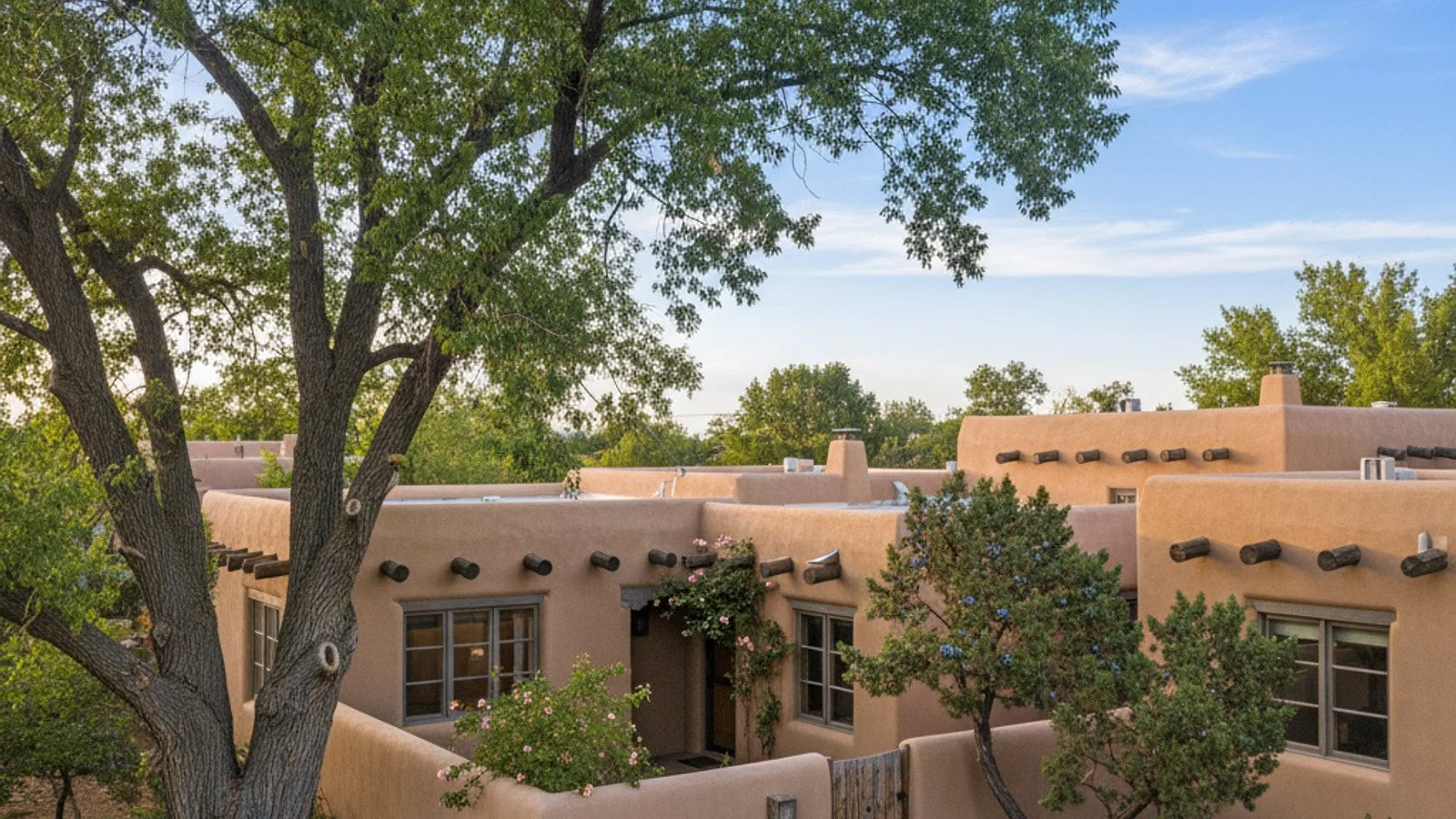
When you drive through the main entrance, the first thing you notice is the consistency. The architecture here is strictly regulated to blend with the landscape. You won't find Victorian peaks or ultra-modern glass boxes here. The homes are predominantly Pueblo Revival and Territorial styles, featuring flat roofs, earth-tone stucco, and soft edges that mimic the surrounding hills.

The biggest draw for many buyers is the land. The standard lot size in Eldorado is roughly 1 to 2 acres. This spacing provides a level of privacy that is hard to find closer to the Plaza. Instead of a manicured lawn, your yard is likely to be filled with native piñon and juniper trees, cholla cactus, and chamisa. It is low-maintenance landscaping by design.

As we move through 2026, the market here remains robust. The median price for a home in Eldorado has been hovering in the $760K to $780K range. While inventory can be tight due to high demand, the value proposition is strong; you generally get more square footage and significantly more land here than you would for the same price in the city center. Also, keep an eye out for solar features. Because of the community's history and orientation, a large percentage of homes come equipped with passive solar design or active photovoltaic panels, which can be a nice offset for utility bills.

HOA & Amenities: The ECIA Experience

Living here means becoming part of the Eldorado Community Improvement Association (ECIA). This is the governing body that manages the shared spaces and enforces the covenants. If you are someone who worries about a neighbor painting their house bright purple or parking an RV on the front lawn permanently, the ECIA is your best friend. They are strict about exterior colors, lighting, and vehicle storage to maintain the visual harmony of the area.

The trade-off for those rules is an impressive list of amenities. For an annual assessment that is quite reasonable compared to other planned communities—the proposed budget for 2026 set the fee around $713 per year—residents get access to excellent facilities.

What your annual fee covers:

  • The Community Center: A hub for meetings and events.

  • Recreation: A seasonal outdoor swimming pool that is a summer staple, plus tennis and pickleball courts.

  • Equestrian Facilities: There are community horse stables and a riding arena, which is a rare find at this price point.

  • Dog Park: A dedicated space for off-leash exercise.

  • Nature: Maintenance of the extensive hike and bike trails that weave through the neighborhood greenbelts.

The fees are typically due in mid-February, so it’s an annual expense to plan for, but most residents feel the value exceeds the cost.

Lifestyle: Art, Nature & Community

Life in Eldorado is active. It is not a place where people just sit inside; the natural environment practically begs you to go outdoors. The community has a massive network of walking and biking trails that run along the roads and through the wilderness areas. If that isn't enough, you are right next door to the Galisteo Basin Preserve, which offers miles of world-class hiking and mountain biking trails through dramatic high-desert terrain.

Culturally, this area is a haven for creatives. The annual "Eldorado Studio Tour" is one of the largest in New Mexico. During this weekend event, dozens of local artists open their home studios to the public, showcasing everything from pottery and painting to weaving and sculpture. It creates a very real sense of connection when you know your neighbor is also a talented sculptor.

One of the most defining aspects of the lifestyle here is the night sky. The community is zealous about light pollution. Streetlights are almost non-existent, and homeowners are required to shield outdoor lighting. The result is a canopy of stars that you simply cannot see from town. If you love astronomy or just quiet evenings on the patio, this is a major perk.

Shopping & Dining: The Agora & La Tienda

A common misconception is that living in Eldorado means driving 20 minutes every time you need a gallon of milk. That isn't the case. The community is anchored by two main commercial centers near the entrance that cover most daily needs.

The Agora Shopping Center This is the older of the two hubs. It houses the Super Market at Eldorado, which is a fully stocked grocery store with fresh produce and a butcher. You’ll also find local staples like The Deli Barn for a quick sandwich, along with essential services like a hardware store, a pharmacy, and the Vista Grande Public Library.

La Tienda at Eldorado Across the street is La Tienda, which feels a bit more like a lifestyle center. It features a taproom for the Santa Fe Brewing Company, making it a popular spot to grab a pint after a bike ride. There are also dining options, fitness studios, and wellness services.

Between these two centers, you can handle 90% of your errands without ever getting on the highway.

Elevation, Weather & Commute

If you are researching the technical details of moving to Santa Fe, you might see conflicting info about the weather and geography. Here is the reality on the ground.

Elevation There is a myth that because Eldorado is "out there," it must be higher up in the mountains. Actually, the elevation here is approximately 6,680 feet. This is slightly lower than the Santa Fe Plaza, which sits around 7,000 feet. This 300-foot difference can mean the weather is marginally warmer, and snow tends to melt a little faster here than in the foothills.

Weather & Wind We enjoy a classic high-desert climate. You get four distinct seasons, but the winters are generally mild with sunny days. The spring, however, can be notably windy. Because the terrain is wide open with fewer tall pines to break the gusts, you will feel the wind more here than in the canyon neighborhoods.

The Commute Most residents rely on US-285 to get to I-25 or into town. The drive is about 12 to 15 miles, which translates to a consistent 15 to 20 minutes to reach the edge of Santa Fe. While there is some limited bus service, a car is essentially mandatory for living here.

Pros & Cons of Living in Eldorado

To summarize, here is a quick look at the trade-offs residents face.

Pros:

  • Privacy & Space: Larger lots and quiet surroundings.

  • Dark Skies: Unparalleled stargazing and strict lighting enforcement.

  • Amenities: Access to the pool, stables, and trails for a low annual fee.

  • Convenience: Local grocery and dining options mean you don't always have to drive to town.

Cons:

  • The Commute: It is a 20-minute drive to major chains like Trader Joe's or Whole Foods.

  • Wind Exposure: It can be dustier and windier in the spring compared to town.

  • Strict Rules: The ECIA covenants are not for everyone; you have to abide by the aesthetic guidelines.

  • Connectivity: While internet is generally good (Comcast/Xfinity is available), cell service can be spotty in certain dips and valleys.

Frequently Asked Questions

How much are the HOA fees in Eldorado at Santa Fe?

The annual assessment is very reasonable for the amenities provided. For the 2026 fiscal cycle, the fees are approximately $713 per year. These fees maintain the pool, community center, stables, and roads.

How far is Eldorado from downtown Santa Fe?

The community is located about 12 to 15 miles from the city center. Depending on traffic and where exactly you start in the neighborhood, it typically takes between 15 and 20 minutes to drive to the Plaza or the Railyard District.

Is Eldorado at Santa Fe a good place to retire?

Many retirees find the area ideal because the homes are almost exclusively single-level, eliminating stairs. The active community center, walking trails, and social clubs also make it easy to meet people and stay engaged.

Does Eldorado at Santa Fe have high-speed internet?

Yes, high-speed internet is available, which is a key requirement for the many remote workers living here. Comcast/Xfinity services the area, though it is always smart to check the specific connection status of a home before buying, as infrastructure can vary slightly by street.
Living in Casa Solana: Santa Fe’s Classic Westside Neighborhood

If you spend enough time looking at homes in Santa Fe, you eventually hear the name "Casa Solana" spoken with a certain level of reverence. Located just west of downtown along West Alameda, this area manages to pull off a balancing act that is hard to find elsewhere in the city. It feels like a quiet, cohesive residential enclave, yet it is attached to one of the most bustling commercial hubs on the west side.

For many locals, the appeal starts with the layout. Unlike the winding, dirt-road aesthetic of the Eastside or the spread-out lots in the county, Casa Solana offers paved sidewalks, mature shade trees, and a genuine sense of connection. It is one of the few places in town where you can truly live a pedestrian lifestyle, walking to grab groceries, coffee, or dinner without ever needing to jump in the car. It’s a neighborhood that feels established, grounded, and incredibly convenient.

The Allen Stamm Legacy: Architecture & History

To understand the real estate value here, you have to talk about Allen Stamm. He was a visionary builder in the mid-20th century who believed that quality construction shouldn't just be for the wealthy custom-home market. In the 1950s and 1960s, he developed Casa Solana with a specific philosophy in mind, creating homes that were solid, charming, and designed to last.

When you walk into a "Stamm house," you immediately spot the signatures. We are talking about original hardwood floors that have held up for decades, charming kiva fireplaces tucked into the corners of living rooms, and authentic vigas (exposed ceiling beams) that give the interiors that classic Santa Fe warmth. He also included "nichos"—small recessed shelves in the plaster—perfect for displaying art or pottery.

Stamm’s vision went beyond just the structures. He famously designed the neighborhood without front fences to encourage neighbors to chat across lawns, a vibe that still lingers today. While many of these homes have been renovated or expanded over the years to add modern primary suites or open kitchens, the good bones of the original Stamm design usually remain the heart of the house.

Casa Solana Center: Amenities at Your Doorstep

It is important to make a quick distinction here: "Casa Solana" is the neighborhood, but it shares its name with the Casa Solana Center, the commercial plaza that anchors the area. Having this strip right next door is a massive lifestyle perk for residents. You aren't just buying a house; you are buying proximity to your daily errands.

The anchor here is undeniably the La Montanita Co-op. It is more than just a grocery store for organic produce and bulk grains; it serves as a community hub where you are likely to run into neighbors. If you aren't cooking, the plaza has excellent food options. Betterday Coffee is a local favorite for breakfast burritos and burgers, while Valentina’s and Masa Sushi offer great options for lunch and dinner.

Beyond food, the center covers the practical side of life too. You have a laundromat, a barber shop, a shipping center, and Undisputed Fitness all in one strip. For anyone interested in living in Santa Fe without constantly driving across town, this density of services is a game changer.

HOA, Solano Fees, and The Casa Solana Pool

One of the first questions buyers ask me about this area is regarding fees. It is common to see "Solana Pool" mentioned in listings, which can be confusing. Generally speaking, the residential neighborhood has a voluntary neighborhood association rather than a mandatory HOA with heavy-handed restrictive covenants. You should always verify the specific deed restrictions for any property you are interested in, but you usually won't find the high monthly dues common in newer subdivisions.

The "fees" people often talk about refer to the Casa Solana Pool. This is a private, membership-based facility that acts as the summer social heart of the neighborhood. It is incredibly popular—so much so that there is often a waitlist. Registration usually opens around March 1st, and spots tend to fill up almost immediately.

If you do snag a membership, here is roughly what you can expect to pay for the season (based on 2026 estimates):

  • Family Membership: Approximately $850 per season

  • Double Membership: Approximately $700 per season

  • Single Membership: Approximately $575 per season

  • Caregiver Add-on: Around $125

Outdoor Access: Trails and Parks

If you own a dog or love a morning run, this location is hard to beat. The neighborhood is bordered by the Santa Fe River Trail, a paved multi-use path that follows the riverbed. It is flat, scenic, and offers a direct biking or walking route toward downtown. It’s a major asset for anyone who wants to commute by bike or just take a casual evening stroll.

Just up the hill, you have the Frank Ortiz Dog Park. This isn't just a small fenced run; it is a massive, open-space off-leash area with 360-degree views of the mountain ranges. It is widely considered one of the best parks in Santa Fe for dog owners.

The walkability factor here is also significant for day-to-day life. Because the neighborhood has sidewalks—a feature that is surprisingly rare in many parts of Santa Fe—it is easy and safe to walk to Gonzales Elementary School or head over to the park without walking on the road shoulder.

Location & Commute

Logistically, Casa Solana sits in a sweet spot. You are located on the "Westside," but you are only a 5-10 minute drive from the Santa Fe Plaza. If you are feeling energetic, you can even bike there along the River Trail. It offers the quiet of the suburbs with the access of an urban neighborhood.

For commuters, the location offers easy access to St. Francis Drive (US 84/285). This makes it straightforward to head north toward Los Alamos National Laboratory (LANL) or south toward Albuquerque without having to navigate the tighter, slower streets of the historic Eastside. You are also close to other city amenities like Alto Park and the Bicentennial Pool if the private pool isn't your speed.

Frequently Asked Questions

Is there a mandatory HOA in Casa Solana?

Typically, no. Most of Casa Solana operates under a voluntary neighborhood association rather than a mandatory HOA. This means you generally don't have monthly dues or strict architectural review boards, though you should always check the specific title report for any property to be sure.

How much does the Casa Solana Pool cost?

The pool is a private club with seasonal dues. For the 2026 season, a family membership is estimated around $850, while a single membership is closer to $575. Keep in mind that these spots are coveted and often require getting on a waitlist early in the spring.

What schools are near Casa Solana?

The neighborhood is very close to Gonzales Elementary School, which is easily accessible via the neighborhood's sidewalk network. For older students, the area is served by the Santa Fe Public Schools district, and there are several charter and private options within a short driving distance.

How far is Casa Solana from the Santa Fe Plaza?

It is very close—usually just a 5 to 10-minute drive depending on traffic. If you prefer to bike or walk, the Santa Fe River Trail provides a direct, paved route that takes you right into the heart of downtown.

South Capitol, Santa Fe: Historic Charm Meets Urban Walkability

If you ask a local real estate agent to name a neighborhood that perfectly balances historic character with modern convenience, they will almost certainly point you toward South Capitol. Often referred to simply as "South Cap," this area is one of Santa Fe’s most coveted residential enclaves.

Located directly south of the New Mexico State Capitol (The Roundhouse) and bordered generally by Paseo de Peralta and Cordova Road, this neighborhood sits in a sweet spot. It offers the quiet, tree-lined atmosphere of a suburb while being just a short stroll from the energy of downtown.

While the Historic Eastside gets a lot of attention for its winding dirt roads, South Capitol offers something different: paved streets, broad sidewalks, and a true neighborhood feel where front porches are the norm. It is an area defined by eclectic architecture and an unbeatable location, making it a top choice for those looking at homes for sale in Santa Fe who want to be near the action without living right in the middle of a tourist hub.

A Unique Architectural Mosaic: Bungalows, Brick, and Adobe

One of the first things you notice when walking through South Capitol is that it doesn't look like the rest of historic Santa Fe. While the Eastside is strictly Pueblo-style adobe, South Capitol features a delightful mix of architectural personalities.

This diversity is largely due to the arrival of the railroad in the early 20th century. When the train arrived, it brought new building materials—like red brick and pitched roofs—and new "Anglo" sensibilities. As a result, you will see California Craftsman Bungalows sitting comfortably next to Pueblo Revival and Territorial Revival homes.

This area, much of which falls under the Don Gaspar Historic District designation, preserves this unique character. It is common to see a classic low-slung adobe with a flat roof right next to a brick home with a deep front porch and tapered columns. This variety gives the streets a texture and charm that feels distinct from the uniform "Santa Fe style" found elsewhere.

The Walkability Factor: Living Steps from the Action

For many buyers, the primary draw of South Capitol is the lifestyle. This is arguably the most walkable residential district in the city. You can easily live here with one car—or sometimes no car at all—because so many amenities are just a few blocks away.

Here is what living in South Capitol looks like on a practical level:

  • Proximity to the Plaza: A pleasant 10 to 15-minute walk north takes you right into the historic heart of the city, where you can enjoy world-class dining and museums.

  • Proximity to the Railyard: A short walk west leads you to the Santa Fe Railyard District. This is your hub for the Santa Fe Farmers Market, movies at the Violet Crown Cinema, REI, and local breweries.

  • The Commuter Perk: If you work in Albuquerque but want to live in Santa Fe, the Rail Runner Express station is easily accessible, making the commute far less stressful.

  • Quiet Streets: Despite being so central, the traffic inside the neighborhood is surprisingly light. The grid layout and established feel make it a favorite for evening strolls.

You also have excellent local conveniences nearby. Residents often walk to Kaune’s Neighborhood Market for groceries or grab a cup of coffee at Ohori’s Coffee on the edge of the neighborhood.

Green Spaces: Harvey Cornell Rose Park

If South Capitol has a living room, it is Harvey Cornell Rose Park. Located centrally within the neighborhood, this park is a bit of a hidden gem. Unlike the high-desert scrub landscape found in newer developments, this park feels like a sunken English garden.

The park is famous for its rose beds, but the real showstoppers are the mature trees. Large Elms and Maples line the perimeter, providing a canopy of shade that is rare in our high-desert climate. It is the perfect spot for reading a book on a bench, walking the dog, or enjoying a picnic on the grass. The park anchors the community and provides a lush, green contrast to the surrounding adobe and brick streetscapes.

Schools and Education: The Wood Gormley Draw

When discussing real estate in this area, the conversation almost always turns to schools. Specifically, Wood Gormley Elementary School is a massive driver of demand for South Capitol homes.

Wood Gormley is widely recognized as one of the top-performing public elementary schools in the state. Objective data supports this reputation; the school consistently earns "A" ratings on platforms like Niche and boasts proficiency scores in reading and math that place it in the top 5% in New Mexico.

For homebuyers prioritizing education, being in the attendance zone for Wood Gormley is often a non-negotiable requirement. While there are other options nearby, including Santa Fe High School and various private institutions, the appeal of a high-performing neighborhood school that students can walk to is a significant factor in property values here.

South Capitol Real Estate Market Trends

The real estate market in South Capitol is best described as competitive and premium. Because the area offers a "trifecta" of benefits—historic charm, a top-tier school district, and high walkability—demand typically outpaces supply.

Inventory here is usually low. When homes hit the market, they tend to move quickly, often attracting multiple offers. You will find that many of the historic homes have been extensively renovated. It is common to walk into a 1920s bungalow that retains its classic exterior but features a completely modernized, high-end interior with open floor plans and chef's kitchens.

The demographic here is mixed. You have long-time residents, professionals who work at the nearby State Capitol (The Roundhouse), and second-home buyers who want an authentic Santa Fe experience. The proximity to the state government buildings makes this area particularly popular with politicians, lobbyists, and government professionals who need to be close to their offices during the legislative session.

Frequently Asked Questions About South Capitol

Is South Capitol Santa Fe a safe neighborhood?

South Capitol is generally considered a safe, quiet residential district. The area benefits from broad sidewalks, decent street lighting, and a steady flow of neighbors walking dogs or commuting, which contributes to a strong sense of community awareness.

What are the boundaries of the South Capitol neighborhood?

While definitions can vary slightly, the core South Capitol area is bounded by the New Mexico State Capitol to the north and Cordova Road to the south. The east-west boundaries generally run between Old Santa Fe Trail and St. Francis Drive (or sometimes Galisteo Street).

How far is South Capitol from the Santa Fe Plaza?

The distance depends on where exactly you are in the neighborhood, but generally, it is a 10 to 20-minute walk. The walk is mostly flat and takes you past the State Capitol grounds and through the historic streets leading downtown.

What architectural styles are found in South Capitol?

This neighborhood is known for its eclectic mix. You will find Pueblo Revival and Territorial Revival styles sitting alongside American Craftsman Bungalows and red brick homes, a diversity that stems from the railroad boom in the early 1900s.

Historic Eastside Santa Fe: Where History Meets Luxury

If you have ever walked down a narrow, winding dirt lane in Santa Fe, smelled the scent of piñon wood smoke in the air, and wondered what lies behind those high adobe walls, you have likely experienced the Historic Eastside.

This neighborhood is often called the "Soul of Santa Fe." Nestled between the bustling Santa Fe Plaza and the rising foothills of the Sangre de Cristo Mountains, it offers an atmosphere you simply cannot replicate in newer developments. It is quiet, incredibly private, and steeped in an "Old World" charm that feels centuries removed from modern life.

The architecture here is strictly protected, dominated by the Pueblo Revival and Territorial styles that give Santa Fe its signature look. For buyers, this is one of the most coveted neighborhoods in the Southwest—not just for the prestige, but for the unique feeling of living inside a piece of living history.

Let’s explore what life is actually like in this district, from the lifestyle and housing market to the regulations you need to know before signing a contract.

The Lifestyle: Canyon Road, Culture, and Walkability

Living in the Eastside means striking a balance between residential seclusion and world-class culture. While your home might feel like a hidden compound, you are often just steps away from Canyon Road, an iconic half-mile stretch housing over 100 art galleries, boutiques, and fine dining establishments. It is rare to find a neighborhood where you can enjoy total silence in your garden and then walk five minutes to view world-renowned art or grab a coffee.

A defining feature of the area is the Acequia Madre (the "Mother Ditch"). This historic irrigation ditch, which still carries water seasonally, winds through the neighborhood and is lined with massive cottonwood trees. The dirt paths alongside the acequia serve as the neighborhood’s unofficial walking trails, popular for morning dog walks and evening strolls.

In terms of getting around, this is a true "walking neighborhood." Most homes are a 15 to 20-minute walk to the Plaza. However, don't expect standard suburban sidewalks. The lanes here are often narrow, paved with dirt or uneven asphalt, and bounded by coyote fences or stucco walls. It adds to the charm, but it means you’ll want comfortable shoes rather than stilettos when heading out for dinner.

The privacy here is also a major draw for luxury buyers. The architecture is designed to turn inward; homes are often hidden behind high walls with gated courtyards, creating a sanctuary that feels miles away from the tourists exploring nearby galleries.

Historic Eastside Real Estate Market

When you look at luxury homes for sale in Santa Fe, the Historic Eastside usually commands the highest price per square foot in the city. The housing stock here is unique; you aren't buying a cookie-cutter build. Many of these homes are authentic adobes dating back to the 1800s or even earlier. You will find classic features like kiva fireplaces, vigas (exposed ceiling beams), and latillas (peeled branches arranged between beams) in almost every property.

Because of the history and location, the price point is significant. Entry-level opportunities—often smaller casitas or homes needing work—usually start near $1M. For fully restored estates or compounds with guest houses, prices typically range from $3M to over $10M. It is not uncommon for the price per square foot to exceed $500 or even $700, depending on the level of finish and historical provenance.

Inventory in the Eastside is historically tight. Because this is a destination neighborhood, homes often sell off-market or go under contract within days of listing. If you are serious about this area, you need to be ready to move quickly.

A quick note on investment potential: If you are considering offsetting costs with rentals, be aware that the City of Santa Fe has strict short-term rental ordinances. Permits are capped and regulated, especially in residential zones, so never assume you can Airbnb a property without checking the current status first.

Buying in a Historic District: What You Need to Know

If you fall in love with a home here, there is one governing body you must become familiar with: the Historic Districts Review Board (HDRB), often just called the "H-Board" by locals.

The Eastside is a protected historic district, which means you cannot simply knock down walls or change the exterior of your home at will. The HDRB manages these regulations to preserve the streetscape.

  • Exterior Changes: Almost any change to the exterior—including replacing windows, changing the stucco color, re-roofing, or altering a garden wall—requires approval.

  • Contributing vs. Non-Contributing: This is the most critical term to learn. A "Contributing" property is one that adds to the historic character of the district (usually older structures). These have the strictest protections. A "Non-Contributing" property (usually newer builds) has slightly more flexibility, but still falls under strict design codes.

  • Common Restrictions: You generally cannot use vinyl windows; you must use specific wood or clad-wood options. Stucco colors are limited to a specific palette of earth tones.

Before you close on a home, review the property’s file at the Land Use department to ensure all past renovations were permitted. It is also smart to budget for ongoing stucco maintenance, as authentic adobe requires care to protect it from the elements.

Schools and Education

For those moving to the area with education in mind, the Eastside offers convenient access to several institutions.

Acequia Madre Elementary is located directly within the neighborhood. It is well-regarded locally and is known for integrating the arts into its curriculum, fitting for a school surrounded by galleries.

For private education, the location is central. Santa Fe Preparatory School and the Rio Grande School are both a short drive away. Because the Eastside is so central, commuting to various educational campuses across the city is generally straightforward, avoiding the heavier traffic found on the city's south side.

Environment and Safety: Fire, Flood, and Terrain

While the Eastside is beautiful, it is important to understand the environmental realities of the terrain.

The neighborhood sits at the base of the foothills, an area known as the Wildland-Urban Interface (WUI). This means the forest meets the city here. Fire safety is taken seriously; homeowners are required to maintain "defensible space" around their property. This usually involves keeping trees trimmed, clearing dry brush, and ensuring that vegetation doesn't bridge the gap between the wild foothills and your home.

Water is another factor. The Santa Fe River and the Acequia Madre run through the area. While the river is often dry, summer monsoons can bring sudden, heavy rains. Flash floods in the arroyos are a real phenomenon. Some properties may lie within FEMA flood zones, so it is essential to check if a specific property requires flood insurance.

Finally, consider the terrain in winter. The Eastside is hilly, and those charming narrow lanes can be tricky to navigate after a snowstorm. While the city plows priority routes, having a vehicle with all-wheel drive is a practical choice for living in the foothills.

Pros and Cons of Living in the Historic Eastside

If you are weighing your options, here is a quick snapshot of the trade-offs involved in living in this specific neighborhood.

Pros:

  • Unmatched Character: You are living in a piece of art. The historic charm is authentic and legally protected.

  • Walkability: You can walk to some of the best dining and art galleries in the country.

  • Value Retention: This is a "blue chip" neighborhood; property values tend to be resilient due to high demand and limited supply.

  • Privacy: High walls and compounds offer a secluded lifestyle in the heart of the city.

Cons:

  • Strict Regulations: The HDRB rules can be frustrating if you want to renovate or expand.

  • Maintenance: Adobe homes and flat roofs require more upkeep than standard construction.

  • Parking & Streets: Narrow streets can make guest parking difficult, and navigation is tight.

  • Cost: You are paying a premium for the location and history.

Frequently Asked Questions

Does the Historic Eastside have an HOA?

No, there is no central Homeowners Association for the neighborhood. However, the City of Santa Fe’s Historic Districts Review Board (HDRB) acts as a governing body for exteriors, enforcing strict rules that are often more rigorous than a standard HOA.

Is the Historic Eastside walkable?

Yes, it is highly walkable to the Plaza and Canyon Road, making it ideal for a pedestrian lifestyle. However, be aware that many residential lanes lack sidewalks and streetlights, so walking at night or in winter requires caution.

What are the restrictions on renovating a home in the Historic Eastside?

Any exterior change visible from the street—including windows, stucco, gates, and roof height—requires a permit and often a hearing with the HDRB. If your home is designated as a "Contributing" property, you will face significant restrictions on demolition or altering the primary facade.

Is the Historic Eastside safe from wildfires?

Because the neighborhood borders the foothills (the Wildland-Urban Interface), there is an elevated risk compared to the city center. Homeowners mitigate this by following strict vegetation management codes to create defensible space around their structures.

Canyon Road, Santa Fe, NM: The Ultimate Guide to the Historic Arts District

If you ask anyone who lives here to describe the heart of Santa Fe’s cultural scene, they usually point you toward the "Magical Half-Mile." Canyon Road isn't just a street; it is the densest concentration of art galleries in the entire country, weaving through the historic fabric of the city.

For visitors and potential homebuyers alike, this area offers a sensory experience you can’t really find anywhere else. As you walk the gentle incline, the smell of piñon wood smoke often hangs in the air, dried chili ristras hang from portals, and the Sangre de Cristo Mountains provide a perfect backdrop.

Before you head over, there is one common confusion to clear up. Because it is a famous destination, many people ask if Canyon Road is "open." The road itself is a public street, so you can walk or drive it 24/7. However, the galleries and businesses generally operate from 10:00 AM to 5:00 PM. While the road is beautiful at sunrise, the doors won't open until mid-morning.

From Humble Footpath to World-Class Art Colony

To understand the real estate and the vibe here, you have to look at the history. Long before it was a destination for fine art, this road was a humble farming trail running alongside the Acequia Madre (the "Mother Ditch"), which still irrigates the trees and gardens today. It was the route wood haulers used to bring firewood down from the mountains into the city center.

The transformation into an art colony really began in the 1920s. A group of artists known as "Los Cinco Pintores" (The Five Painters) moved in and began building their own adobe homes. They were young, broke, and looking for a cheap place to live and paint. Today, those "humble" homes are some of the most desirable properties in the Southwest.

As you explore, keep an eye out for historic landmarks that anchor the neighborhood. El Zaguan, home to the Historic Santa Fe Foundation, is a stunning example of a hacienda-style building with a garden that feels like a secret oasis. You might also spot the Olive Rush House and Studio, which serves as a testament to the Quaker artist who helped shape the district's identity. This history dictates the architecture you see today—low-slung buildings, thick adobe walls, and narrow streets that were never designed for modern SUVs.

Navigating the Galleries: A Collector’s Paradise

With over 80 to 100 galleries packed into such a short stretch, it can be overwhelming to know where to start. The variety here is staggering. You aren't just looking at one style; you will find everything from contemporary abstract paintings and large-scale wind sculptures to traditional Native American pottery and Navajo weavings.

One of the unique features of Canyon Road is the "sculpture garden" culture. Unlike big city galleries that are purely indoor spaces, many properties here have deep front yards filled with bronze and kinetic art. It encourages a slower pace where you browse outside before stepping in.

If you are planning a day of viewing, here is a simple strategy: Start at the bottom of the road (near Paseo de Peralta) and work your way up.

  • Contemporary Art: You’ll find incredible modern works and kinetic wind sculptures (like those at Wiford Gallery) that move with the breeze.

  • Western & Traditional: As you wander, you will see classic oil paintings capturing the Western landscape and cowboy culture.

  • Historic Gems: Don't miss the smaller, tucked-away spots like the Meyer Gallery, which often feature incredible regional artists.

Where to Eat: Canyon Road Restaurants & Dining

Walking the road is a workout—it is a steady uphill climb—so knowing where to refuel is essential. The dining scene here is just as artistic as the galleries, often housed in centuries-old buildings that add to the atmosphere. These aren't just tourist stops; they are culinary destinations in their own right.

  • Geronimo: Located in the historic Borrego House (built in 1756), this is often cited as one of the best restaurants in Santa Fe. It offers global eclectic fine dining and is perfect for a celebratory dinner.

  • The Compound Restaurant: Famous for its design by Alexander Girard, this spot focuses on seasonal menus and has one of the most beautiful patios in the city.

  • El Farol: This is Santa Fe’s oldest restaurant and bar. It is the place to go for tapas, steaks, and world-class flamenco shows. The walls are covered in murals painted by early artists who traded art for drinks.

  • The Teahouse: If you want something more casual, this is a local favorite located at the top of the commercial district. They have a massive tea selection and great breakfast and lunch options.

Living on Canyon Road: Historic Eastside Real Estate

For many of my clients, buying a home in the Historic Eastside is the ultimate Santa Fe dream. When we look at homes for sale in this area, we aren't just buying square footage; we are buying a piece of history.

The housing stock here is distinct. You are looking at authentic adobe homes, many of which date back a hundred years or more. These properties often feature kiva fireplaces, thick plaster walls, and vigas (exposed ceiling beams). Because the lots were originally agricultural, many homes are hidden behind high coyote fences or adobe walls, creating private compounds with lush courtyards that you would never guess exist from the street.

However, potential buyers should be prepared for the market reality. Because of the scarcity of land and the prestige of the location, price per square foot here is among the highest in the city. Zoning is also very strict. The Historic Design Review Board ensures that the "Old World" charm remains intact, which is great for property values but means renovations require careful planning.

Living here offers a lifestyle you can't replicate. You are within walking distance to world-class dining and art, yet once you close your garden gate, it is incredibly quiet and private.

Signature Events: The Farolito Walk & Paint Outs

While the road is active year-round, there are certain times when the community really comes alive.

The most famous event is arguably the Christmas Eve Farolito Walk. On December 24th, the city closes the road to cars, and thousands of people walk the street. The area is lit by thousands of "farolitos" (small paper bags filled with sand and a candle) and "luminarias" (small bonfires made of stacked piñon wood). It is a silent, glowing spectacle that feels almost spiritual.

In the summer, the vibe changes with various Paint Outs. During these weekends, artists set up easels on the sidewalks and paint live. It is a fantastic way to meet the artists and see the creative process firsthand. You might also catch the Edible Art Tour, a charity event that pairs galleries with top local chefs.

Visitor Logistics: Parking, Hours, and Tips

If you are planning a visit or scouting the neighborhood, here are the answers to the most common logistical questions we get.

What time does Canyon Road Santa Fe open and close?

Canyon Road is a public street, so it never technically "closes." However, the galleries and shops generally open their doors around 10:00 AM and close by 5:00 PM. If you want to see the art, that is your window, though evening dining keeps the street lively after dark.

Where do you park to walk Canyon Road?

Parking is the biggest challenge here. There is very limited street parking, and the road is narrow. Your best bet is the paid parking lot at the bottom of the road (near Paseo de Peralta). You can sometimes find parallel parking on side streets like Acequia Madre, but be very careful not to block driveways, as towing is enforced.

How long does it take to walk Canyon Road?

If you power-walked from the bottom to the top without stopping, it would take about 45 minutes. However, nobody does that. To truly enjoy the galleries and gardens, plan for at least 2 to 4 hours.

Is Canyon Road residential or commercial?

It is a unique blend of both. While the main frontage is dominated by commercial galleries and restaurants, the properties immediately behind and between them are high-end residential homes. This mix is what gives the Historic Eastside its vibrant, lived-in character.


Living on Museum Hill: Santa Fe’s Cultural Crown Jewel

When people think of Santa Fe, they often picture the bustling Plaza or the galleries of Canyon Road. But just a few miles southeast, rising above the city dust, lies an area that offers a completely different perspective on high-desert living. Museum Hill isn't just a destination for tourists clutching guidebooks; it is one of the most prestigious residential districts along the Old Santa Fe Trail corridor.

For those considering a move here, the appeal goes far beyond the "big four" museums and the botanical garden that anchor the neighborhood. It’s about the elevation. Living here means your daily backdrop often includes sweeping panoramic views of the Sangre de Cristo Mountains and the badlands to the north. It is a transition zone where the historic density of downtown gives way to winding roads, piñon-studded lots, and a profound sense of quiet. If you are looking at Santa Fe luxury neighborhoods, Museum Hill offers a rare blend of world-class culture and residential privacy.

The Cultural Anchors: Living Next to Masterpieces

Living on Museum Hill is a bit like having the Smithsonian in your backyard, but with better weather and Adobe architecture. The institutions here define the neighborhood’s character, serving as community hubs where residents can attend lectures, enjoy member-only openings, or simply take a quiet morning walk through curated gardens. It transforms the concept of things to do in Santa Fe from a weekend itinerary into a daily lifestyle.

Museum of International Folk Art

This is a neighborhood pride point. Holding the world’s largest collection of folk art, this museum brings global color to the high desert. For residents, it’s a constant source of inspiration, offering rotating exhibits that ensure there is always something new to see just minutes from your front door.

Museum of Indian Arts & Culture

Focusing deeply on the Southwest Native peoples, this institution is vital for understanding the land you live on. It connects the history of the region with contemporary Native life. The outdoor sculpture gardens here are particularly peaceful spots for contemplation away from the city crowds.

Nuevo Mexicano Heritage Arts Museum

Longtime locals and repeat visitors might remember this as the Museum of Spanish Colonial Art. It was rebranded in 2024 to the Nuevo Mexicano Heritage Arts Museum, but the soul of the place remains. Housed in a stunning building designed by legendary architect John Gaw Meem, it is a masterclass in the Santa Fe architecture styles that influence the surrounding homes.

Wheelwright Museum of the American Indian

The Wheelwright stands out for its unique focus on contemporary Native art and its distinct octagonal architecture, inspired by a Navajo hogan. It feels intimate and personal, often hosting shows that challenge conventional expectations of Native art.

Santa Fe Botanical Garden

Think of this as the neighborhood’s collective garden. It is perfect for tracking the seasons, from the first blooms of spring to the stark beauty of winter. Many locals use the garden trails for their daily exercise, enjoying the "Ojos y Manos" section which explores the intersection of nature and human creativity.

Museum Hill Real Estate: Views, Architecture, and Value

The real estate market here is distinct from the rest of the city. While you can find pockets of varying styles, the area is dominated by Pueblo Revival and Territorial designs that adhere to strict covenants. These rules are there for a reason: they protect the view corridors that give property here its immense value. Unlike the tighter lots downtown, homes on Museum Hill are often sited on hillsides or larger parcels to frame the Jemez and Sangre de Cristo mountain views perfectly.

Price-wise, this is firmly a luxury market. While the broader Santa Fe median home price might hover around the $600K to $800K mark, properties in this specific pocket typically start at $1M and can easily climb to $3M or more. You are paying for the stability of the neighborhood—anchored by state-funded museums that prevent over-commercialization—and the prestige of the address.

The housing stock is a fascinating mix. You might find a mid-century modern build influenced by the John Gaw Meem aesthetic sitting just down the road from a newer, custom-built estate. Because it sits along the Old Santa Fe Trail, the area feels connected to history without being stuck in it. If you are interested in Santa Fe historic homes but want modern amenities and room to breathe, this district is often the sweet spot.

Lifestyle & Amenities: The Convenience Factor

One of the most common questions I get from buyers is about the practical side of living "up on the hill." It feels removed, but that’s by design. The convenience factor here is surprisingly high, especially if you value a slower pace.

For a sophisticated lunch or a mid-day coffee meeting, Weldon's Museum Hill Café is essentially the neighborhood clubhouse. Open for lunch Tuesday through Sunday from 11 AM to 3 PM, it offers incredible views and a menu that feels special enough for guests but casual enough for a regular Tuesday. It’s a great asset to have within walking distance.

Outdoor access is another major perk. You have direct connectivity to walking paths that link the museums, and you are right on the doorstep of the Dale Ball Trails system for serious hiking and mountain biking. It’s effortless to go from your living room to a trail without ever getting in a car. Santa Fe hiking trails are world-famous, and living here puts you at the trailhead.

It is also worth noting the shift in local events. For years, the International Folk Art Market brought thousands of people to the hill every July. That event has moved to the Santa Fe Railyard Park to better accommodate the crowds. For residents, this is actually a win-win: you get the quiet streets back during the summer, but the hill still hosts smaller, more intimate jazz nights, lectures, and openings that foster a real sense of community. Plus, you are only about two miles from the Plaza and Canyon Road, making it a quick drive to the best restaurants in Santa Fe whenever you want a night out.

Who Calls Museum Hill Home?

The demographic here is defined more by lifestyle choice than anything else. It attracts people who are seeking quietude and deep cultural immersion. You won't find the late-night noise of downtown, which makes it perfect for those who prioritize tranquility.

It is a very popular area for second-home owners who want "lock-and-leave" security. The neighborhood is established and watchful, providing peace of mind when you are away. We also see many retirees and remote workers choosing this area. The inspiring landscape provides a perfect backdrop for a home office, and the proximity to the city center allows for easy engagement when the workday is done. It’s a community where privacy is respected, but shared interests in art and nature create natural connections among neighbors.

Frequently Asked Questions About Living Near Museum Hill

How far is Museum Hill from the Santa Fe Plaza?

It is approximately two miles from Museum Hill to the Santa Fe Plaza. While it is technically walkable for fit hikers or those looking for a workout, the return trip is uphill; most residents drive, take a ride-share, or use the local shuttle system for errands.

Do I need a car to live on Museum Hill?

Generally, yes. While the area offers beautiful walking paths and trail access for recreation, it is a car-dependent luxury area for grocery shopping and daily errands. However, the drive is short, scenic, and rarely congested compared to other cities.

What happened to the Museum of Spanish Colonial Art?

The museum is still there and thriving, but it was rebranded in 2024 as the Nuevo Mexicano Heritage Arts Museum. The name change reflects a broader commitment to the diverse heritage arts of the region, though the location and the historic John Gaw Meem building remain the same.

Is the International Folk Art Market still on Museum Hill?

No, the International Folk Art Market (the large summer event) moved to Santa Fe Railyard Park in 2023 to handle larger crowds and improve accessibility. However, the Museum of International Folk Art itself remains a permanent fixture on the hill and is open year-round.

The Heart of the City Different: Living in Plaza & Downtown Santa Fe

If you trace the history of Santa Fe back to 1610, everything starts at the Plaza. For over four centuries, this square has been the commercial, cultural, and geographic nucleus of the city. While millions of visitors flock here to see the Palace of the Governors—the oldest continuously occupied public building in the U.S.—living here is an entirely different experience.

For a homebuyer, the Downtown and Plaza district offers a unique proposition: the ability to exist in a modern, walkable urban center that feels like an open-air museum. It is a blend of high-energy commercial buzz during the day and surprising residential quiet in the evenings.

When you look for homes for sale in downtown Santa Fe, you aren't just buying square footage; you are buying access. This is the only neighborhood where world-class opera, indigenous art markets, and James Beard Award-winning cuisine are literally just outside your front gate.

Real Estate in the Historic District: Adobe Charm Meets Luxury

Let's look at the housing stock. If you are accustomed to suburban markets with wide lawns and two-car garages, downtown Santa Fe requires a shift in perspective. Inventory here is incredibly scarce, and the price per square foot often reflects that exclusivity.

Architectural Style and Preservation

The aesthetic here is non-negotiable. The streets are dominated by Pueblo Revival and Territorial styles. You will see flat roofs, earth-toned stucco, and soft, rounded edges. Inside, these homes often feature the authentic details that define Santa Fe style: vigas (exposed ceiling beams), latillas (ceiling strips), and kiva fireplaces.

Because this area falls under strict historic zoning, the Historic Districts Review Board (HDRB) plays a major role. They ensure that no matter how much the city grows, the downtown aesthetic remains preserved. For a homeowner, this protects your property value, though it does mean that exterior renovations require careful approval.

What You Can Buy

True single-family homes with large yards are rare in the immediate downtown core. Instead, the market is defined by:

  • Luxury Condos: often converted from historic buildings or built to look like them.

  • Pied-à-terres: smaller, high-end units designed for part-time residents who want lock-and-leave convenience.

  • Historic Compounds: clusters of casitas sharing a courtyard or driveway, offering a sense of privacy amidst the bustle.

The Downtown Lifestyle: Culture at Your Doorstep

Living near the Plaza means your daily routine is steeped in art and history. You might step out for a morning coffee and walk past a building that has stood since the Spanish colonial era.

For art lovers, the density of culture is unmatched. The New Mexico Museum of Art and the Georgia O'Keeffe Museum are neighborhood staples. Beyond the museums, Lincoln Avenue and the surrounding streets are lined with high-end galleries. You don't need to plan a trip to see art; you just have to walk down the street.

Dining and shopping are equally accessible. You have historic institutions like The Shed and Plaza Cafe for traditional New Mexican red and green chile. For a more elevated evening, fine dining spots like Sazon or Geronimo (on the nearby Canyon Road) are within easy reach. Shopping here isn't about big-box stores; it’s about bespoke boots, high-end fashion boutiques, and buying turquoise jewelry directly from artisans under the portal of the Palace of the Governors.

Front Row Seats to Santa Fe's Signature Events

One of the greatest perks of owning real estate in the Plaza district is the logistics of festival season. During the summer and early autumn, Santa Fe hosts massive cultural events that draw global crowds. While visitors struggle with traffic and hotel bookings, residents simply walk out their front door.

Santa Fe Indian Market, held in August, is the largest indigenous art market in the world, transforming the downtown streets into a gallery of talent. In July, the Spanish Market celebrates traditional Hispanic arts.

Come September, the Fiestas de Santa Fe take over. You are within walking distance of Fort Marcy Park for the burning of Zozobra, a unique local tradition, as well as the parades and music on the Plaza. In the winter, the Christmas Eve Farolito Walk is a magical, luminary-lit tradition that feels intimate and communal. Living here gives you a front-row seat to the festivities, with the luxury of retreating to your quiet home whenever you choose.

Living Downtown: Walkability, Parking, and Safety

When clients ask about moving to Santa Fe’s historic center, the conversation eventually turns to logistics. It is important to weigh the convenience of walkability against the realities of an old city layout.

Walkability

The walkability score here is incredibly high. If you enjoy a pedestrian lifestyle, this is the best spot in the city. You can handle banking, dining, entertainment, and social outings without ever turning on a car ignition.

The Parking Reality

Parking is the primary challenge in the historic district. The streets were laid out for donkeys and carts, not SUVs. When viewing properties, dedicated off-street parking or a private garage is a premium feature that adds significant value. Many historic condos or compounds may rely on tight driveways or permit parking systems. It is something to check immediately when looking at a listing.

Safety and Atmosphere

A common question regarding downtown living is safety. The Plaza is a commercial hub, meaning it is busy and highly visible during the day. There is a consistent police presence, especially during peak tourist seasons. At night, once the shops and galleries close, the area becomes surprisingly quiet. The streets are generally well-lit, but like any city center, it requires standard urban awareness.

Frequently Asked Questions About Living Near the Plaza

Is downtown Santa Fe safe at night?

Generally, the downtown area is quiet once the restaurants and shops close for the evening. While it is a safe area with good lighting and patrol presence, it is still a city center, so standard awareness of your surroundings is always recommended.

Is living in downtown Santa Fe noisy?

Despite the tourist foot traffic, residential units are often tucked away on side streets or behind compound walls. The thick adobe construction of many historic homes also provides excellent sound insulation, keeping interiors quiet even during busy times.

Do homes near the Plaza have parking?

This varies significantly by property. Many historic condos and homes have tight parking situations, shared driveways, or rely on residential permits. A property with a dedicated, spacious garage is a rare find and commands a premium price.

Can you walk to grocery stores from the Plaza?

While you can walk to incredible restaurants and cafes, full-service grocery shopping usually requires a car or a short ride. The nearest major grocery options, such as Kaune’s Neighborhood market or Whole Foods, are a short drive away rather than a convenient walk with heavy bags.

Living in the Railyard & Guadalupe Districts, Santa Fe, NM: A Neighborhood Guide

If you stand at the intersection of Guadalupe Street and Paseo de Peralta, you are standing at the exact meeting point of Santa Fe’s past and its future. To your left, you have the historic winding streets of the Guadalupe District, the original end of the Camino Real. To your right, the modern, industrial energy of the revitalized Railyard.

For buyers looking into living in Santa Fe, this specific pocket of town offers something rare: a truly walkable, urban lifestyle in a city famous for its sprawling landscapes. It is the convergence of "Old Santa Fe" charm and "New Energy" sophistication. Anchored by the active rail line and the historic Santuario de Guadalupe, this area has become the cultural living room of the city.

If you are looking for a car-optional lifestyle where world-class contemporary art, fresh local food, and historic residential charm sit side-by-side, this is likely where your search will end.

A Tale of Two Districts: History & Atmosphere

While often spoken of together, the Guadalupe and Railyard districts have distinct personalities. Understanding the difference is key to understanding the vibe here.

The Guadalupe District is steeped in history. For centuries, this was the trading hub where the Camino Real (the Royal Road) terminated. Consequently, the atmosphere is organic and intimate. The streets are narrow and winding, lined with historic adobes that hug the sidewalks. It feels established, cozy, and deeply rooted in the Spanish and Mexican heritage of the region.

The Railyard District, by contrast, feels open and breathable. Historically, this was a grit-and-gravel industrial transport hub. In the 2000s, a massive 50-acre redevelopment project transformed the area. It shifted from a dusty train yard into a master-planned arts and leisure district. The architecture here transitions from the organic adobe of Guadalupe to modern, angular structures that pay homage to the area's industrial roots.

The magic of living here is the ability to move between these two worlds in a five-minute walk. You can leave a centuries-old chapel and walk straight into a steel-and-glass contemporary art museum.

Real Estate in the Railyard & Guadalupe Districts

Because these two neighborhoods offer such different atmospheres, the housing stock is equally varied. This diversity appeals to a wide range of buyers, from those seeking a historic pied-à-terre to investors looking for modern urban living.

Guadalupe Homes If you are browsing historic homes for sale in Santa Fe, the Guadalupe district is a prime target. Here, you will find renovated historic adobes, charming bungalows, and hidden compounds tucked behind coyote fences. Many of these properties carry historic status, which preserves the neighborhood's visual integrity. These homes are perfect for buyers who want that authentic, "old world" New Mexico aesthetic with kiva fireplaces, vigas, and thick adobe walls.

Railyard Living Cross into the Railyard, and the inventory shifts dramatically. This is one of the few places in town where you can find true industrial lofts and luxury condos. The architecture features sharper lines, steel, glass, and corrugated metal elements. A unique feature of this area is the availability of "live/work" spaces, which are highly sought after by creatives and entrepreneurs.

Market Trends Regardless of which side of the tracks you prefer, be prepared for a competitive market. Because this area offers the highest walkability score in the city, demand is consistently high. You are paying for the location—the ability to walk to dinner, the movies, and the grocery store commands a premium price per square foot compared to neighborhoods further from the core.

Lifestyle & Amenities: The Urban Heart of Santa Fe

When people talk about the "Santa Fe lifestyle," they usually mean hiking and sunsets. But in the Railyard, the lifestyle is distinctly urban. This is a neighborhood where you can genuinely leave the car in the garage for days at a time.

The Santa Fe Farmers Market This is the undeniable crown jewel of the district. Housed in a LEED-certified building, the market is one of the best in the country. On Tuesday and Saturday mornings, the neighborhood transforms into the city’s social hub. Residents grab coffee, buy green chiles and local produce, and catch up with neighbors. Living within walking distance of the market is a major selling point for many residents.

Transportation & The Depot The Santa Fe Depot serves as the northern terminus for the New Mexico Rail Runner Express. This commuter train connects Santa Fe to Albuquerque, making it incredibly convenient for those who need to travel between the two cities without driving. The presence of the depot adds a romantic travel element to the neighborhood, especially with the Sky Railway offering adventure train rides.

Railyard Park Just because it is urban doesn't mean it lacks green space. The Railyard Park covers over 10 acres, offering performance spaces, picnic areas, and walking paths that weave through xeric gardens. It serves as a communal backyard for condo owners and local residents.

Art & Culture: The Railyard Arts District

While Canyon Road is famous for traditional and impressionist art, the Railyard is the undisputed headquarters of the contemporary art scene. The vibe here is edgier, larger in scale, and globally connected.

  • SITE Santa Fe: This is a globally renowned contemporary art space that hosts biennials and exhibitions rivaling those in New York or London.

  • Vladem Contemporary: The recently opened New Mexico Museum of Art Vladem Contemporary has solidified the district's status as a modern art hub.

  • Commercial Galleries: The district is dense with high-end contemporary galleries, such as Blue Rain Gallery and Tai Modern, often housed in converted warehouses with soaring ceilings.

  • Cinema: For film lovers, the Violet Crown Cinema offers a luxury movie-going experience with a full bar and restaurant. Nearby, the Jean Cocteau Cinema, owned by George R.R. Martin, hosts eclectic film screenings and author events.

Dining, Shopping, and Nightlife

The culinary and retail scene in this corridor is eclectic, reflecting the mix of residents and visitors.

For dining, you have a spectrum of options. You can enjoy high-end steakhouse fare at Market Steer or grab a pint and a burger at Second Street Brewery, which features a lively patio right on the plaza. The area is also home to excellent New Mexican cuisine and fusion restaurants that take advantage of the fresh ingredients from the nearby Farmers Market.

Shopping is a mix of practical and boutique. REI serves as a major anchor tenant for outdoor enthusiasts, which is incredibly convenient. However, if you wander down Guadalupe Street, you’ll find curated clothing boutiques, antique shops, and local bookstores.

Regarding nightlife, the Railyard tends to stay awake a bit later than the historic Plaza. Between the breweries, the cinemas, and the performance spaces, there is a vibrancy here after dark that attracts locals who want an evening out without the tourist density of the city center.

Schools & Education

For households considering the educational landscape, the Railyard and Guadalupe districts offer proximity to several downtown options. While the area is heavily commercial and residential, it is centrally located near various public and charter schools.

Notably, the vibe of the neighborhood aligns closely with the New Mexico School for the Arts. While admission is based on audition and lottery, the school’s presence in the downtown area contributes to the creative, student-friendly energy that permeates the streets. The central location also means short commute times to other educational institutions across the city.

Why Residents Love Living Here

Ultimately, people choose the Railyard and Guadalupe districts because they want to be part of the energy. They love waking up on a Saturday and walking over to get a breakfast burrito at the Farmers Market. They love the spontaneity of deciding to catch a movie or visit a gallery opening without needing to plan parking.

It is a neighborhood that respects Santa Fe’s deep history while enthusiastically embracing its modern future. Whether you are looking for a lock-and-leave luxury condo or a historic adobe project, this area offers a dynamic, connected way of living in The City Different.

Frequently Asked Questions

Is the Railyard District in Santa Fe walkable?

Yes, the Railyard and Guadalupe districts have the highest walkability scores in Santa Fe. Residents can easily access grocery stores, restaurants, museums, parks, and the Farmers Market on foot, making a car-optional lifestyle entirely possible.

What is the difference between the Guadalupe District and the Railyard?

The Guadalupe District is historic, characterized by narrow winding streets and older adobe architecture centered around the Santuario de Guadalupe. The Railyard is a modern, revitalized industrial district featuring open plazas, contemporary lofts, and steel-structured commercial buildings.

Does the Rail Runner stop in the Railyard District?

Yes, the Santa Fe Depot is located directly in the Railyard District. It serves as the northern terminus for the New Mexico Rail Runner Express, providing direct train access to and from Albuquerque.

What kind of homes are for sale in the Railyard District?

The housing stock varies by specific location. The Guadalupe side features historic adobes, bungalows, and single-family compounds, while the Railyard proper offers modern industrial live/work lofts and luxury condominiums.

Midtown & Siler-Rufina: Santa Fe’s Creative & Innovation District

If you ask most visitors about Santa Fe, they’ll describe the adobe charm of the Plaza or the quiet luxury of Canyon Road. But if you ask a local artist, a brewer, or a tech entrepreneur where the real energy is, they’ll point you toward the center of town.

Welcome to the Midtown and Siler-Rufina district. Often called the "Brooklyn of Santa Fe," this area is gritty, industrial, and rapidly evolving. It sits roughly in the triangle formed by St. Michael’s Drive, Cerrillos Road, and Siler Road.

This isn't just one neighborhood; it's really two distinct zones operating side-by-side. You have the Siler-Rufina area, which is an active, edgy hub of manufacturing, makers, and immersive art right now. Then you have the Midtown site (formerly the university campus), which is a massive 64-acre redevelopment project currently shaping the city's future.

If you are looking for polished perfection, this might not be your spot. But if you want innovation, "maker" culture, and a front-row seat to the city's most aggressive revitalization efforts—formally recognized as the Midtown LINC (Local Innovation Corridor)—this is where you want to be.

Living in the Siler-Rufina Nexus: The Industrial Arts Hub

Let’s talk about the part of the district that is already bustling. The Siler-Rufina corridor was once purely industrial—think auto body shops and metal supply yards. Today, it’s the beating heart of Santa Fe’s alternative scene.

The catalyst for this transformation was undoubtedly Meow Wolf. When their House of Eternal Return took over an old bowling alley complex, it turned a sleepy industrial park into a global destination. That energy rippled outward, attracting other creatives who wanted large, flexible spaces that simply don’t exist in the historic districts.

Housing and The Vibe

Real estate here is eclectic. You won’t find many sprawling estates. Instead, the market is a mix of older workforce housing, industrial lofts, and new creative-focused projects. A prime example is Siler Yard: Arts + Creativity Center. This development brought 65 live-work rental units specifically designed for artists and makers, solidifying the neighborhood’s identity.

The vibe here is unpolished and vibrant. It feels significantly younger than the city average. On a Friday night, the streets are filled with locals biking between taprooms or heading to a show, giving it a distinct urban pulse that’s rare in New Mexico.

Local Amenities

Living here means your local "coffee shop" might actually be a distillery or a climbing gym. The area is anchored by places like the Second Street Brewery Rufina Taproom, which acts as a de facto community center. You also have access to performance spaces like Wise Fool New Mexico for circus arts and various rock climbing gyms, making it a haven for active residents.

The Midtown Redevelopment: What’s Happening with the Old Campus?

While Siler-Rufina is active now, the Midtown site is the giant question mark that investors and locals are watching closely. This is the site of the former Santa Fe University of Art and Design (SFUAD), which sat vacant after the school closed in 2018.

As of early 2026, the "wait and see" phase is officially over. The City designated this 64-acre parcel as a Metropolitan Redevelopment Area (MRA), a legal move that unlocks specific funding and tax tools to get dirt moving.

The Master Plan

The vision for this site is huge. The Master Plan calls for a new city center featuring roughly 1,000 mixed-income housing units, a new central library, expanding film studios, and public parks. The goal is to create a walkable, dense urban village that connects the disjointed parts of the city.

Timeline and Status

If you drive by the site on St. Michael’s Drive today, you’ll likely see activity. The demolition of non-historic structures (like the old barracks) was slated to begin ramping up in 2025. We are looking at a long-term build-out over the next decade, but the initial phases are critical for setting the tone of the market. The city has partnered with groups like the Midtown Arts and Design Alliance (MADA) to ensure the cultural integrity of the project remains intact.

Real Estate Trends: Investing in 87507

So, what does this mean for homebuyers and investors? The 87507 zip code has historically been the "affordable" side of town, but that gap is closing as demand for the Midtown lifestyle grows.

Price Point and Value

Despite the appreciation, this area remains significantly more attainable than the Historic Eastside. While a modest adobe near the Plaza might command $700,000 or more, single-family homes in the Siler-Rufina area generally trade in the $350,000 to $550,000 range. This lower entry point makes it attractive for first-time buyers and investors looking for cash flow.

The Investment Angle

Real estate agents often talk about the "path of progress." This district is the definition of that concept. Gentrification is already evident near Meow Wolf, where industrial warehouses are being converted into studios and offices.

As the Midtown redevelopment brings new parks, a library, and modern infrastructure online, property values in the surrounding blocks are expected to benefit. The zoning changes—shifting from heavy industrial to mixed-use Live/Work—are also opening doors for creative renovations that weren't possible ten years ago.

Lifestyle & Local Culture: Beyond the Plaza

Life in Midtown isn't about sunset views over the mountains; it's about community and craft. The lifestyle here appeals to people who want to be close to the production of things, whether that’s beer, art, or food.

  • Food & Drink: The density of craft beverages here is high. Beyond the Rufina Taproom, you have spots like Leaf & Hive for hard kombucha and live music, and Java Joe’s for the morning rush. Food trucks are a staple of the dining scene here.

  • Makerspaces: This is a working neighborhood. Reunity Resources offers a community farm and compost operation that is a favorite for locals, while MAKE Santa Fe provides the tools and space for industrial fabrication.

  • Entertainment: Nightlife is genuinely local. The Bridge at Santa Fe Brewing is a go-to for concerts, while the immersive art scene provides constant, rotating events.

  • Walkability: A note of caution—while the area is "walkable" in terms of distance, the infrastructure is still catching up. You will encounter sidewalks that end abruptly and industrial traffic. It’s walkable in a gritty, urban sense, not a manicured, park-like sense.

Is Midtown / Siler-Rufina Right for You?

Pros:

  • Creative Energy: You are surrounded by artists, brewers, and makers.

  • Walkability to Amenities: You can walk to a brewery, a gym, and an art show.

  • Price: Lower entry price compared to downtown or the Eastside.

  • Upside: High potential for appreciation as the Midtown Campus develops.

Cons:

  • Noise: This is a mixed-use zone; expect noise from traffic, industry, and construction.

  • Construction: The Midtown redevelopment will generate dust and detours for years.

  • Infrastructure: Sidewalks and lighting can be patchy in the industrial pockets.

  • Scenery: You are further from the foothills and hiking trails than in other parts of town.

Frequently Asked Questions

What is the Midtown Santa Fe redevelopment plan?

The Midtown redevelopment is a city-led initiative to transform the vacant 64-acre former university campus into a mixed-use district. The Master Plan includes approximately 1,000 new housing units, a central library, film production facilities, and public spaces, managed under a Metropolitan Redevelopment Area (MRA) designation.

Is Siler-Rufina a walkable neighborhood?

Yes and no. It is walkable in the sense that you can easily walk between breweries, art spaces, and housing, which is rare for Santa Fe. However, it retains an industrial character, meaning sidewalks are sometimes missing, and the aesthetic is more "concrete and metal" than scenic walking paths.

What happened to the Santa Fe University of Art and Design campus?

The campus has been vacant since the university closed in 2018. After years of planning and community input, the City of Santa Fe is now actively redeveloping the site (the Midtown Project) to serve as a new hub for housing, education, and digital media.

Are there homes for sale near Meow Wolf?

Yes, the area surrounding Meow Wolf (zip code 87507) has a mix of real estate available. Inventory typically includes older mid-century workforce housing, newer infill condos, and occasional live-work industrial lofts, generally priced lower than Santa Fe's historic districts.

The Southside: Santa Fe’s Fastest-Growing District

If you have spent time browsing homes online or visiting our city, you probably know there are effectively two Santa Fes. There is the "Tourist Santa Fe" of the Historic Plaza and Canyon Road—beautiful, iconic, and priced accordingly. Then there is the "Local Santa Fe," often referred to as the Southside. This is where the bulk of our population actually lives, shops, and commutes from every day.

Geographically, we are talking about the area generally south of Siler Road and St. Michaels Drive, spreading out around the Cerrillos Road and Airport Road corridors. This encompasses the massive 87507 zip code. For many years, this area was an afterthought for visitors, but for residents, it has become the engine of the city's growth.

The value proposition here is straightforward. While the Historic Eastside offers historic charm, the Southside offers modern infrastructure, genuine affordability, and big-box convenience. If you are looking for living in Santa Fe NM without the million-dollar price tag, this is likely where your search will begin.

Living Local: The Southside Vibe & Lifestyle

Life on the Southside is defined by convenience and community. While the downtown area shuts down relatively early, the Southside is where you find the pulse of daily life. It’s less about art galleries and more about practical living.

One of the best ways to understand the vibe is to look at where the locals eat. Places like the Plaza Cafe Southside are staples here. It’s the same authentic New Mexican food you’d find downtown, but you’re sitting next to nurses, teachers, and construction managers rather than tourists, and you aren't paying the "Plaza premium."

The convenience factor is hard to overstate. Living here means you are minutes away from the essentials that can be a hassle to reach from the historic districts. You have major grocery chains, the Santa Fe Place Mall, and the Regal cinemas all concentrated along the main arteries. For commuters, the location is strategic; you have the easiest access to I-25, making the drive to Albuquerque or Los Alamos significantly smoother than trying to navigate out of the winding streets of the north side.

Real Estate Market Analysis: Affordability & New Growth

Let’s talk numbers, because this is usually the deciding factor for buyers looking at cost of living in Santa Fe. The price gap between the Southside and the historic districts is not just a gap; it’s a canyon.

As of early 2026, the median listing price in the Southside hovers around $528,000. Compare that to the Historic Eastside, where the median easily pushes past $962,000, and you see why this area is booming. That $528,000 price point has ticked up about 1.6% year-over-year, showing steady appreciation without the volatile spikes seen in luxury markets.

The housing stock here is also fundamentally different. In the historic districts, you are often paying for 100-year-old adobe that requires specialized maintenance. On the Southside, you are looking at the hub for Santa Fe new construction. These homes come with modern insulation, standard drywall, stucco that meets current codes, and—perhaps most importantly—garages.

We are also seeing a strong push for "Missing Middle" housing here. Developments like Tierra Contenta Phase 3 are introducing more townhomes, duplexes, and workforce housing options. This inventory is critical for first time home buyer Santa Fe candidates who have been priced out of single-family detached homes elsewhere in the county.

Key Southside Neighborhoods & Developments

The Southside isn’t a monolith; it’s a collection of distinct neighborhoods, each with a different feel.

Tierra Contenta This is a massive master-planned community designed specifically to provide affordable housing. It is mixed-use, meaning you’ll find the library, the teen center, and trails interwoven with residential streets. It’s busy and dense, but it offers some of the most accessible price points in the city.

Nava Ade If you want something that feels a bit more established and calm, look at Nava Ade. It features excellent walking trails and a slightly quieter atmosphere. It’s located near the Santa Fe Community College, giving it a studious, relaxed vibe.

Rancho Viejo While technically stretching slightly south of the main city limits, Rancho Viejo is a major player in the Southside market. It is a higher-end master plan known for its "village" concept, preserving 50% of the land as open space. They also adhere to strict dark sky lighting rules, so the stars are clearer here than near the mall.

New Construction Zones If you are looking for brand-new builds, keep an eye on builders like Twilight Homes or Arete Homes. They are active in subdivisions like Cerro del Norte and Arroyo Oeste, delivering modern product that moves quickly.

Amenities: Parks, Shopping, and Healthcare

One of the biggest misconceptions about the Southside is that it’s just a concrete jungle of houses. In reality, the city has poured significant resources into amenities to support the growing population.

Swan Park (Southwest Activity Node)

Swan Park is the crown jewel of the Southside. It is a massive 90-acre master-planned space that rivals any park in the city. With the Phase 2 expansion, it includes ballfields, elaborate playgrounds, and plenty of open space. It has become the backyard for thousands of residents who don't have large lots of their own.

Santa Fe Place Mall & Retail

The Santa Fe Place Mall has undergone a serious revitalization. It’s no longer just a quiet indoor walking loop; it has attracted major tenants like Dunham’s Sports and Hobby Lobby, cementing it as a regional retail hub. This area is also home to Meow Wolf, which, while a tourist draw, has spurred development and energy in the surrounding industrial district.

Healthcare Access

For retirees or those with chronic health needs, the Southside is arguably the most practical place to live. The Presbyterian Santa Fe Medical Center is located right off Cerrillos Road. This is a modern, full-service hospital that has drawn many medical professionals to live in nearby neighborhoods like Rancho Viejo.

Safety in Southside Santa Fe: A Realistic Look

This is the most common question I get: "Is it safe?" It is important to address this realistically and look at the context behind the reputation.

Historically, the Airport Road corridor has carried a stigma of being "rougher" than the Plaza. If you look at the raw data, Santa Fe as a city has property crime rates that are higher than the national average, and the Southside does see a higher volume of calls for service. This is partly due to population density—this is where the people are.

However, there is a lot of nuance here. The safety profile of a high-density apartment complex on Cerrillos Road is very different from a quiet cul-de-sac in Nava Ade or a gated section of Rancho Viejo. Most of the crime statistics in the area are driven by property crime (auto burglary, larceny) rather than random violent crime.

The city is actively investing in community policing and social infrastructure here. Projects like the Teen Center and the expansion of the Genoveva Chavez Community Center are designed to build community cohesion. When evaluating safety, it is always best to look at the specific street or subdivision rather than painting the entire 87507 zip code with a broad brush.

Pros & Cons of Living in the Southside

If you are weighing your options, here is the quick breakdown of what to expect.

Pros:

  • Affordability: The most accessible entry point into the Santa Fe market.

  • Modern Living: Homes are newer, more energy-efficient, and require less maintenance.

  • Convenience: You are minutes away from Target, Lowe’s, groceries, and the cinema.

  • Commute: Direct access to I-25 makes getting to Albuquerque or Los Alamos easy.

Cons:

  • Less "Santa Fe Style": You won't find many historic adobe compounds or winding dirt lanes here.

  • Traffic: Cerrillos Road is the busiest street in the city, and traffic can get heavy during rush hour.

  • Density: Houses are often built closer together on smaller lots compared to the sprawling estates of the north.

Frequently Asked Questions

Is Southside Santa Fe safe?

Safety varies significantly by specific neighborhood within the Southside. While the area statistically has higher rates of property crime compared to rural outskirts, master-planned communities like Rancho Viejo and Nava Ade generally experience different safety profiles than high-traffic commercial corridors. It is advisable to check specific neighborhood crime maps and drive the area at different times of day.

What is the zip code for Southside Santa Fe?

The primary zip code for the Southside is 87507. This is the most populous zip code in the city and covers the area south of Siler Road, including the Airport Road and Cerrillos Road corridors.

How far is the Southside from the Santa Fe Plaza?

Depending on traffic and your specific location in the Southside, the drive to the Santa Fe Plaza takes approximately 15 to 20 minutes. While it isn't walking distance, the trade-off provides significantly more square footage for the price.

Does Southside Santa Fe have good schools?

The Southside is served by Santa Fe Public Schools, with several newer facilities built to accommodate the population growth, such as Nina Otero Community School. Ratings vary by specific campus, so we recommend parents check current reports from the New Mexico Public Education Department or sites like GreatSchools for the most up-to-date data on specific attendance zones.

The Reality in 2026: Is Santa Fe, NM Good for Young Professionals?

Santa Fe, NM sits at an elevation of 7,200 feet in the foothills of the Sangre de Cristo Mountains. The city is defined by its distinct adobe architecture and a slower pace of life than you will find in larger western hubs like Denver, CO or Phoenix, AZ. The population is relatively small, hovering around 90,000 residents in the greater metro area.

When asking the question, Is Santa Fe, NM Good for Young Professionals, the answer comes down to your career field and lifestyle preferences. People who move to Santa Fe, NM often prioritize outdoor access and a strong local arts scene over late-night entertainment. The city attracts remote workers, artists, and professionals in specialized scientific fields.

The city presents a unique environment for building a career. You trade the massive corporate campuses of major tech hubs for specialized research facilities, government offices, and regional healthcare centers. The film and television industry also maintains a steady presence in the region, offering production and administrative jobs.

The Local Job Market and Major Employers

Government, healthcare, and scientific research drive the Santa Fe, NM economy. The State of New Mexico is the largest single employer within the city limits, providing thousands of administrative, legal, and policy jobs. Many residents work for large state agencies like the Environment Department or the Department of Transportation.

Christus St. Vincent Regional Medical Center serves as another major employment anchor for medical staff and administrators. Beyond these central pillars, the hospitality and tourism sectors provide a steady stream of jobs. These service-industry roles often operate at different income brackets than government or research positions.

The average commute time in Santa Fe, NM is approximately 25 minutes. Traffic patterns are generally predictable, with the heaviest congestion occurring along Cerrillos Road and St. Francis Drive during morning and evening rush hours. Most daily driving involves short trips across town rather than long highway commutes.

Los Alamos National Laboratory

Los Alamos National Laboratory is located about 45 minutes northwest of Santa Fe, NM. The lab is a massive draw for scientific, engineering, and administrative talent. It remains one of the largest employers in northern New Mexico.

Many lab employees choose to live in Santa Fe, NM and commute up the hill to Los Alamos, NM. This commute requires driving on State Road 502, which can experience delays during winter weather. Carpooling and commuter buses are common solutions for daily lab workers.

Commuting and Regional Transit

The New Mexico Rail Runner Express connects Santa Fe, NM to Albuquerque, NM and points south. This commuter train is a practical option if you work in Albuquerque, NM but prefer living in Santa Fe, NM, or vice versa. The train offers Wi-Fi, allowing professionals to work during the ride.

Within the city, the Santa Fe Trails bus system provides local public transit. Most residents still rely on personal vehicles for daily errands, especially when accessing trailheads or traveling outside the downtown core. Biking is popular, though the hilly terrain requires some physical endurance.

Housing Costs and Average Rent in Santa Fe, NM

The median home price in Santa Fe, NM sits between $545,000 and $583,000 as of May 2026. This pricing places the city above the national average, making affordable housing a common topic of local discussion. Property taxes in New Mexico are relatively low, which helps offset some of the initial purchase costs.

Housing inventory includes historic adobe homes near the center, mid-century single-family residences, and newer condo developments on the south side. Buyers looking for entry-level homes often focus their search south of Interstate 25 or in neighboring communities. The Historic Eastside commands the highest premiums due to its proximity to Canyon Road.

Buying a Home

Buyers should expect a competitive market for properties priced under $500,000. These homes often receive multiple offers within the first week of listing. Working with a local agent helps buyers identify properties before they hit the broader market.

Condos and townhomes provide a more accessible entry point for first-time buyers. These properties frequently include HOA fees, which buyers should factor into their monthly budget calculations. Many condo communities offer shared amenities like road maintenance and snow removal.

Renting an Apartment

Average rent in Santa Fe, NM runs about $1,688 to $1,750 per month. A standard one-bedroom apartment typically costs between $1,600 and $1,688. Two-bedroom units generally start closer to $2,000 depending on the location and building amenities.

Rental inventory can be tight, particularly during the summer when seasonal workers and tourists arrive. Signing a lease in the late fall or winter often yields better availability and slightly lower rates. Newer apartment complexes on the south side of town tend to have more consistent vacancy rates.

Neighborhoods to Consider

Santa Fe, NM is divided into distinct geographic zones, each offering a different daily routine. The downtown area features narrow, historic streets and high walkability, while the outer subdivisions offer larger lots and easier highway access. The city lacks a traditional grid system, meaning roads often follow natural terrain and historical trails.

Choosing where to live depends on whether you prioritize walking to coffee shops or having a quick drive to the grocery store. Public transit access is strongest near the central corridors and tapers off as you move toward the foothills. Housing prices generally decrease as you move further south and west from the downtown plaza.

The Railyard District

The Railyard District is a central hub for dining, shopping, and transit. It sits adjacent to the downtown plaza and features a mix of modern apartments and renovated historic properties. The architecture here blends industrial elements with traditional stucco.

Living here means you can walk to the farmer's market, local art galleries, and the Rail Runner station. This convenience comes with a premium price tag for both renters and buyers. Parking can also be limited, so residents often rely on designated garage spaces.

South Capitol

South Capitol is located just south of the downtown area. It features tree-lined streets and a mix of early 20th-century architectural styles. You will find bungalows and brick homes alongside traditional adobe structures.

The area provides a straightforward walk or bike ride to state government offices. Properties here hold their value well due to the proximity to major employment centers. The neighborhood maintains a quiet residential feel despite being blocks away from commercial zones.

The Southside

The southside of Santa Fe, NM offers newer construction and larger commercial shopping centers. This area includes neighborhoods like Rancho Viejo, which features planned communities and extensive walking paths. The streets are wider and more uniformly laid out than in the historic center.

Living on the southside provides immediate access to Interstate 25 and State Road 599. This makes it a practical choice for professionals commuting to Albuquerque, NM or Los Alamos, NM. Home prices and rental rates here are generally more accessible than in the downtown districts.

Dining, Entertainment, and the Social Scene

Santa Fe, NM is famous for its culinary landscape, which features traditional New Mexican cuisine. The city supports a high concentration of independent restaurants, particularly around the downtown plaza and Canyon Road. Chain restaurants are mostly relegated to the southern commercial corridors.

The local nightlife operates on an earlier schedule than you might find in larger cities. Most kitchens close by 9:00 PM, and late-night entertainment options are limited to a handful of bars and music venues. The social scene centers more around happy hours, gallery openings, and weekend brunches.

Local Flavors and Breweries

Red and green chile are staples of the local diet, served on everything from breakfast burritos to enchiladas. You will find casual diners and upscale restaurants alike showcasing these ingredients. The debate over which chile is better is a permanent fixture of local conversation.

The city also supports several local breweries and taprooms. These spots serve as common gathering places after work and on weekends. Many breweries feature outdoor patios to take advantage of the region's 300 days of sunshine.

Cultural Hubs

The Santa Fe Opera provides world-class performances in an open-air theater during the summer months. It is a major draw for both locals and international visitors. Tailgating in the opera parking lot before a show is a longstanding local tradition.

For year-round entertainment, Meow Wolf offers an immersive art installation that doubles as a concert venue. This facility hosts touring bands and electronic music acts on a regular basis. The downtown plaza also hosts free concerts and cultural festivals throughout the summer.

Outdoor Recreation and High-Altitude Living

Santa Fe, NM sits at an elevation of approximately 7,200 feet above sea level. This high-altitude desert environment means the city experiences four distinct seasons, including winter snow and summer monsoons. The dry climate keeps humidity low year-round.

New residents should plan for altitude sickness during their first few weeks. Drinking extra water and limiting alcohol intake helps the body acclimate to the thinner air. Sun protection is also necessary, as the UV index is intense at this elevation.

Trails and Green Spaces

The Dale Ball Trails offer over 20 miles of hiking and mountain biking routes just outside the city center. These trails connect to the Atalaya Mountain trail, which provides steep climbs and expansive views. The trailheads are easily accessible, allowing for quick hikes after work.

Within the city limits, Fort Marcy Park offers open green space, a recreation center, and historical markers. It is a popular spot for dog walking and outdoor exercise. The city maintains several paved urban trails for cycling and jogging.

Winter Sports and Forest Access

The Santa Fe National Forest borders the city to the east, providing vast acreage for camping and exploration. The road up the mountain leads directly to Ski Santa Fe. The Pecos Wilderness is also nearby, offering multi-day backpacking routes.

The ski area operates from late fall through early spring, offering runs for various skill levels. It is located just 16 miles from the downtown plaza, making half-day ski trips a practical weekend option. The base elevation of the ski basin starts at over 10,000 feet.

Frequently Asked Questions

Is Santa Fe an expensive place to live for young professionals?

Yes, the cost of living in Santa Fe, NM is higher than the national average and higher than most other cities in New Mexico. Housing costs are the primary driver of this expense, with median home prices hovering around $545,000. Groceries and utilities also run slightly above average due to the city's relatively isolated location.

How does Santa Fe compare to Albuquerque for young professionals?

Albuquerque, NM is a much larger metropolitan area with a more diversified economy and lower housing costs. Living in Albuquerque, NM provides access to an international airport and major interstate crossroads. Santa Fe, NM offers a smaller-town feel, immediate access to mountain trails, and a specialized job market focused on government and research.

What are the crime statistics in Santa Fe?

Santa Fe, NM experiences property crime rates that are higher than the national average, particularly regarding auto theft and burglary. Violent crime rates remain relatively low compared to major urban centers. Residents rely on local police department data and neighborhood watch programs to stay informed about specific areas.

Santa Fe: The Oldest State Capital in the United States

If you have ever stood in the Santa Fe Plaza on a crisp evening, smelling the scent of piñon smoke in the air, you know this city feels different. It isn’t just the adobe architecture or the high-desert light that has captivated artists for a century; it is the sheer weight of time. While many American cities measure their history in decades, Santa Fe measures its timeline in centuries.

Officially founded in 1610, Santa Fe holds the title of the oldest state capital in the United States. Its full original name—La Villa Real de la Santa Fé de San Francisco de Asís—hints at the regal and religious ambitions of its Spanish founders. Sitting at an elevation of roughly 7,000 feet at the foot of the Sangre de Cristo Mountains, the city has been a crossroads of culture, trade, and conflict long before the United States even existed.

For anyone thinking about living in Santa Fe or just visiting, understanding this timeline changes how you see the streets. You aren’t just looking at old buildings; you are walking through a living museum that has survived revolts, changing flags, and the arrival of the railroad. Let’s take a walk back through time to see how this high-desert outpost became the "City Different."

Indigenous Roots and Early Settlement

Long before Spanish boots ever touched this soil, the area was already a thriving center of life. Around 900 AD, a Tewa village known as Ogapoge, or "White Shell Water Place," occupied the very ground where downtown Santa Fe sits today. The Tewa people and other Indigenous groups had established complex pueblo settlements up and down the Rio Grande Valley, utilizing the river and the mountains for agriculture and shelter.

When Spanish conquistadors arrived in the region in the 16th century, they found a civilization that was already ancient. However, the formal European chapter of the city began in 1610 when Don Pedro de Peralta established the capital. It was Peralta who laid out the Plaza and began construction on the Palace of the Governors.

That structure is still standing today on the north side of the Plaza. It holds the distinction of being the oldest continuously occupied public building in the United States. When you look at its thick adobe walls, you are looking at the literal seat of government that predates the landing at Plymouth Rock by a decade.

The Pueblo Revolt of 1680 and Spanish Return

The relationship between the Spanish colonizers and the Pueblo people was fraught with tension from the start. The Spanish imposed their legal system and religion, often suppressing Indigenous spiritual practices. This pressure cooker exploded in 1680 in what is known as the Pueblo Revolt.

Led by a majestic Ohkay Owingeh leader named Popé, the Pueblo people coordinated a massive uprising that successfully drove the Spanish out of New Mexico entirely. For the next 12 years, the Spanish remained in exile in what is now El Paso/Juarez, while the Pueblo people reclaimed their capital. During this time, the Palace of the Governors was remodeled into a pueblo-style dwelling.

The Spanish eventually returned in 1692 under Don Diego de Vargas. This event, often described in older texts as a "bloodless reconquest," was actually a complex series of negotiations and conflicts that eventually re-established Spanish rule. Today, the complex legacy of these events is remembered during the annual Fiestas de Santa Fe, a tradition that remains a deeply ingrained, though sometimes controversial, part of the city's cultural fabric.

The Mexican Era and the Santa Fe Trail (1821–1846)

For over two centuries, Santa Fe was an isolated outpost of the Spanish Empire, forbidden from trading with the French or Americans. That isolation ended abruptly in 1821 when Mexico won its independence from Spain. The new Mexican government was eager for trade, and the gates were thrown open.

Almost immediately, a Missouri trader named William Becknell blazed the Santa Fe Trail. This commercial highway connected the United States frontier in Missouri directly to the Santa Fe Plaza. Suddenly, American goods—calico, tools, and hardware—flooded the market, and silver and furs flowed back east.

This era brought a massive economic boom and shifted the cultural tide. Anglos began to settle in the area, marrying into local families and influencing the architecture and lifestyle. If you visit the Plaza today, you can find a stone marker commemorating the "End of the Trail," a reminder of when this square was the most important international trading hub in the West.

U.S. Territory, the Civil War, and the Railroad

The map changed again in 1846. During the Mexican-American War, General Stephen W. Kearny marched his Army of the West into Santa Fe and claimed New Mexico for the United States without firing a shot. But the city's military history wasn't quite over. In 1862, during the Civil War, Confederate troops actually occupied Santa Fe for a few days before being pushed back at the decisive Battle of Glorieta Pass.

The biggest change, however, was technological. In 1880, the railroad finally arrived. While the main line bypassed Santa Fe for the easier terrain of Albuquerque, a spur line was built to Lamy, just south of town. The train brought heavy machinery, metal roofs, and fired bricks.

This influx of materials gave rise to the "Territorial" architectural style you still see today. It also brought Archbishop Jean-Baptiste Lamy, a French clergyman who decided the city needed a proper European-style cathedral. He commissioned the Romanesque St. Francis Cathedral, which was started in 1869. Its sharp stone spires stand in stark contrast to the low-slung adobe surroundings, a permanent reminder of the city’s layer-cake history.

Statehood and the Birth of "Santa Fe Style" (1912–Present)

New Mexico finally achieved statehood in 1912. Around this same time, city leaders made a brilliant, conscious decision that saved Santa Fe from looking like every other American town. Realizing that tourism was their best economic bet, they rejected the standard grid plans and brick buildings becoming popular elsewhere.

Instead, they championed the "Pueblo Revival" style. This aesthetic emphasized flat roofs, rounded corners, and earth tones that mimicked the landscape. It was a romanticized version of the city's roots, but it worked. It attracted artists, writers, and eventually, the scientists of the Manhattan Project.

In 1943, a nondescript office at 109 East Palace Avenue became the secret gateway to Los Alamos. Scientists like Oppenheimer would check in here before being whisked away to "The Hill" to develop the atomic bomb.

To protect this unique atmosphere, the city passed the Historic Zoning Ordinance in 1957. This landmark legislation legally protected the architectural character of the city. It is the reason why, even in early 2026, you won't see skyscrapers or neon-flashing billboards in the historic districts.

Exploring Santa Fe’s Historic Districts and Architecture

For those looking at homes for sale in Santa Fe historic districts, understanding the specific neighborhoods helps you appreciate the price and the vibe. The city is a patchwork of protected areas, each with a different flavor.

Barrio de Analco Located across the Santa Fe River from the Plaza, this is one of the oldest European residential neighborhoods in the U.S. It is home to the "Oldest House" on De Vargas Street. The streets here are narrow, winding, and lined with authentic adobe homes that feel grown from the earth.

The Plaza & Downtown This is the commercial heart. The architecture here is grander, featuring deep portals (porches) where Native American artisans sell jewelry under the governor's protection. It is walkable, busy, and steeped in history.

Canyon Road Once a humble farming road leading into the mountains, Canyon Road evolved into a world-famous artist colony. Today, it is one of the densest concentrations of art galleries in the country. The homes here are often historic adobes converted into studios and showrooms.

Architectural Styles to Know When house hunting, you’ll hear two main terms:

  • Pueblo Style: Think soft, rounded edges, real or stucco adobe, and exposed vigas (beams) protruding from the walls.

  • Territorial Style: This is the sharper, "tidier" look introduced after the US takeover. Look for brick coping along the rooflines and squared-off columns painted white.

How History Shapes Santa Fe Today

The history of Santa Fe isn't just in the guidebooks; it dictates the modern lifestyle. The strict preservation laws that began in the 1950s have maintained property values and kept the skyline open to the mountains. When you look at Santa Fe architectural styles, you realize that owning a home here comes with a stewardship responsibility.

The art scene, which exploded in the 1920s with the arrival of the "Los Cinco Pintores" (The Five Painters), has turned the city into the third-largest art market in the U.S. Events like the Santa Fe Indian Market are direct descendants of the centuries-old trade gatherings on the Plaza.

Today, living in Santa Fe offers a rare blend of modern amenities and deep heritage. You have access to world-class opera and dining, yet you walk streets laid out for mule carts. It is a place where the past is always present, offering a richness that few other American cities can match.

Frequently Asked Questions

How old is Santa Fe, New Mexico?

Santa Fe was officially founded by the Spanish in 1610, making it over 415 years old as of 2026. However, the site was occupied by Indigenous peoples, specifically the Tewa village of Ogapoge, for centuries prior to European arrival.

Why is Santa Fe called "The City Different"?

The nickname "The City Different" emerged in the early 20th century as part of a deliberate effort to brand the city for tourism. Civic leaders pushed to preserve the unique Pueblo-Spanish architectural style and reject the industrial "Anytown, USA" look that was sweeping the country at the time.

What is the oldest building in Santa Fe?

The Palace of the Governors on the Plaza is the oldest continuously occupied public building in the U.S., dating back to 1610. For residential structures, the house at 215 East De Vargas Street is often cited as the "Oldest House," with foundations that may date back to roughly 1200 AD.

Did the Santa Fe Trail end in the Plaza?

Yes, the historic Santa Fe Trail, which began in Missouri, officially terminated at the Santa Fe Plaza. You can still find a stone marker on the southeast corner of the Plaza commemorating the end of this vital 19th-century trade route.


Exploring the High Desert: Things to Do in Santa Fe, NM in 2026

Established in 1610, Santa Fe stands as the oldest state capital in the United States. The city operates as a major center for Southwestern art, outdoor recreation, and centuries of indigenous history. Visitors and prospective buyers alike are drawn to the distinct streetscapes, which feature a blend of Spanish Colonial, Pueblo Revival, and Territorial architecture.

Beyond the visual appeal, the local lifestyle revolves around high-altitude mountain trails and a globally recognized culinary scene. When visitors search for Things to Do in Santa Fe, NM, they often find a mix of morning hikes in the national forest paired with afternoons browsing historic art districts. Whether you are planning a short trip or evaluating the area for a permanent move, the city offers a specific rhythm dictated by its geography and cultural heritage.

Top Sights Around the Santa Fe Plaza

The downtown area centers around the Santa Fe Plaza, a National Historic Landmark that has served as the city's gathering place for more than 400 years. Directly on the north side sits the Palace of the Governors, a 1610 adobe structure that originally housed the Spanish colonial government. Today, Native American artisans from surrounding Pueblos sell handmade jewelry and pottery under its shaded portal.

Just a block away, the New Mexico History Museum details the region's complex timeline, from Ancestral Puebloans to the modern era. Nearby, the Loretto Chapel draws visitors looking at its famous spiral staircase, which was constructed without a central support column.

For real estate buyers, this immediate downtown radius represents the most expensive market segment in the city. Homes within walking distance of the Plaza consistently command the highest price per square foot locally. Inventory here consists mostly of historic adobe structures with walled courtyards and updated interiors.

Exploring Canyon Road and Local Museums

Canyon Road contains over 80 galleries and boutiques concentrated within a half-mile stretch of narrow, winding pavement. This district serves as the primary artery of the city's art market, featuring everything from contemporary sculpture to traditional Southwestern paintings.

The residential real estate bordering this gallery district moves quickly. The Canyon Road neighborhood features historic adobe homes, with median prices frequently exceeding $800,000. Buyers looking in this corridor pay a premium for the walkability and the preserved architectural styling of the Eastside.

Major Art Collections

A short distance from the gallery district, the Georgia O'Keeffe Museum houses the largest collection of the artist's work in the world. The exhibits focus primarily on her New Mexico landscapes and the distinct light that drew her to the region.

Further south, Museum Hill offers a cluster of cultural institutions with sweeping views of the surrounding terrain. The Museum of Indian Arts and Culture located here provides extensive exhibits on the pottery, textiles, and history of the Pueblo peoples.

Hiking, Skiing, and the Sangre de Cristo Mountains

The base elevation of Ski Santa Fe sits at 10,350 feet, making it one of the highest ski areas in the country. During the winter months, locals and tourists make the 16-mile drive from downtown to access 86 trails and extensive glade skiing.

When the snow melts, the focus shifts to the Santa Fe National Forest for camping, mountain biking, and trail running. The Sangre de Cristo Mountains provide immediate access to steep, high-altitude hiking routes like the Windsor Trail and Atalaya Mountain.

Post-Trail Recovery and Property Values

After a day in the mountains, many visitors head to Ten Thousand Waves, a Japanese-style hot spring resort located on the road down from the ski basin. The spa offers outdoor communal tubs and private soaking suites surrounded by piñon and juniper trees.

Access to these outdoor amenities directly influences local property values. Homes with unobstructed mountain views or private trail access appraise higher than comparable properties closer to the city center without those features. Buyers often prioritize proximity to the national forest boundaries when searching for properties on the north side of town.

Dining and Shopping in the Railyard District

The Santa Fe Farmers' Market operates year-round and features over 150 local vendors selling produce, meats, and artisan goods. This market anchors the Railyard District, a revitalized industrial area that serves as a modern counterpoint to the historic Plaza.

The surrounding streets house contemporary art spaces, breweries, and a different style of residential real estate. Buyers looking in the Railyard district will find modern condos, renovated lofts, and newer construction that contrasts with the traditional adobe homes of the Eastside.

Southwestern Cuisine and Historic Chocolate

The Cuisine of New Mexico defines the local restaurant scene, with menus centered around the seasonal harvest of red and green chile. Diners are routinely asked "red, green, or Christmas?" to determine which chile sauce they want ladled over their enchiladas or breakfast burritos. During the summer months, locals often follow dinner with a trip to the Santa Fe Opera, an open-air venue known for its striking architecture and panoramic sunset views.

For a different culinary experience, Kakawa Chocolate House specializes in historic chocolate elixirs based on Mesoamerican and European recipes. The small shop serves these rich drinking chocolates in small ceramic cups, drawing steady lines of tourists and locals alike.

Buying a Home Near Santa Fe, NM Attractions

A spring 2026 WSJ/Realtor.com report ranked Santa Fe as the number one luxury housing market in the United States. Demand for second homes and primary residences has kept inventory tight, particularly for properties that capture the traditional Southwestern aesthetic.

As of May 2026, median home prices range between $545,000 and $680,000 depending on the zip code. However, luxury properties and historic downtown estates push the averages much higher in specific neighborhoods.

Property Styles Across the County

Buyers will find a clear split in property types based on location. The downtown core and historic Eastside feature thick-walled adobe homes with kiva fireplaces, vigas, and enclosed courtyards.

Moving further out into Santa Fe County, newer builds and planned communities offer larger lots and more modern amenities. Buyers prioritizing square footage over walkability should focus their search on these perimeter neighborhoods.

Frequently Asked Questions

What is the best time of year to visit Santa Fe?

September and October offer clear skies, changing aspen leaves in the mountains, and daytime temperatures in the 60s and 70s. The fall months also coincide with the annual chile harvest, filling the air with the scent of roasting peppers.

Do I need a rental car when visiting Santa Fe?

If you plan to stay entirely within the downtown Plaza and Canyon Road areas, you can rely on walking and ride-shares. However, accessing the ski basin, Museum Hill, or surrounding Pueblos requires a vehicle.

How much does a home cost in Santa Fe?

While the broader city median sits around $600,000, your budget depends entirely on the neighborhood. A modest condo near the Railyard might list for $450,000, while a preserved adobe estate walking distance to the Plaza can easily exceed $2 million.

The Santa Fe Job Market in 2026: What You Need to Know

If you are thinking about moving to Santa Fe, you might have a specific image in mind: art galleries on Canyon Road, vibrant sunsets, and perhaps a slower pace of life. While that is all true, the economic reality here is surprisingly dynamic. It is now February 2026, and the job market in Santa Fe has evolved into something quite distinct from the rest of New Mexico. We aren't just a tourist town anymore - though hospitality is still huge - we are a hub for government, specialized healthcare, and high-level science.

Currently, the local unemployment rate is hovering around a very low 3.5%, which is tighter than the national average. For job seekers, this is generally good news. It means employers in key sectors are actively looking for talent. However, it is important to understand that Santa Fe is a niche market. Unlike Albuquerque, which has a broader industrial and corporate base, Santa Fe’s economy is specialized.

The outlook for 2026 remains steady, particularly if you are in technical fields or healthcare. We are seeing continued growth driven by state and federal spending, alongside a tourism sector that has fully found its footing again. If you are planning on living in Santa Fe, understanding where these opportunities lie is the first step to making the math work.

Top Industries Driving Santa Fe's Economy

When we look at what pays the bills in this city, the economy really stands on four main pillars. It is a unique mix that you don't find in many other state capitals of this size.

Government and Stability

First and foremost, Santa Fe is the state capital. The State of New Mexico is a massive anchor here. State jobs offer a level of stability and benefits that are hard to beat, even if the hiring process can be a bit bureaucratic. From administrative roles to specialized policy positions, the public sector provides a steady heartbeat for the local job market.

The "Los Alamos Effect" in Science & Tech

You cannot talk about the Santa Fe economy without talking about "The Hill." Los Alamos National Laboratory (LANL) might be a 45-minute drive away, but its economic footprint in Santa Fe is gigantic - estimated at over $515 million annually. A significant number of the lab’s scientists, engineers, and support staff choose to live here for the lifestyle and commute up to the lab. This influx of high-earning professionals supports a lot of the local service economy.

Healthcare Services

With a demographic that leans slightly older than the national average, healthcare is a critical and booming industry here. Christus St. Vincent Regional Medical Center is a major employer, but there is also a wide network of private practices, specialists, and urgent care facilities. The demand for qualified nurses, doctors, and technicians is constant.

Tourism, Arts, and Film

Roughly 1 in 10 jobs here are connected to the arts or cultural activities. Hospitality remains the largest private-sector employer, ranging from luxury hotels to our famous restaurant scene. Additionally, New Mexico’s tax incentives keep the film industry active. It is not uncommon to see production crews setting up around town, bringing temporary but lucrative work for technicians and creatives.

Major Employers in Santa Fe & The Region

If you are polishing your resume, it helps to know exactly who is signing the paychecks. The landscape is a mix of public institutions and very specific private entities.

Public Sector: The biggest players are the State of New Mexico, the City of Santa Fe, and Santa Fe Public Schools. These three entities alone employ thousands of residents. If you have a background in education or public administration, this is your primary target.

Private and Non-Profit: Christus St. Vincent is the heavyweight in the private sector. On the creative side, Meow Wolf has grown from an art collective into a major employer offering jobs that blend art, tech, and operations. You also have high-end hospitality groups like Rosewood (Inn of the Anasazi) and the Four Seasons Resort Rancho Encantado, which are always staffing for service and management roles.

Regional Commuter Hubs: As mentioned, Los Alamos National Laboratory (LANL) is effectively a local employer because so many of its staff call Santa Fe home. It’s a regional powerhouse for STEM jobs.

Retail: While we have the standard big-box presence you would expect, Santa Fe prides itself on a thriving independent business community. Local boutiques and galleries are significant employers here, distinct from the national chains.

Salaries vs. Cost of Living: The "Sunshine Tax"

This is the part of the conversation where we have to be realistic. We often call the gap between wages and expenses the "Sunshine Tax" - the price you pay for the privilege of living in such a beautiful place.

Housing costs are the biggest hurdle for newcomers. The median home price here sits between $530,000 and $650,000 depending on the neighborhood, which is significantly higher than the New Mexico average. Consequently, the overall cost of living in Santa Fe is about 18% higher than the national average, driven almost entirely by real estate.

If you are working in the service or retail sectors, wages often struggle to keep up with rent, even though the local minimum wage is higher than the federal standard. However, for professionals in the specialized sectors we discussed - like those commuting to LANL or working in specialized healthcare - salaries are often robust enough to manage these costs comfortably, frequently exceeding $100,000.

When you are calculating your budget, it is smart to look closely at the cost of living in Santa Fe regarding utilities and groceries as well, though housing remains the main outlier.

Remote Work and the Creative Economy

Santa Fe has quietly become a haven for digital nomads and remote workers. If you can bring your job with you, the lifestyle here is hard to beat.

We have a high concentration of freelancers, consultants, and self-employed creatives who work from home or local coffee shops. Thanks to recent infrastructure improvements funded by programs like BEAD, high-speed internet is reliable even in some of the more semi-rural outskirts of town.

This shift has fostered a growing coworking culture, making it easier to find community even if you don't have a traditional office. For many remote workers, the trade-off of higher housing costs is worth it for the immediate access to hiking trails, a world-class food scene, and the rich cultural history that surrounds you every day.

Commuting Patterns: The Rail Runner and LANL Bus

Unless you work remotely or right downtown, you will likely be commuting. The good news is that "traffic" here is generally mild compared to major metros, though rush hour on Cerrillos Road and St. Francis Drive can definitely slow you down.

To Los Alamos: A large chunk of our workforce heads "up the hill" to the Lab every morning. It is a beautiful but winding drive. Many locals prefer the Park-and-Ride bus options. It saves gas, saves stress, and lets you catch up on emails (or sleep) during the 45-minute trip.

To Albuquerque: We also see a lot of dual-commuter households where one partner works here and the other in Albuquerque. The New Mexico Rail Runner Express is a commuter train that connects the two cities. The ride takes a little over an hour, but it is scenic and reliable. It’s a viable option if you want to explore the best neighborhoods for commuters near the deeper south side of town or close to the depots.

How to Land a Job in Santa Fe

Finding a job here requires a mix of digital savvy and old-school networking. Santa Fe is still very much a "who you know" town.

Networking is Key: Don't just rely on online applications. Join local industry groups or the Chamber of Commerce. Showing up to events and meeting people face-to-face goes a long way here.

Where to Apply:

  • State Jobs: Go directly to the New Mexico State Personnel Office (SPO) website.

  • LANL: Their careers page is the only way in; third-party sites often have outdated listings.

  • Local Services: Indeed is widely used here for hospitality, retail, and trade jobs.

Skills in Demand: If you have healthcare certifications, you will likely find work quickly. Bilingual abilities (English/Spanish) are highly valued across all sectors, from government to banking. STEM qualifications are obviously gold standard due to the Lab's influence.

Patience Required: If you are applying for state or federal roles, prepare for a wait. The hiring process can take months, not weeks. It is best to start applying well before you plan on moving to Santa Fe.

Frequently Asked Questions

Is it hard to find a job in Santa Fe?

It depends heavily on your industry. If you are in healthcare, technical fields, or hospitality, the market is very active and favorable. However, general corporate middle-management roles are fewer here than in larger cities like Albuquerque or Phoenix.

What is a good salary to live in Santa Fe?

To live comfortably and buy a home in the current market, a household income of $100,000 to $120,000 is a safe benchmark. You can certainly live on less, especially if you rent or live further out, but the high housing costs make a higher salary necessary for financial freedom.

Who is the largest employer in Santa Fe?

The State of New Mexico is the largest employer within the city itself. However, in terms of regional economic impact and total employment affecting Santa Fe residents, Los Alamos National Laboratory is a massive contender.

Can I live in Santa Fe and work in Albuquerque?

Yes, many people do this. The commute is about 60 to 75 minutes by car or train (Rail Runner). It is a popular choice for couples where one works in the capital and the other works in the larger Albuquerque metro area.


Is Santa Fe, NM Good for Families? A 2026 Relocation Guide

If you mention moving to Santa Fe, you’ll usually hear one of two things: "Oh, the food is amazing," or "Isn't that just a place for retirees and tourists?" For a long time, the "City Different" did have a reputation as a playground for empty nesters and art collectors. But as we settle into 2026, the local landscape has shifted significantly.

With the lasting impact of remote work, more parents are trading congested coastal cities for the high desert air, looking for a childhood that feels a little more grounded. Santa Fe offers a rare kind of upbringing—one filled with mountains, mud, and a rich blend of cultures that you just can't find elsewhere. However, it isn't without its challenges. The cost of living has climbed, and navigating the school system requires some real homework.

This isn't a glossy brochure; it’s an honest look at what it actually takes to raise kids here. We are going to look at the real costs, decode the school options, and talk openly about safety and lifestyle so you can decide if this town is the right fit for your household.

At a Glance: Pros and Cons of Raising a Family in Santa Fe

If you are short on time, here is the quick version of what parents discuss at school pick-up lines. Santa Fe is a place of high highs and some frustrating lows, and it is best to know those trade-offs upfront.

The Pros

  • Unmatched Outdoors: Your kids can grow up skiing in the winter and hiking the Sangre de Cristo Mountains in the summer, often just 20 minutes from your driveway.

  • Cultural Depth: This isn't a cookie-cutter suburb. Children here are exposed to deep Hispanic and Native American history, art markets, and a slower, more intentional pace of life.

  • Climate: We get four true seasons, but they are generally mild. The sun shines roughly 300 days a year, meaning "go play outside" is almost always a viable option.

The Cons

  • High Housing Costs: Real estate here is significantly more expensive than the rest of New Mexico, and inventory for starter homes is tight.

  • Property Crime: While violent crime rates are lower than many big cities, property crime—like car break-ins—is a persistent headache.

  • Education Navigation: Finding the right fit often means choosing specific charter schools, magnet programs, or paying for private education, as the general state rankings are low.

Cost of Living for Families in 2026

Let's talk numbers. People often expect New Mexico to be cheap across the board, and while that might be true for other parts of the state, Santa Fe is a different market entirely. As of early 2026, the secret is definitely out, and prices reflect that.

The Housing Market

Housing will be your biggest line item by far. In the current Santa Fe housing market, the median home price generally hovers between $540,000 and $675,000, depending on which neighborhood and data source you look at. If you are renting, a decent two-bedroom apartment or small casita often starts around $1,300, but a full-sized family home with a yard will cost significantly more.

Compared to coastal hubs like Los Angeles or New York, these numbers might look like a bargain. However, if you are moving from the Midwest or Texas, the price-per-square-foot can be a bit of a shock.

Everyday Expenses and Childcare

Groceries and utilities tend to run on par with or slightly above the national average, mostly because we are a bit isolated geographically. The expense that catches many new residents off guard is childcare.

Demand for quality care far outstrips supply here. For full-time care, you should budget aggressively; current estimates suggest costs can easily exceed $12,500 per year per child. It is competitive, so getting on waitlists before you even arrive is smart advice.

Navigating the School System: Public vs. Private

usually the biggest hesitation for families considering a move here. It is no secret that New Mexico often ranks near the bottom nationally for education. However, writing off the entire city based on state statistics is a mistake. There are excellent options if you know where to look.

The Public and Charter Landscape

The Santa Fe Public Schools district is a mixed bag. While the overall stats can be discouraging, specific schools have strong reputations and dedicated communities. Wood Gormley Elementary near the downtown area is frequently praised by local parents for its strong engagement. Similarly, Mandela International Magnet School offers an International Baccalaureate (IB) curriculum that attracts students from all over the city.

Charter schools are a massive part of the education ecosystem here. Many locals treat them as the "public private" option. Because they are tuition-free but often have capped enrollment, admission is usually based on a lottery system. If you have your heart set on a specific charter, you need to understand the application timelines well in advance.

Private School Options

Because of the variability in public schools, a significant number of families opt for private education. If your budget allows, the options are robust. Santa Fe Preparatory School (grades 7-12) is widely considered a top-tier college prep institution. St. Michael’s High School offers a historic, faith-based option with a strong alumni network.

For younger children, the Rio Grande School (PK-6) and Santa Fe Waldorf offer alternative learning environments that leverage the local culture and outdoors. Tuition for these top-tier schools can range broadly from $12,000 to over $25,000 annually, so it is a major factor to calculate into your cost of living in Santa Fe.

Safety and Crime: What Parents Need to Know

Safety is a personal feeling, but the data paints a specific picture in Santa Fe. You will often hear people say, "It’s safe, just don't leave anything in your car."

The Reality of Property Crime

The city struggles with a high rate of property crime. Burglary, auto theft, and car break-ins are higher here than the national average. It’s a frustration that locals learn to live with by adopting a "lock it or lose it" mentality and installing security cameras.

Violent Crime and School Safety

When it comes to violent crime, the statistics can be skewed by our small population size, but generally, families feel safe walking around their neighborhoods during the day. Most of the violent crime is concentrated in specific pockets rather than being widespread.

Regarding schools, safety is a priority here just as it is nationwide. Campuses have modernized their protocols, and while no place is immune to the concerns of modern American life, local schools are vigilant. Generally, neighborhoods located further from the heavy commercial corridors—like Eldorado or the foothills—tend to see lower crime stats compared to areas right off the main thoroughfares.

Kid-Friendly Lifestyle: Things to Do with Children

If you can navigate the schools and the cost, the lifestyle payoff is huge. Santa Fe is an incredible place to be a kid. The screen time battle is a little easier to win when you have mountains in your backyard.

The Great Outdoors

We are a four-season city, which means your weekends change with the weather. In the winter, Ski Santa Fe is a favorite. It doesn't have the intense crowds or exorbitant prices of some major Colorado resorts, making it a perfect, approachable mountain for kids to learn to ski or snowboard. In the warmer months, the Santa Fe Canyon Preserve and the Dale Ball Trails offer miles of hiking that are accessible enough for little legs but scenic enough for adults.

Interactive Culture and Play

You can't talk about kids in Santa Fe without mentioning Meow Wolf. It’s the number one tourist draw for a reason, but for locals, it’s also a frequent hangout for events and sheer creative inspiration.

For more traditional play, the Santa Fe Children’s Museum features 1.5 acres of outdoor space where kids can dig, build, and explore. History also comes alive here at El Rancho de las Golondrinas, a living history museum where kids can see what life was like in the 18th and 19th centuries.

Parks and Recreation

The Genoveva Chavez Community Center is basically the headquarters for indoor recreation. It has an ice rink, a massive leisure pool with a lazy river, and sports courts. On nice evenings, you’ll find families gathering at the Railyard Park, which hosts farmers markets, outdoor movie nights, and has a great playground.

One note for parents of older kids: the "teen scene" here is quieter. We don't have a massive nightlife or mall culture. Social life for teenagers tends to revolve around school activities, sports, and outdoor adventures.

Top Neighborhoods for Families

Santa Fe doesn't really do "subdivisions" in the cookie-cutter sense. Each neighborhood has a distinct personality. Finding the best neighborhoods in Santa Fe depends on whether you want land, walkability, or convenience.

Eldorado at Santa Fe

Located about 20 minutes south of town, Eldorado is a favorite for households that want space. The lots are large, the skies are dark (great for stargazing), and the community has its own pool, stables, and extensive trail system. It feels a world away from the city but has a very strong community vibe.

Southside / Rancho Viejo

If you are looking for newer construction and paved sidewalks, the Southside is where you will find the most inventory. Areas like Rancho Viejo offer community parks and are much closer to major shopping and the interstate. This is also where you’ll generally find a more affordable price point compared to the downtown areas.

CasA Solana

For those who want to be closer to the Plaza without the luxury price tag of the Eastside, Casa Solana is a gem. It features mid-century homes and is incredibly walkable. You can walk to the grocery store, the dog park, and local coffee shops, giving it a very neighborly feel.

Historic Eastside and Las Campanas

The Historic Eastside is beautiful—think adobe walls and narrow lanes—but it is often cost-prohibitive for young, growing families due to high prices per square foot and smaller lots. On the other end of the spectrum is Las Campanas, a gated, luxury golf community. It offers incredible amenities but is further removed from the town center.

Santa Fe vs. Albuquerque: Which is Better for Families?

We often see people torn between Santa Fe and our larger neighbor to the south, Albuquerque. They are only an hour apart, but they offer very different lives.

  • Cost: Albuquerque is significantly cheaper. Housing there can be 30-50% less than in Santa Fe, which frees up a lot of budget for other things.

  • Job Market: If you aren't working remotely, ABQ has a much larger economy with more diverse industries.

  • Amenities: Albuquerque has the "big city" stuff kids love—the BioPark Zoo, Aquarium, and Explora Science Center. Santa Fe’s amenities are more nature and culture-focused.

  • The Vibe: Santa Fe is slower, quieter, and arguably more scenic. Albuquerque is a sprawling metro area with more traffic, but also more convenience and big-box shopping.

If your priority is a quiet, nature-rich life and you have the budget, Santa Fe wins. If you need affordability and access to city conveniences, Albuquerque might be the smarter play.

Common Questions About Raising Kids in Santa Fe

Is Santa Fe a good place to raise a family?

Yes, provided you value outdoor access and cultural richness over big-city conveniences. It is an excellent place for children to connect with nature, but it requires parents to be proactive about selecting schools and managing the higher cost of living.

What is the best area to live in Santa Fe with a family?

It depends on your lifestyle. Eldorado is fantastic if you want large lots and nature trails. The Southside (like Rancho Viejo) is better if you want newer homes, sidewalks, and proximity to shopping.

Are Santa Fe public schools good?

The district rankings are generally low, but that doesn't tell the whole story. Schools like Wood Gormley Elementary and Mandela International Magnet School have excellent reputations. Many families also successfully utilize the charter school lottery system to find great fits for their children.

Is Santa Fe safe for families?

Santa Fe has a high rate of property crime, so locking cars and homes is essential. However, violent crime rates are generally lower than in larger cities. Most families feel very safe in residential neighborhoods, especially those set back from major commercial streets.

Is Santa Fe better than Albuquerque for families?

Santa Fe is better if you want a small-town feel, minimal traffic, and immediate access to mountains. Albuquerque is better if you need a lower cost of living, a wider range of job opportunities, and traditional city amenities like zoos and


Retiring in Santa Fe: The City Different

There is a reason people call Santa Fe "The City Different." If you are looking for rows of identical stucco houses and flat, humid golf courses, this probably isn't the place for you. But if you want crisp mountain air, a culture that blends Native American history with Spanish heritage, and a retirement filled with gallery openings rather than just bingo nights, you might have found your home. For more on the general lifestyle, consider reading about living in Santa Fe.

Santa Fe sits at about 7,200 feet above sea level, nestled at the foot of the Sangre de Cristo Mountains. With a population of around 90,000, it manages to feel like a small town where you run into neighbors at the grocery store, yet it boasts the cultural amenities of a major metropolis. It’s a unique dynamic that draws a specific type of retiree: creative, active, and usually looking for something a bit more soulful than the standard sunbelt retirement.

Before we dive into the specific neighborhoods, it is important to understand that Santa Fe doesn't follow the typical Florida or Arizona retirement script. You won't find massive, 5,000-home age-restricted tracts here. Instead, the market is a mix of age-targeted luxury neighborhoods, boutique 55+ condo communities, and full-service independent living resorts.

Why Choose Santa Fe for Retirement?

People usually fall in love with Santa Fe for the romance of it—the adobe architecture and the famous "Santa Fe light"—but they stay for the lifestyle. It offers a rare balance of intellectual stimulation and physical activity that is hard to find elsewhere in the Southwest.

The Arts: You can’t talk about Santa Fe without mentioning the art scene. With over 250 galleries, primarily concentrated on Canyon Road, art isn't just a hobby here; it's the industry. For music lovers, The Santa Fe Opera offers world-class open-air performances that are a staple of the summer social calendar.

The Outdoors: If you love to hike, this is paradise. You have immediate access to trails in the Sangre de Cristo Mountains and a mild four-season climate. We get over 300 days of sunshine a year, and while we do get snow, it usually melts by the afternoon in the city, leaving the powder for the skiers up at the basin. To learn more about activities, check out things to do in Santa Fe.

Tax Benefits: New Mexico has become increasingly friendly to retirees. Property tax rates are among the lowest in the U.S. (often around 0.78%), and the state has implemented exemptions for Social Security income, which can be a huge relief for your monthly budget.

The Vibe: The pace here is relaxed—sometimes notoriously so (we call it "mañana time"). It is a wellness-focused, intellectual community where people are just as likely to discuss philosophy or pottery techniques as they are the stock market.

Understanding Santa Fe’s Retirement Landscape

When you start looking at retirement communities in Santa Fe NM, you’ll quickly realize there are three distinct paths you can take. Understanding these differences early will save you a lot of time on your property search.

First, you have Active Adult (Ownership). This is where you buy a condo or single-family home in a neighborhood designed for an older demographic. These may offer clubhouse amenities and handled exterior maintenance, but you own the real estate.

Second, there is Independent Living (Rental). These are full-service communities where you pay a monthly rent that covers dining, housekeeping, and activities. You don’t have a mortgage, but you don’t build equity either.

Finally, you have Life Plan Communities (CCRC). Places like El Castillo require a significant upfront buy-in fee. In exchange, you get a residence and a guarantee of future care (assisted living or nursing) if your health needs change later in life.

Top Active Adult & Lifestyle Communities (Ownership)

If you want to own your home but ditch the yard work and gain a social circle, these are the top neighborhoods to consider.

Quail Run This is arguably the premier "lock-and-leave" community in the city. Located relatively close to the plaza, Quail Run is a gated, condo-style community that feels like a private resort. It offers a 9-hole golf course, tennis courts, a 65-foot pool, and a high-end fitness center. The housing stock here ranges from cozy one-bedroom units to spacious standalone casitas, with prices generally spanning from $500,000 to over $1.5 million. The trade-off is the HOA fee. You should expect monthly dues between $1,000 and $2,000+, but remember this covers 24-hour security, club membership, and extensive exterior maintenance.

Las Campanas While not strictly age-restricted, Las Campanas is the heavyweight champion of luxury living in Santa Fe and is incredibly popular with retirees. It’s a vast master-planned community featuring two Jack Nicklaus Signature golf courses and a world-class equestrian center. If you are looking for homes in Las Campanas, expect to see large estates on generous lots with sweeping mountain views. Prices typically sit in the $1 million to $3 million+ range. It offers a very high-end country club lifestyle, but you’ll need to drive about 15–20 minutes to get to the downtown Plaza. For those interested in moving to Santa Fe, understanding these luxury options is key.

Rancho Viejo For something more approachable, Rancho Viejo is a favorite among active seniors. It’s designed as a series of "villages," each with its own central park or plaza, connected by miles of paved walking trails. It is located on the south side of town, where the terrain is flatter and the skies are protected by strict lighting ordinances (perfect for stargazing). It’s generally more affordable than Las Campanas or the historic Eastside, offering a strong sense of community without the resort-level fees of Quail Run. If you're comparing neighborhoods in Santa Fe, Rancho Viejo offers a unique community feel.

Tesuque & North Summit Some people retire to Santa Fe to get away from people, not to join a club. If you want privacy, trees, and acreage, look north toward Tesuque. You won't find a clubhouse or scheduled activities here, but you will find stunning custom homes and quiet canyons.

Best Independent Living & Life Plan Communities

If you are ready to let go of homeownership entirely and want a lifestyle that includes dining and housekeeping, Santa Fe has several top-tier options.

El Castillo: This is a Santa Fe institution. Located right downtown, El Castillo is a Life Plan Community (CCRC) that allows you to walk to the library, the Plaza, and nearby coffee shops. Because it offers a continuum of care (meaning you can move from independent living to nursing care without leaving the community), it requires an entrance fee. These buy-ins can exceed $200,000 to $500,000 depending on the unit, plus monthly fees. However, for many, the peace of mind regarding future healthcare is worth the investment.

The Montecito: If you want the resort feel without the heavy buy-in, The Montecito is a stunning rental option. The architecture is unique—it looks more like a grand southwestern monastery or resort than a retirement home. It offers independent living with high-end dining, a spa, and concierge services. Rents generally fall in the $3,500 to $6,000+ range depending on the size of the apartment and the service package.

Marbella & Brookdale: Marbella offers a nice mix of independent and assisted living, providing a good balance of luxury and care continuity. Brookdale Santa Fe is another solid option, offering the reliability of a national brand with a location that provides great views of the mountains.

The Cost of Retiring in Santa Fe (2026 Update)

Let's talk numbers. Santa Fe is significantly more expensive than Albuquerque or Las Cruces, but it often looks like a bargain compared to coastal California or the Northeast.

Housing: This will be your biggest line item. As of early 2026, the median home price in Santa Fe hovers around the $600,000 mark. However, in desirable retiree areas like the Historic Eastside or Las Campanas, prices go much higher. For more details on the local housing market in Santa Fe, you can refer to our blog.

HOA Fees: This is the "gotcha" for many buyers. In communities like Quail Run or luxe condo buildings, HOA fees are substantial. You need to budget for these as a non-negotiable fixed cost, not an afterthought.

General Cost of Living: While housing is premium, other costs are mixed. Utilities and groceries are close to the national average. However, dining out and healthcare services can command higher prices due to the tourism economy and the smaller pool of providers.

Tax Advantages: The silver lining is the tax situation. As mentioned, property taxes are low—roughly $4,700 a year on a $600,000 home—and the exemption on Social Security taxes helps stretch your fixed income further.

Healthcare & Wellness at 7,000 Feet

One of the most common questions from those relocating to Santa Fe is about health and altitude.

Medical Access: Christus St. Vincent Regional Medical Center is the primary trauma center and hospital in town. In recent years, Presbyterian Santa Fe Medical Center has opened, providing more competition and choice for patients. For highly specialized procedures or complex surgeries, many residents travel about an hour south to the University of New Mexico Hospital in Albuquerque.

The Altitude Factor: Living at 7,000 feet is wonderful for the air quality, but it requires an adjustment. You get dehydrated faster, and alcohol hits you harder. If you have serious respiratory or cardiac conditions (like COPD), you should absolutely consult your doctor before moving here. Most active seniors adjust within a few weeks, but it is a real biological factor to consider.

Lifestyle: Dining, Culture, and Connection

Daily life here is rich. You aren't just filling time; you are engaging with a vibrant community.

Food: We take our chile seriously. You'll quickly learn the question "Red, green, or Christmas?" (Christmas means both). But beyond the traditional New Mexican fare at places like The Shed, Santa Fe has a density of fine dining that rivals much larger cities. Places like Geronimo on Canyon Road are staples for special occasions.

Connection: The Santa Fe Farmers Market at the Railyard is the social heart of the weekend. It’s where you go to buy local produce, grab a coffee, and catch up with friends.

Volunteering: Because so many accomplished professionals retire here, the volunteer culture is incredible. Whether it’s being a docent at the Museum of International Folk Art or walking dogs at the animal shelter, you will find yourself working alongside retired executives, artists, and scientists.

Santa Fe Retirement FAQ

Does Santa Fe tax Social Security benefits?

Generally, no. New Mexico has changed its tax laws to exempt Social Security benefits from state income tax for the vast majority of seniors. It is always smart to check the specific income caps for the current tax year, but most retirees will find their Social Security checks are tax-free at the state level.

What is the best 55+ community in Santa Fe?

If you want the most amenities and a "resort" feel with ownership, Quail Run is widely considered the best option. If you prefer a rental model with full services, The Montecito is often the top choice for luxury independent living.

Is it expensive to retire in Santa Fe?

It is more expensive than the national average, primarily due to housing costs. However, compared to other luxury retirement destinations like Sedona, Aspen, or coastal California, it offers good value. The low property taxes help offset the higher home prices.

How does the altitude in Santa Fe affect seniors?

The altitude (7,000+ feet) means the air is thinner and drier. Seniors often need to drink more water and use more sunscreen. While most active adults acclimate quickly, those with pre-existing heart or lung conditions should spend time here on a trial basis before buying.

Are there gated retirement communities in Santa Fe?

Yes. Quail Run is the most prominent gated community specifically geared toward older adults (though legally open to all). Las Campanas is also gated and guarded, offering a very high level of security and privacy for its residents.


Navigating Schools in Santa Fe: A 2026 Guide

If you are thinking about moving to "The City Different," you have probably realized that the school landscape here is just as unique as the architecture. Santa Fe doesn't follow the standard cookie-cutter model where every neighborhood just feeds into one massive, identical public school. Instead, we have a diverse patchwork that can be a little surprising for newcomers.

In 2026, the educational scene here is defined by choice. While we have traditional public schools, there is a massive emphasis on charter schools, magnet programs, and private academies. Whether you are looking for a rigorous college-prep environment, a specialized arts curriculum, or a dual-language immersion program, you can likely find it here. But because there are so many options, understanding how school choice impacts where you live is a major part of the home-buying process.

Santa Fe Public Schools (SFPS) District Snapshot

Santa Fe Public Schools is the primary district serving the city and many of the surrounding communities, covering a massive area of about 1,000 square miles. It handles the education for roughly 11,000 to 13,000 students, ranging from the dense historic downtown areas out to the semi-rural communities like Tesuque.

The district structure is a bit of a mix. You will find traditional elementary schools that typically run from Pre-K to 5th or 6th grade, alongside a growing number of K-8 community schools. The district has been pushing hard on modernization lately, so you will see recent improvements in technology and campus facilities across the board.

For the traditional public schools, attendance is based on geography. If you buy a home within a specific boundary, your student is guaranteed a seat there. This makes checking attendance zones critical if you are set on a specific elementary or high school pathway.

The Charter School Scene: A Dominant Force

One thing that often catches new residents off guard is just how prominent charter schools are in Santa Fe. Relative to the size of our city, we have an unusually high concentration of highly rated charters. It is important to remember that these are tuition-free public schools, not private institutions, but they operate independently and usually have their own governance boards.

Because these schools are so popular, they don't always operate on neighborhood zones. Instead, many require an application or a lottery process. Demand is high for 2026, so securing a spot often requires planning ahead during the spring enrollment windows.

These schools usually specialize in a specific niche. You might find one school that focuses entirely on the arts, while another is built around STEM or bilingual education. For many locals, the charter system is a primary alternative to the traditional district path.

High School Options: Public, Magnet, and Charter

When your student reaches high school age, the options really branch out. You have the large, comprehensive traditional schools, but you also have specialized campuses that feel more like small colleges or conservatories.

New Mexico School for the Arts (NMSA): This is a statewide charter school, meaning it pulls talent from all over New Mexico, not just Santa Fe. It offers a dual curriculum of rigorous academics and pre-professional arts training. Admission includes an audition or portfolio review, and it consistently ranks among the top schools in the state for its unique approach.

Mandela International Magnet School: If you are looking for the International Baccalaureate (IB) Diploma Programme, this is the place. Mandela is known for its serious academic focus and dual-language environment. It caters to students who want a globally minded education.

Academy for Technology and the Classics (ATC): ATC frequently posts high academic ratings. It is a college-prep charter that leans heavily into a classical education model paired with modern technology. It’s a small, focused environment compared to the big comprehensive high schools.

Traditional Public High Schools: Santa Fe High School and Capital High School are the traditional heavyweights. These are large campuses where you will find the full "American High School" experience - big sports teams, marching bands, and a wide array of AP courses.

Monte del Sol Charter School: This school takes a different approach, focusing heavily on mentorship, sustainability, and arts integration. It is often a top pick for students who want a strong community feel but something smaller than the main district high schools.

Notable Elementary and Middle Schools

For younger students, real estate often dictates the school choice more directly, especially for the popular traditional elementary schools. A few specific campuses tend to drive housing searches in their respective neighborhoods.

Wood Gormley Elementary: This is arguably the most discussed elementary school in town. Located near the historic downtown and Canyon Road real estate areas, it has a long history of high parent involvement and strong test scores. Homes in this zone are often in high demand because of the school’s reputation.

Acequia Madre Elementary: Another historic gem, Acequia Madre serves the east side. It has a similar reputation to Wood Gormley, with a tight-knit community feel that fits right in with the surrounding historic neighborhoods.

Pinon Elementary: If you are looking at homes in Eldorado at Santa Fe, this is likely your school. It is located on the outskirts of town and serves that specific subdivision. It is very popular among residents there who appreciate having a quality school within their own community hub.

K-8 Options: Many parents in Santa Fe try to avoid the transition from elementary to middle school by choosing K-8 charters. Schools like Monte del Sol or various Montessori programs offer this continuity, which can be a smoother experience for many students.

Top Private Independent Schools

If you are looking outside the public system, Santa Fe has excellent private independent schools. These offer smaller class sizes—often with ratios of 8:1 or 12:1—and specialized curriculums.

Santa Fe Preparatory School: Often just called "Prep," this is widely considered the premier college-prep institution in the city for grades 7 through 12. The campus is extensive, and the resources are significant. Tuition here generally ranges from $28,000 to $32,000 annually, though you should check current 2026 rates.

Rio Grande School: Serving Pre-K through 6th grade, Rio Grande uses a progressive education model. The focus here is on inquiry-based learning, where educators encourage students to ask questions and drive their own discovery processes.

Santa Fe Waldorf School: This school follows the global Waldorf curriculum from Pre-K all the way through 12th grade. It places a huge emphasis on developmental stages, integrating arts, nature, and practical skills into every academic subject.

Montessori Options: Santa Fe has a deep Montessori culture. Schools like Desert Montessori and Journey Montessori are well-established, offering that distinct self-directed learning environment many parents look for.

Faith-Based Private Education

For families prioritizing religious education, the options are anchored by deep historical roots. Santa Fe has a long tradition of Catholic education dating back to the territory days.

St. Michael’s High School: Established in 1859, St. Mike's is a landmark in Santa Fe. It is a Lasallian Catholic school with an enrollment of roughly 400 to 500 students. It is known for a very spirited community, strong athletics, and a balance of faith and academics.

Santo Niño Regional Catholic School: This is the primary feeder school for St. Michael's, serving the elementary and middle school grades. Many students start here and move on to St. Mike's for high school.

Specialized Programs: Dual Language, STEM, & Arts

One of the great things about relocating to Santa Fe is that you don't have to settle for a generic curriculum. The local schools have carved out strong identities in specific fields.

Bilingual and Dual Language: Given our location and history, bilingual education is a massive priority in New Mexico. Schools like El Camino Real and Mandela International Magnet School offer robust dual-language tracks where the goal is true biliteracy.

The Arts: Obviously, NMSA is the flagship for this, but arts integration is common everywhere here. Whether it is a private Waldorf education or a public charter, you will find that visual and performing arts are treated as core subjects, not just after-thought electives.

STEM: If your student is tech-focused, schools like ATC and Santa Fe High offer specific pathways in engineering and computer science. Because we are close to major research centers like Los Alamos National Laboratory (LANL), advanced students can sometimes access mentorships or programs that aren't available in other cities.

Higher Education & Adult Learning

Santa Fe is also a hub for higher learning, which adds a layer of academic vibrancy to the town that benefits everyone.

St. John’s College: This is a unique institution famous for its "Great Books" curriculum. There are no textbooks, only original sources. It creates a very distinct intellectual atmosphere in the city.

Santa Fe Community College (SFCC): SFCC has excellent facilities and is a go-to for workforce training. They also offer strong dual-credit options, allowing local high schoolers to earn college credits before they graduate.

Institute of American Indian Arts (IAIA): This is a premier tribal college focused on contemporary Native arts. It is a major cultural force in the city and contributes heavily to the local art scene.

Santa Fe Institute: While not a traditional college for undergraduates, this world-renowned research center draws top minds for advanced theoretical science, adding to the city's smart reputation.

Living in Santa Fe: Attendance Zones vs. Lotteries

When you are looking at buying a home in Santa Fe, the connection between your address and your school isn't always linear.

For traditional SFPS schools, your home address is everything. Neighborhoods like South Capitol and the Eastside are coveted specifically for their zoning to schools like Wood Gormley. If you have your heart set on a specific traditional school, you need to verify the boundary lines before you write an offer.

However, if you are eyeing a charter school like NMSA or Mandela, living nearby usually doesn't guarantee admission. Those seats are filled via lottery or application. Living near the school might make the commute shorter, but it won't get you to the front of the line.

My best advice is to use the "SchoolSearch" tool on the official Santa Fe Public Schools website before falling in love with a property. It’s the most reliable way to see exactly which traditional schools are assigned to a specific house.

Frequently Asked Questions About Santa Fe Schools

How do I find my school zone in Santa Fe?

The most accurate way to find your designated school is to use the "SchoolSearch" tool on the Santa Fe Public Schools (SFPS) official website. You can enter a specific street address to see exactly which elementary, middle, and high school serves that property.

Are charter schools in Santa Fe free?

Yes, charter schools in Santa Fe are public schools and are tuition-free. However, because they are often in high demand, many require you to apply for a lottery seat during the enrollment window, rather than just registering based on your address.

What is the best school for the arts in Santa Fe?

The New Mexico School for the Arts (NMSA) is widely considered the top choice for serious arts education. It is a statewide charter that combines rigorous academics with pre-professional training in visual arts, music, dance, and theater.

Does Santa Fe have International Baccalaureate (IB) schools?

Yes, the Mandela International Magnet School offers the International Baccalaureate (IB) curriculum. It is a key option for parents looking for that specific academic framework and typically requires an application.

When does the 2026-2027 school year start in Santa Fe?

While the official calendar is subject to final approval by the district, the school year in Santa Fe typically begins in mid-August. It is smart to have registration and immunizations sorted out by July to ensure a smooth start.